 Dorry Archiles
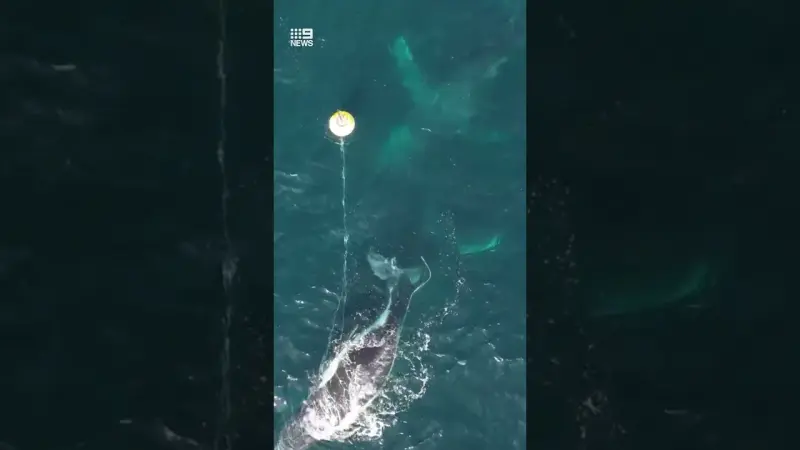
CUXHAVEN — A massive rescue operation culminated today in the successful release of a disoriented humpback whale that had been stranded for nearly 48 hours off the German North Sea coast. Marine biologists, local authorities, and specialized teams coordinated efforts to guide the distressed cetacean back into deeper waters, averting a potential tragedy.
The 45-foot adult male, estimated to weigh around 30 tons, was first spotted Monday morning in shallow tidal flats near the mouth of the Elbe River, prompting immediate concern from environmental groups and maritime officials. Its unusual presence in the busy shipping lanes raised questions about its health and navigation.
Experts quickly determined the whale was likely disoriented, possibly due to illness or accidental navigation into unfamiliar coastal shallows. The receding tide compounded the danger, leaving the behemoth vulnerable to sunburn, dehydration, and potential injury from its own immense weight pressing against the seabed.
Initial attempts by local fishermen to gently nudge the whale back to sea proved unsuccessful due to its immense size and the rapidly falling water levels. This underscored the complexity of the situation, necessitating a more robust, scientifically guided intervention.
A multi-agency task force, including personnel from the German Oceanographic Museum, the German Maritime Search and Rescue Service, and the World Wide Fund for Nature (WWF), mobilized rapidly. Their combined expertise became critical for devising a safe and effective strategy.
The elaborate plan involved deploying several specialized tugboats and inflatable pontoons to create a floating perimeter around the whale. Rescuers then used sonic deterrents and gentle physical nudges with water jets to encourage the mammal to move towards the deeper channels during high tide.
For hours, the fate of the majestic creature hung in the balance as onlookers watched from shore and international media covered the unfolding drama. As the tide swelled Tuesday afternoon, the coordinated pressure from the rescue vessels finally yielded results, with the whale slowly beginning to maneuver itself.
Cheers erupted as the humpback, now visibly stronger, cleared the sandbanks and began swimming purposefully towards the open North Sea. Authorities confirmed late Tuesday that the whale had successfully navigated beyond the critical shallow zones and was observed heading northward.
Dr. Anja Richter, lead marine biologist on the scene, stated, "This was a race against time and a testament to international cooperation. Every minute counted. Seeing it swim free is an immense relief and a powerful reminder of our responsibility to protect these incredible animals."
Humpback whales, known for their migratory patterns and acrobatic breaches, are not typically found in the shallow coastal waters of the German Bight. While isolated strandings occur globally, this incident highlights potential environmental pressures or navigational challenges faced by marine life in increasingly busy shipping lanes.
Conservationists pointed to the incident as an urgent call for greater monitoring and protective measures for marine ecosystems. The North Sea, a vital habitat, also experiences significant human activity, raising concerns about noise pollution and ship strikes impacting whale populations.
German authorities confirmed they would continue to monitor the area for any signs of the whale, though current indications suggest it is well on its way to its usual migration routes. Satellite tagging, while considered, was deemed too invasive during the critical rescue phase.
The successful release of the stranded humpback whale stands as a beacon of hope for wildlife conservation efforts worldwide, demonstrating that concerted human intervention can make a crucial difference in the survival of individual animals and species at risk.