 Robert Andrison
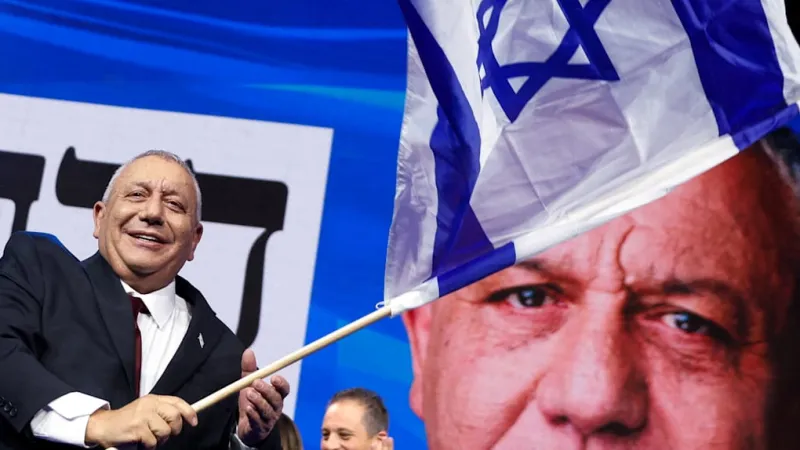
JERUSALEM – Opposition politician Gadi Eisenkot has been formally tasked by President Isaac Herzog with the critical mission of forming Israel's next government, following a tightly contested national election that left the political landscape fragmented. This mandate places the former military chief at the center of complex coalition negotiations, where securing a parliamentary majority may paradoxically rely on support from unexpected factions, including erstwhile allies of former Prime Minister Benjamin Netanyahu.
The presidential assignment comes after weeks of political uncertainty, marked by intense backroom discussions and the failure of other potential candidates to muster sufficient parliamentary backing. The recent election, the fifth in under five years, underscored the deep divisions within Israeli society and its political establishment, producing no clear winner and leaving a path to stable governance fraught with obstacles.
President Herzog, whose role is largely ceremonial but holds significant weight in the government formation process, consulted with leaders from across the political spectrum before making his decisive announcement. His decision to tap Eisenkot reflects a calculated gamble to break the persistent deadlock that has plagued Israeli politics, hindering long-term policy formulation and national stability.
Gadi Eisenkot, a former Chief of Staff of the Israel Defense Forces, transitioned into politics, aligning with centrist blocs. His military background lends him a reputation for pragmatism and decisiveness, qualities that President Herzog likely hopes will translate into effective coalition-building. However, his political alignment also presents challenges in uniting disparate elements.
Eisenkot's immediate hurdle involves assembling a coalition that commands at least 61 seats in the 120-member Knesset. This arithmetic necessitates reaching across traditional political divides, a task made more complicated by entrenched ideological positions and personal rivalries that define much of Israeli parliamentary life.
Crucially, the path to achieving the necessary majority might depend on figures who previously supported Netanyahu. This scenario suggests a potential realignment among certain right-wing or religious parties, possibly motivated by a desire to avoid another snap election or by discomfort with more extreme elements within Netanyahu's broader bloc.
Reports from sources close to the negotiations suggest Eisenkot's initial overtures include significant preconditions. These reportedly involve demands for the exclusion of certain controversial figures from any prospective cabinet, echoing sentiments seen in analyses such as Eisenkot Tapped to Form Israel Government, Demands Ben Gvir Ouster. Such a stipulation could prove a major stumbling block or a powerful leverage point in the delicate talks.
Israeli politics is characterized by a multi-party system where no single party typically achieves an outright majority. This necessitates intricate power-sharing agreements and compromises, which often prove fragile. The ideological chasm between the secular left, centrist parties, the religious right, and Arab parties makes stable governance notoriously difficult to achieve.
Previous attempts at forming stable governments have frequently collapsed over issues ranging from religious law to security policy and judicial reform. The recurring cycle of elections has eroded public trust and diverted national attention from pressing social and economic challenges.
Should Gadi Eisenkot succeed in his endeavor, his government would likely represent a broad, potentially unwieldy, coalition. Its longevity would depend on its ability to navigate internal disagreements and present a unified front on key national issues. Failure, however, would plunge Israel back into political uncertainty, potentially leading to yet another round of elections.
The prolonged political instability carries significant implications for Israel's economy, its social cohesion, and its standing on the international stage. A stable government is essential for addressing issues such as the cost of living, regional security challenges, and long-term infrastructure development.
International observers are closely watching developments in Jerusalem, recognizing that a stable Israeli government is crucial for regional diplomacy and for maintaining continuity in foreign policy. The formation of a viable government under Eisenkot could signal a new phase for Israeli politics, or merely a temporary pause in its perpetual electoral churn.
Ultimately, the success of Gadi Eisenkot's mandate hinges on his diplomatic skill, his capacity for compromise, and the willingness of diverse political factions to prioritize national stability over partisan interests. The coming weeks will be crucial in determining Israel's immediate political trajectory.