Gabriella
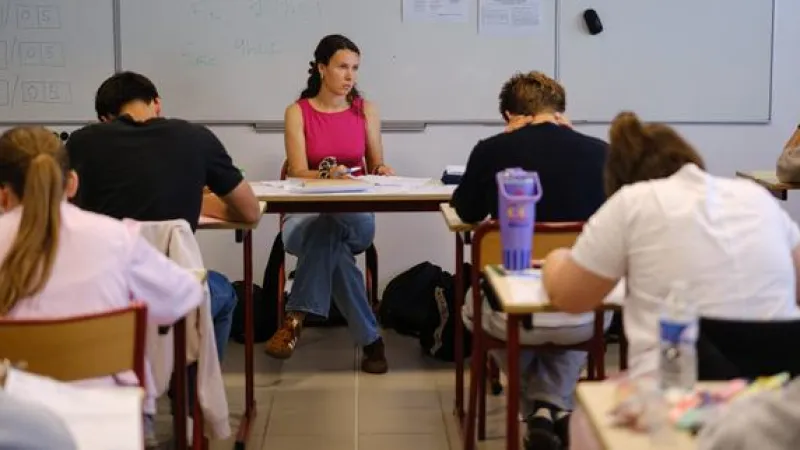
PARIS – French high school students in their first year, known as Premiere, will for the first time undergo an anticipated mathematics examination for the Baccalaureate 2026, with content explicitly differing based on their chosen academic specialty. This significant shift marks what critics describe as the culminating act in seven years of governmental indecision and educational turmoil surrounding the discipline.
This newly introduced Bac 2026 math exam directly addresses the profound changes initiated in 2019 when mathematics was controversially removed from the common core curriculum for all high school students. That decision, intended to streamline specialized pathways, inadvertently led to widespread concern regarding the overall mathematical proficiency of graduates.
Education unions have vehemently denounced the latest measure as merely a patchwork solution, or a rafistolage, rather than a coherent, long-term strategy. They argue that it reflects ongoing ministerial wanderings and a failure to establish a stable and effective framework for teaching mathematics at the secondary level.
The initial reform in 2019 saw a sharp decline in the number of students pursuing advanced mathematics, particularly among female students, raising alarms about potential negative impacts on scientific and technical fields in higher education. The current administration has since faced mounting pressure to reverse this trend and ensure a stronger foundation in quantitative reasoning.
The anticipated nature of the Bac 2026 exam means Premiere students will sit for this assessment before their final year of high school, a departure from the traditional terminal examinations. This timing aims to integrate mathematics earlier into the Baccalaureate structure, but it also adds another layer of complexity for students and educators.
Under the new system, students pursuing scientific and technical tracks will face a more rigorous mathematics exam tailored to their specialized curriculum. Conversely, those focusing on humanities or social sciences will encounter a foundational mathematics test, designed to assess general numeracy and problem-solving skills relevant to their fields.
Teachers across France are now grappling with the practical implications of this differentiated examination. Developing curricula that adequately prepare students for distinct math pathways, all while maintaining educational equity, presents a considerable challenge for institutions.
Critics highlight the inconsistency of the past seven years, characterized by numerous adjustments and pilot programs that often left schools and families struggling to adapt. The constant recalibration of educational policy, especially in a core subject like mathematics, has generated considerable frustration within the academic community.
The Ministry of National Education has stated that the reform aims to strengthen students mathematical foundations while providing more flexibility in their academic paths. However, the perceived reactive nature of these changes, rather than a proactive long-term vision, continues to fuel skepticism.
For the class of 2026, this new mathematics evaluation represents not only an academic hurdle but also a symbol of an education system in continuous flux. The success or failure of this latest Baccalaureate reform will undoubtedly shape the future of mathematical instruction in France for decades to come.