 Debby Wijaya
WASHINGTON – Worldwide, nations and scientific institutions are commemorating International Moon Day today, July 20, with a myriad of events designed to celebrate humanity's monumental achievement of the 1969 Apollo 11 lunar landing and to ignite enthusiasm for the next era of lunar exploration. This annual observance serves as a poignant reminder of our capacity for audacious discovery and the enduring allure of Earths nearest celestial neighbor.
International Moon Day was officially established by the United Nations General Assembly, recognizing the anniversary of the first human landing on the Moon as a significant milestone for all humanity. The resolution encourages Member States to celebrate this day to promote awareness about sustainable lunar exploration and utilization, fostering international cooperation in space.
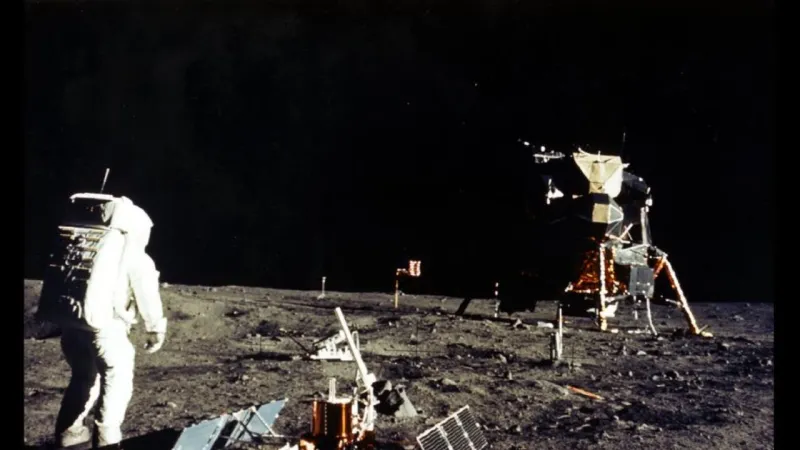
The genesis of this global celebration traces back to July 20, 1969, when Apollo 11 astronauts Neil Armstrong and Buzz Aldrin stepped onto the lunar surface, marking an unparalleled moment in human history. Millions across the globe watched in awe as images from the Moon were transmitted back to Earth, profoundly impacting generations and reshaping our perception of what is possible.
Events marking the day range from public viewings at observatories and planetariums to educational workshops in schools and interactive exhibits in science museums. These activities often feature archival footage, virtual reality experiences simulating lunar missions, and discussions with leading experts in space science and astronautics.
Space agencies, including NASA, the European Space Agency, and numerous national programs, use International Moon Day as a platform to highlight current lunar missions and future aspirations. The Artemis program, for instance, aims to return humans to the Moon, including the first woman and person of color, establishing a sustained human presence there.
The scientific community emphasizes the Moon's critical role as a natural laboratory for understanding the early solar system, planetary formation, and even the origins of life. Ongoing research delves into lunar geology, the potential for water ice at the poles, and the implications for future resource utilization, which could facilitate long-duration missions.
Beyond scientific endeavors, the Moon has captivated human imagination for millennia, serving as a muse for artists, poets, and storytellers across cultures. International Moon Day also celebrates this cultural significance, acknowledging the Moon's pervasive influence on human thought and creativity.
Educational outreach is a core component of the observances, aiming to inspire young minds to pursue careers in science, technology, engineering, and mathematics. By showcasing the excitement and challenges of space exploration, organizers hope to cultivate the next generation of astronauts, engineers, and researchers who will push the boundaries of human knowledge.
As humanity looks toward a future of sustainable lunar presence and eventual missions to Mars, the lessons learned from Apollo and the ongoing international collaborations are more vital than ever. The technical challenges are immense, from developing advanced propulsion systems to creating habitats that can withstand the harsh lunar environment.
The global convergence on International Moon Day underscores a shared human ambition to explore and understand the universe around us. It is a testament to the collective spirit of discovery that transcends national borders and reminds us of our unique place within the cosmos.
The commemoration also provides an opportunity to reflect on the technological advancements that enabled the original Moon landing and the continued innovation required for future space endeavors. From robust communication systems to life support technologies, each step forward builds on the foundational work of past pioneers.
Ultimately, International Moon Day reinforces the idea that the Moon is not merely a distant object but an integral part of human history and our collective future, a beacon of exploration that continues to beckon humanity skyward.