Robert Andrison
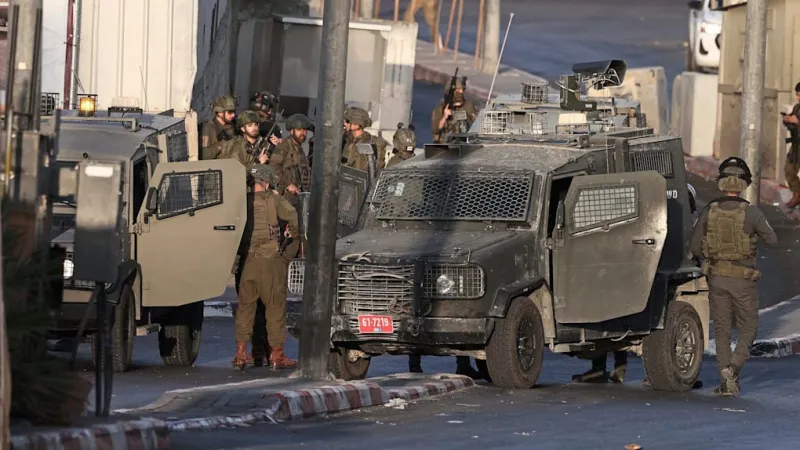
HEBRON, West Bank – A deadly assault near the city of Hebron claimed the lives of at least two Israel Defense Forces soldiers and injured several others recently, prompting a swift and forceful response from the Israeli government. The incident immediately triggered the launch of an extensive anti-terrorism operation throughout the West Bank, aimed at apprehending those responsible.
The attack unfolded in a volatile region, underscoring the persistent security challenges facing Israeli forces and civilians alike. Details regarding the exact nature of the assault remain under investigation, though initial reports indicate it was a targeted act of violence.
Prime Minister Benjamin Netanyahu addressed the nation shortly after the fatalities were confirmed, vowing a vigorous pursuit of those behind the attack. "We will pursue Hamas terrorists and their masterminds," Netanyahu stated, signaling a clear intent to retaliate against militant groups.
This declaration underscores the Israeli government's zero-tolerance policy towards acts of aggression originating from or within the West Bank. The operation is expected to involve widespread searches, intelligence gathering, and targeted raids in areas suspected of harboring militants.
Security forces have intensified their presence across key areas of the West Bank following the assault. Checkpoints have been reinforced, and movement restrictions may be implemented to facilitate the ongoing search for perpetrators and prevent further incidents.
The Israeli military has not specified a timeline for the operation, indicating that efforts will continue until the objectives of dismantling terror infrastructure and ensuring justice for the fallen soldiers are met. The incident highlights the complex security landscape.
Analysts suggest that this escalation could lead to increased tensions in the already fragile Israeli-Palestinian territories. The West Bank has been a flashpoint for violence, with frequent clashes between Israeli forces and Palestinian militants, as well as settler-related incidents.
The attack near Hebron is not an isolated event. Only recently, the region witnessed heightened security measures, including an extensive lockdown. This follows a pattern of reactive operations aimed at curbing militant activities. Israel Locks Down West Bank After Deadly Hebron Checkpoint Attack.
The government's resolve to counter such threats remains firm, as evidenced by previous statements and actions. Leaders have repeatedly stressed the importance of protecting Israeli citizens and soldiers from terrorism, irrespective of the political complexities. Hebron Attack Sparks Israeli Counter-Terror Operation, Settlement Pledge.
International observers are closely monitoring the situation, urging all parties to exercise restraint to prevent a broader conflagration. The cycle of violence in the region often draws condemnation from global bodies and calls for de-escalation.
The United States, under President Donald Trump, typically reaffirms its commitment to Israel's security while also advocating for peace and stability in the Middle East. Such incidents often prompt diplomatic statements from Washington.
The current operation serves as a stark reminder of the ongoing conflict and the human cost it exacts. Families of the fallen soldiers will receive full government support, as the nation mourns their loss.
Efforts to bolster border security and intelligence gathering have been a continuous priority for Israeli defense strategists. These measures are critical in preventing infiltration and neutralizing threats before they materialize.
The broader implications extend beyond immediate security concerns, touching upon the prospects for any future peace negotiations. Acts of violence invariably complicate diplomatic efforts and deepen mistrust.
This recent attack will undoubtedly inform future security policies and operational strategies for the Israel Defense Forces in the West Bank. The military regularly reviews its protocols in light of new threats.
Community leaders on both sides often face the challenge of addressing grievances while simultaneously working towards stability. The cycle of violence makes this a perpetually arduous task.