 Dodi Irawan
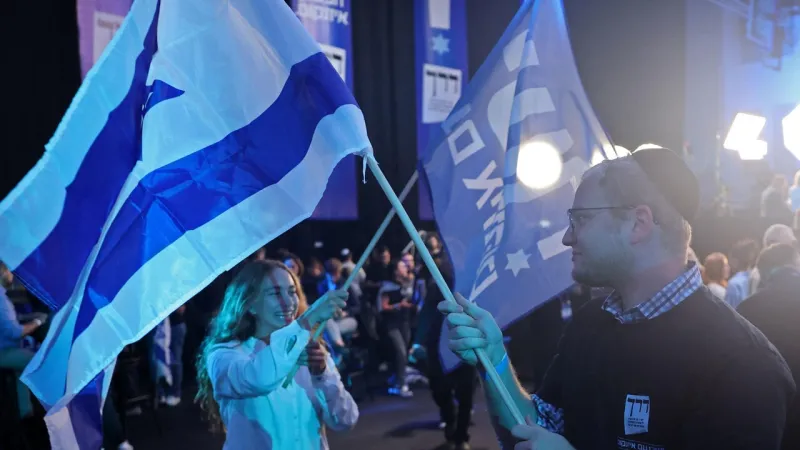
JERUSALEM – Israel finds itself at a profound political crossroads following a recent national election where Prime Minister Benjamin Netanyahu’s Likud party emerged as the largest faction, yet without a clear path to forming a governing majority. The results highlight a deeply fragmented electorate and underscore ongoing political instability, with the centrist Eisenkot bloc demonstrating surprising strength and Arab parties achieving record voter engagement.
Preliminary tallies and exit polls indicate that while Likud secured a plurality of votes, it fell short of the 61 seats required to control the Knesset. This familiar scenario prolongs the nation's political stalemate, which has seen multiple inconclusive elections in recent years.
The challenge to Netanyahu's long-standing dominance intensified with the formidable performance of the Eisenkot bloc, led by former IDF Chief of Staff Gadi Eisenkot. This burgeoning political force positions itself as a credible alternative, drawing significant support from across the political spectrum. The bloc has notably presented itself as offering a new Israeli direction, distinct from the traditional right-wing and left-wing divides.
Simultaneously, Arab political parties collectively saw a surge in turnout and representation, marking a historic moment for a demographic often marginalized in Israeli politics. This increased participation reflects growing civic engagement and a desire for greater influence in national decision-making, potentially altering the dynamics of future coalition formations.
A remarkable feature of this election cycle was the record voter turnout, signaling a highly energized and polarized populace. Citizens, eager to express their preferences amidst persistent political deadlock, flocked to polling stations, indicating the high stakes involved in shaping Israel's next government.
The inability of any single bloc to achieve a decisive victory perpetuates the cycle of uncertainty that has plagued Israeli governance. The political landscape remains deeply polarized, with strong ideological divides making the formation of a stable, broad-based coalition exceptionally difficult. This outcome forces Israel to confront deepening political uncertainty.
Prime Minister Netanyahu, a veteran political strategist, now faces the daunting task of navigating complex negotiations to stitch together a functional government. His reliance on smaller, often ideologically rigid, right-wing and religious parties has historically complicated coalition building and governance.
The centrist and left-leaning factions, while not forming a cohesive majority, hold significant bargaining power. The Eisenkot bloc, in particular, will play a critical role in any potential unity government or opposition configuration, demanding substantial policy concessions in exchange for their support.
Analysts suggest that the current results could lead to protracted coalition talks, potentially stretching for weeks or even months. The absence of a clear mandate from the electorate means that compromise and concessions will be paramount, yet these qualities are often in short supply within Israel's highly combative political arena.
The strong showing from the Eisenkot bloc, as indicated by initial tallies and Israeli exit polls, has narrowed Netanyahu's traditional pathways to power. He must now contend with a more robust and unified opposition front that is determined to break the recurring cycle of political instability.
The implications extend beyond domestic policy, influencing Israel's standing on the international stage. A government formed under duress or with a fragile majority could struggle to make decisive foreign policy decisions, affecting regional stability and key diplomatic efforts.
Ultimately, the election results underscore a nation grappling with its identity and future direction. The deep divisions reflect fundamental disagreements over national priorities, security doctrines, and the role of religious and secular values in public life. The path forward for Israel remains highly ambiguous, demanding unprecedented political dexterity and a willingness to transcend entrenched ideological lines for the sake of national unity and stable governance.