Gabriella
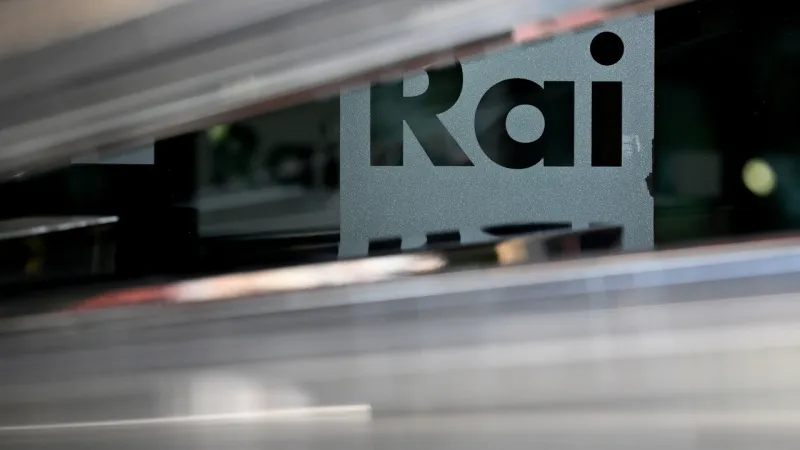
The Italian parliamentary majority has formally proposed an amendment aimed at significantly reforming the funding structure of Rai, Italy's national public broadcasting company. This move, spearheaded by rapporteurs working on the broader Rai reform, specifically targets the long-standing annual license fee, known as the canone Rai. While the proposal seeks to alleviate financial burdens on Italian households, it immediately raises critical questions regarding the necessary resource reallocation to compensate for the potential revenue shortfall.
This legislative initiative emerged recently within the ongoing parliamentary discourse surrounding the overhaul of the public broadcasting system. The exact details of the proposed amendment remain under scrutiny, but its core intent is to either drastically reduce or entirely eliminate the direct charge currently levied on all Italian television owners. Proponents argue this would modernize Rai's funding and better align it with contemporary media consumption habits, which increasingly gravitate away from traditional broadcast television.
For decades, the Rai license fee has been a mandatory annual payment for Italian households possessing a television set, regardless of whether they actively consume Rai programming. It has been a consistent source of revenue for the public broadcaster, funding its vast array of news, entertainment, and cultural content across multiple channels and platforms. The current fee is integrated into electricity bills, a mechanism introduced to boost collection rates and curb evasion.
However, the fee has consistently been a point of contention among citizens and political factions alike. Critics often decry it as an anachronistic tax, arguing that it disproportionately affects lower-income families and that its mandatory nature is unfair in an era of diverse media choices and streaming services. The perception of its necessity has also diminished for many as private broadcasters and international platforms offer increasingly competitive alternatives.
The challenge now facing the majority coalition lies in identifying credible and sustainable alternative funding mechanisms for Rai. Public broadcasting, by its nature, requires substantial and stable financial backing to maintain its editorial independence, comprehensive service, and commitment to public interest programming. Without the canone Rai, the government must find new avenues to support an institution vital to national information and culture.
Initial discussions suggest various possibilities for replacing the fee. These could range from increased general taxation allocated specifically to Rai, a direct contribution from the state budget, or a more robust commercial revenue model involving advertising or subscription services for premium content. Each option, however, carries its own set of political, economic, and logistical complexities that require careful consideration.
The implications for Rai are profound. A significant cut or abolition of the license fee without adequate replacement funding could jeopardize its operational capacity, leading to potential reductions in programming quality, staffing cuts, or even a compromise of its editorial autonomy. Maintaining Rai's role as an independent, unbiased source of news and culture is a cornerstone of Italian democracy.
Political analysts note that this move aligns with broader government efforts to address cost-of-living concerns for Italian families. Reducing or eliminating the Rai license fee could be framed as a tangible benefit to citizens, potentially bolstering public support for the ruling coalition. However, the financial tightrope walk involved is considerable, given the nation's overall fiscal health.
Opposing political parties and some media watchdogs have voiced concerns that such a reform, if poorly executed, could weaken Rai, making it more susceptible to political influence through direct state funding or forcing it to chase commercial revenues at the expense of its public service mandate. The debate highlights the delicate balance between public funding, editorial independence, and consumer choice.
The proposed amendment is now entering a critical phase of parliamentary review. Lawmakers must scrutinize the financial projections, assess the viability of alternative funding models, and engage in extensive debate to ensure that any reform strengthens rather than diminishes Italy's public broadcasting landscape. The future of the Rai license fee, and indeed Rai itself, hinges on these crucial deliberations in the coming weeks.