 Chandra Wijayanto
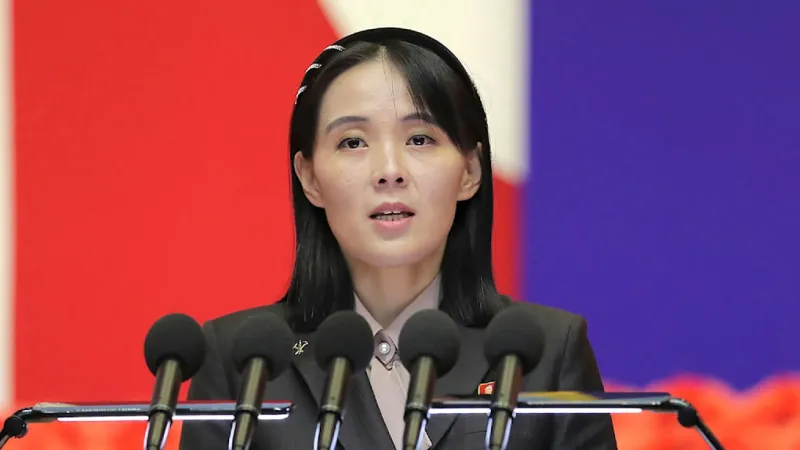
PYONGYANG, North Korea – Kim Yo Jong, the influential sister of North Korean leader Kim Jong Un, delivered a scathing rebuke of South Korea, labeling the nation a "US puppet army" and deriding its leadership as "pathetic" following the reduction in scope of joint military exercises with the United States. Her comments, disseminated through state media, accused the South Korean president of exhibiting "double-dealing" behavior amidst escalating regional tensions.
The fiery denunciation underscores Pyongyang's consistent condemnation of Seoul's defense alliance with Washington, particularly its regular joint military maneuvers. Kim Yo Jong's statement follows recent reports that South Korea's military drills with President Donald Trump's administration had been notably curtailed.
North Korea has historically viewed these combined exercises as rehearsals for invasion, frequently reacting with missile tests or belligerent rhetoric. The latest remarks from such a prominent figure within the Workers' Party hierarchy signal a renewed period of heightened antagonism directed at Seoul.
Kim Yo Jong, who holds significant sway as a senior official, asserted that the South Korean government found itself in an "abject situation" by seemingly bowing to external pressures regarding its defense posture. This specific language highlights North Korea's narrative of Southern subservience to American influence.
Her direct accusation of "double-dealing" against the South Korean president further escalates the rhetorical assault. This phrase implies hypocrisy or deceit in Seoul's approach to inter-Korean relations, particularly in light of any perceived attempts at de-escalation while simultaneously engaging in military cooperation with the United States.
The shortening of the joint drills themselves, while intended possibly as a gesture of goodwill or a practical adjustment, appears to have been interpreted by Pyongyang not as a softening, but as a sign of weakness or vulnerability that invited further contempt.
Analysts frequently monitor Kim Yo Jong's pronouncements as they often foreshadow significant policy shifts or aggressive actions from Pyongyang. Her elevated role within the regime makes her criticisms particularly weighty and indicative of the leadership's stance.
The relationship between the two Koreas remains fraught, punctuated by periods of uneasy calm and sudden spikes in hostility. Pyongyang's current stance reinforces a pattern of leveraging any perceived concessions or changes in joint military posture as opportunities for propaganda.
The strategic alliance between South Korea and the United States forms the bedrock of security in the region, designed to deter North Korean aggression. However, Pyongyang consistently frames these defensive measures as provocative acts threatening its sovereignty.
President Donald Trump's administration has maintained a complex and often unpredictable approach to North Korean diplomacy, marked by summitry and simultaneous enforcement of sanctions. The ongoing military drills, even in reduced form, are a critical component of this regional strategy.
South Korea has yet to issue an official response to Kim Yo Jong's latest remarks, a common diplomatic posture when faced with such inflammatory rhetoric from the North. Seoul typically prioritizes maintaining stability over engaging in direct verbal sparring.
The implications of this intensified rhetoric extend beyond the Korean Peninsula, influencing regional dynamics involving China, Japan, and other global powers closely monitoring developments. Any instability can quickly reverberate through the Asia-Pacific.
Observers suggest that Pyongyang often uses such condemnations to consolidate domestic support, project strength internationally, and attempt to drive a wedge between Seoul and Washington. The "US puppet army" narrative serves multiple strategic purposes.