 Dodi Irawan
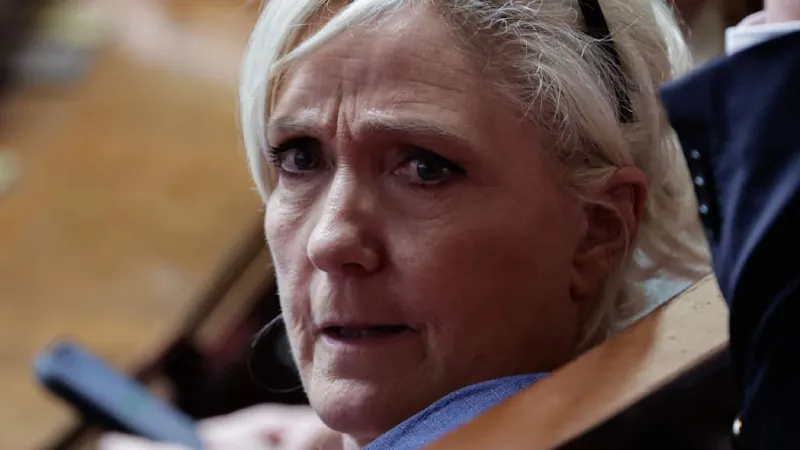
Paris – Marine Le Pen, the influential leader of France's National Rally, alongside party president Jordan Bardella, recently issued a resolute declaration, publicly distancing their political movement from Russia. Le Pen emphatically stated, "We will never tolerate a foreign power dictating our politics," particularly concerning the ongoing Ukraine conflict, underscoring the party's commitment to French sovereignty on the international stage.
This explicit repudiation of Russian influence signals a strategic re-alignment for the National Rally, a party that has historically faced scrutiny over its past financial dealings and perceived sympathies with Moscow. The statement reflects a robust assertion of national independence, clarifying the party's stance against external interference.
Bardella echoed Le Pen's sentiment, clarifying that France would not facilitate Russia's objectives in its war against Ukraine. This firm stance seeks to align the National Rally more closely with the broader European consensus condemning Russia's aggression while maintaining a distinct French nationalist identity.
Political analysts suggest this move by Le Pen and Bardella serves multiple purposes. Domestically, it aims to shed the label of being pro-Russian, a perception that has been a significant liability in past elections and has alienated a segment of the electorate. As the political landscape evolves in 2026, such declarations become crucial for broader appeal.
Internationally, the declaration strengthens France's position within the European Union and NATO, projecting an image of unified resolve against external interference. It underscores the National Rally's commitment to safeguarding national interests and security, even as it continues to advocate for a re-evaluation of France's role in multinational organizations.
The timing of these statements is also noteworthy. With the Ukraine conflict persisting, European nations face continued pressure to present a united front. Le Pen's declaration contributes to this unity, albeit from a nationalist perspective, by unequivocally rejecting any notion of French complicity or assistance to Russian war efforts.
Critics of the National Rally have often highlighted previous instances of financial support from Russian banks and favorable comments made by party members regarding President Vladimir Putin. This latest announcement appears designed to decisively break from that past narrative, positioning the party as unequivocally patriotic and fiercely protective of French sovereignty.
The party's emphasis on independence resonates with a core tenet of its platform: prioritizing national interests above all else. This principle, now extended to foreign policy vis-à-vis Russia, seeks to reassure voters about the National Rally's reliability as a guardian of France's autonomy.
While the National Rally maintains its critical stance on certain European Union policies, its position on Russia and Ukraine now appears to converge more with mainstream European political thought. This strategic recalibration might open new avenues for the party in future political alliances or government formations.
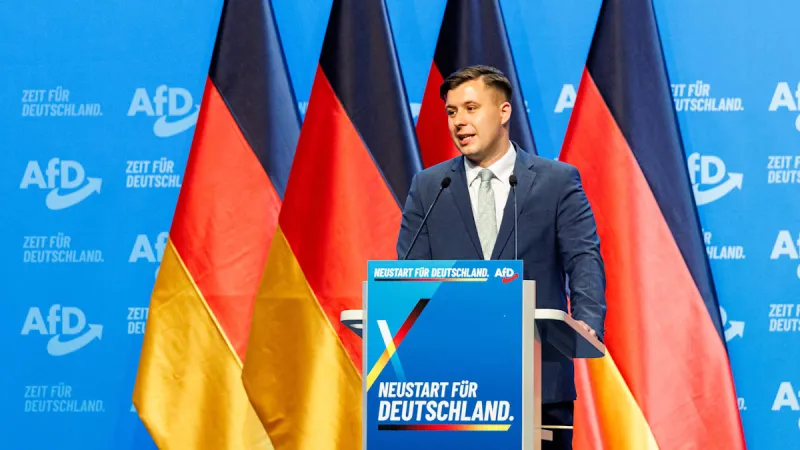
This development also draws parallels with shifts observed in other European right-wing parties. For instance, in Germany, discussions surrounding national identity and foreign influence remain pertinent, as explored in articles like AfD Threatens German Identity; Merz Poised for Post-Election Shift. Such movements often navigate the delicate balance between nationalist principles and international realities.
The declarations from Le Pen and Bardella signal a mature political strategy, acknowledging the geopolitical realities of 2026 and adapting their rhetoric to better serve their long-term political ambitions. Their clear message is that French policy will be determined solely by French interests, free from external coercion.
This assertive stance on French sovereignty is expected to be a recurring theme in the National Rally's future communications, aiming to solidify its image as a responsible and independent political force capable of governing France. The party is keen to project an image of steadfast leadership prepared to defend national values and geopolitical standing.
This public distancing from Moscow also serves to pre-empt potential attacks from political rivals, who might otherwise leverage past ties to Russia as a campaign issue. By taking a clear stand, Le Pen aims to neutralize a historical vulnerability.
The implications for the broader European political landscape are significant. A major right-wing party in a key EU member state like France clearly articulating such a position adds weight to the collective European effort to counter Russian aggression and uphold international law.
Ultimately, Le Pen and Bardella's statements represent a calculated political maneuver to strengthen the National Rally's credibility and electoral prospects by unequivocally asserting France's autonomy and rejecting any foreign power dictating its future.