 Chandra Wijayanto
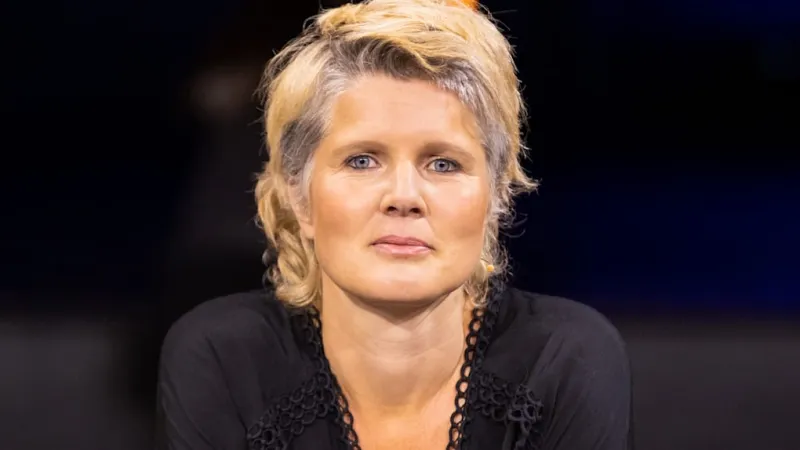
Philosopher Svenja Flaßpöhler recently challenged prevailing modern societal norms, asserting that true freedom for an individual resides not in boundless options but in the committed bond to one person. Her remarks, made during a candid interview, confront the widespread contemporary belief that loyalty in relationships is outdated or even a form of deception within what she terms the multi-option society.
Flaßpöhler's philosophy directly counters a cultural zeitgeist that increasingly champions fluidity and individual autonomy above all else. In a world saturated with choices, from dating apps to career paths, the idea of permanent attachment often faces skepticism, frequently being dismissed as an antiquated possessive mindset.
She argues that the perceived liberation of having limitless choices is often an illusion, one that can lead to superficiality and a perpetual state of dissatisfaction. The constant pursuit of the next best thing prevents individuals from fully investing in and experiencing the profound depth that only sustained commitment can offer. This unending quest for novelty, in Flaßpöhler's view, paradoxically limits genuine freedom.
Instead of true self-realization, the multi-option society can trap individuals in a cycle of comparison and fleeting connections. Flaßpöhler suggests that by relinquishing the pressure to constantly seek alternatives, one can cultivate a deeper, more meaningful existence within a chosen relationship. This intentional limitation, she contends, is where authentic personal growth and a unique form of liberty are forged.
In a poignant personal reflection that underpins her philosophical stance, Flaßpöhler shared, "To get back in touch with my desire, I needed my husband." This statement highlights a perspective where the steadfastness of a long-term partnership becomes a crucible for rediscovering and nurturing one's inner self and passions.
Her personal experience serves as a powerful testament to her theoretical arguments. It illustrates how the security and challenges inherent in a committed relationship can provide the necessary framework for introspection and the rekindling of personal desire, rather than stifling it. This intimate insight adds a compelling dimension to her broader philosophical discourse.
Modern society often views traditional commitment as a limitation on personal freedom, particularly in the realm of romantic relationships. Flaßpöhler addresses this head-on, suggesting that this perspective misunderstands the very nature of freedom itself. She implies that true freedom is not the absence of constraint, but the deliberate choice of one's constraints.
The philosopher critiques the notion that fixed relationships are merely a vestige of outdated possessive thinking. She argues that viewing loyalty as deceitful or archaic strips relationships of their potential for profound intimacy and mutual development. Such a view, she posits, misunderstands the human need for deep, enduring connection.
From a psychological standpoint, Flaßpöhler's arguments resonate with studies that point to the long-term benefits of stable social bonds for mental and emotional well-being. The constant state of flux encouraged by the multi-option society can contribute to anxiety and loneliness, while committed relationships offer a sense of belonging and security.
Flaßpöhler envisions a form of true autonomy found precisely within a deliberately chosen and nurtured framework. This autonomy is not about escaping all bonds, but about forming deep, meaningful ones that allow individuals to explore their potential more fully. It is a freedom cultivated through intentionality and dedication.
Her ideas carry significant implications for both individual well-being and the broader stability of society. By re-evaluating the value of commitment, Flaßpöhler invites a necessary conversation about the foundations of human connection in an increasingly fragmented world. Her work encourages a shift from quantitative choices to qualitative depth.
Many individuals, feeling the fatigue of endless swiping and ephemeral connections, may find solace and direction in Flaßpöhler's unconventional wisdom. Her call for a return to profound loyalty offers a refreshing counter-narrative to the prevailing ethos of limitless romantic and personal options.
Her philosophical background lends rigorous intellectual weight to these propositions, moving beyond mere sentimentality to articulate a coherent argument for the enduring relevance of steadfastness. Flaßpöhler's work prompts a reconsideration of what it truly means to be free and fulfilled in the modern age.
Ultimately, Svenja Flaßpöhler's compelling narrative about loyalty and freedom presents a profound challenge to contemporary relationship paradigms. She asserts that by embracing the intentional constraints of a chosen bond, individuals can unlock a deeper, more authentic sense of self and purpose, thereby discovering genuine liberation in commitment.