 Dodi Irawan
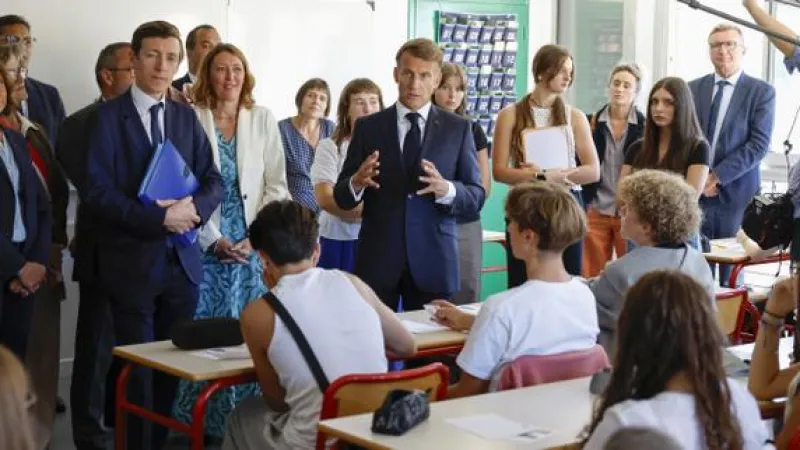
Lozere, France - French President Emmanuel Macron recently championed the national school phone ban before a class of high school students in Lozere, underscoring a pivotal policy for the 2026 academic year. The measure, which gained approval during the summer, stands as a central component of the government's educational agenda, designed to cultivate heightened student concentration and mitigate the ubiquitous presence of digital distractions within learning environments. Beyond the immediate ban, President Macron also reiterated his commitment to forthcoming legislation aimed at curtailing social media usage for individuals under the age of 15, signaling a comprehensive strategy to enhance youth well-being in the digital era.
The presidential visit served as a direct engagement with the demographic most affected by the new regulations. Officials state the comprehensive mobile phone prohibition extends beyond classrooms, encompassing school grounds throughout the academic day. Proponents of the policy argue that unrestricted smartphone access often impedes genuine social interaction, fosters anxiety, and detracts significantly from pedagogical objectives.
The ban did not emerge spontaneously but resulted from extensive deliberations and mounting concerns among educators, parents, and policymakers regarding the encroaching digital presence in children's lives. Its adoption over the summer reflected a consensus that preventative measures were necessary to restore focus to learning and personal development.
This initiative forms part of a broader set of educational reforms championed by the Macron administration. The French government has consistently advocated for policies that prioritize foundational learning, digital literacy, and student mental health. The school phone ban aligns directly with these overarching goals, aiming to create a more conducive learning atmosphere.
For students, the absence of personal devices during school hours is anticipated to encourage more direct engagement with curriculum materials and peers. Teachers, in turn, foresee a reduction in classroom disruptions and an increased capacity to command student attention, thereby optimizing instructional time.
The proposed restriction on social media for children under 15 represents another layer of this protective framework. This legislative push recognizes the unique developmental vulnerabilities of younger adolescents to the often-unregulated content and social pressures prevalent on digital platforms.
Experts in child psychology and digital ethics have frequently highlighted the detrimental effects of excessive social media exposure on cognitive development, self-esteem, and sleep patterns among young people. The government's proposed age restriction seeks to create a buffer, allowing for more mature decision-making before full immersion into these complex digital ecosystems.
France is not alone in grappling with the challenges posed by pervasive digital technology in schools and for youth. Nations across Europe and beyond are exploring similar measures. For instance, discussions around curriculum adjustments and school calendars are ongoing, with countries like Italy recently confirming their school calendar for the upcoming 2026-2027 academic year, reflecting a broader European effort to optimize educational environments.
Implementation of such bans inevitably presents challenges, including enforcement logistics and potential parental concerns. Schools are tasked with establishing clear protocols for device storage and emergencies, ensuring that essential communication remains possible without undermining the policy's intent.
While the policy enjoys considerable support from many parents and educators, some civil liberties advocates raise questions about individual freedoms and the role of schools in regulating student technology use. The debate underscores the delicate balance between protection and personal autonomy in a rapidly evolving digital landscape.
President Macron's advocacy for the school phone ban and social media restrictions solidifies his administration's vision for a future where digital tools serve as complements to, rather than substitutes for, traditional learning and social development. This forward-looking approach aims to equip young French citizens with the critical thinking skills needed to navigate a complex digital world responsibly.