 Dorry Archiles
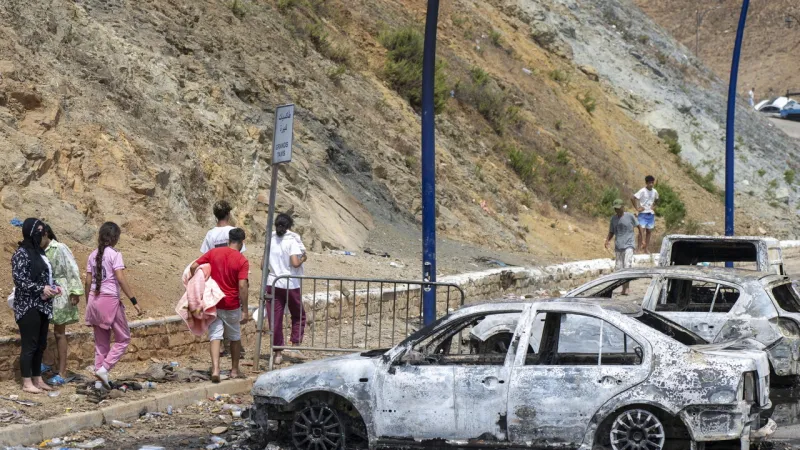
BRUSSELS – Italian Prime Minister Giorgia Meloni, alongside 21 other European Union leaders, has formally called for an urgent EU summit to address the escalating migrant crisis in the Spanish North African enclave of Ceuta. The demand, articulated in a joint letter sent to the European Commission, seeks a unified and immediate response to the humanitarian catastrophe unfolding, where approximately 100 migrants have reportedly died. This initiative sets the stage for a contentious video call scheduled for Tuesday, expected to highlight sharp divisions within the bloc, particularly with Spanish Prime Minister Pedro Sanchez.
The urgency behind the summit request stems from the dire situation in Ceuta, a key flashpoint for migration into Europe. For months, the enclave has witnessed a surge in desperate attempts by migrants to cross its fortified borders, often leading to tragic outcomes. The letter to Brussels underscores the need for a coordinated European strategy, emphasizing burden-sharing and external border management as critical components.
However, the proposal has encountered significant resistance from Madrid. Prime Minister Pedro Sanchez has publicly denounced the notion of closing the Schengen Area as a response to the crisis. In a pointed statement, Sanchez labeled such a suggestion as “ignorant,” signaling his government’s firm opposition to any measures that would undermine the fundamental principles of free movement within the EU.
The call for an urgent summit was swiftly acknowledged by European Commission President Ursula von der Leyen, who reportedly greenlighted the initiative. Her support suggests a recognition of the severity of the Ceuta migrant crisis and the necessity for high-level political engagement to forge a consensus among member states.
The deteriorating humanitarian situation in Ceuta has placed immense pressure on Spain, which administers the enclave. The reported deaths of around 100 individuals underscore the perilous journey migrants undertake, often across treacherous terrain and dangerous sea routes, in their quest for safety and better opportunities in Europe.
This latest development highlights a recurring fault line within the European Union regarding migration policy. While some member states, led by Italy’s conservative government, advocate for stricter border controls and a more robust common defense, others, like Spain, emphasize humanitarian principles and the integrity of existing European treaties, such as Schengen.
The dispute over Schengen is particularly contentious. Sanchez’s strong stance against its closure reflects a broader concern among some EU nations that such actions could unravel decades of European integration and severely impact economic and social ties. His remarks position him as a vocal opponent of policies that might be perceived as isolationist or detrimental to the union’s foundational freedoms.
Meanwhile, the joint letter from Meloni and the other 21 leaders illustrates a growing impatience among several EU member states with the current state of migrant management. They argue that the Ceuta migrant crisis is not merely a Spanish problem but a European one, demanding a collective approach that extends beyond national borders. This sentiment aligns with previous calls for a more unified stance on immigration, as detailed in reports like EU Backs Urgent Summit Amid Migrant Crisis; Schengen Under Fire.
The video conference scheduled for Tuesday is anticipated to be a highly charged session. Leaders are expected to debate the practicalities of a potential summit, including its agenda, objectives, and the scope of any proposed solutions. The outcome could significantly shape the EU’s migration policy for the foreseeable future, especially as the Ceuta Crisis Deepens: Spain Demands Urgent EU Summit Amid Rising Death Toll.
Beyond the immediate diplomatic wrangling, the crisis in Ceuta also shines a harsh light on the socio-economic conditions in North Africa and the broader geopolitical factors driving migration. Experts continually point to poverty, conflict, and political instability as primary motivators for individuals risking their lives to reach European shores, making any long-term solution inherently complex.
The historical context of Ceuta and Melilla, Spain’s two enclaves in North Africa, has long made them magnets for migrants seeking to enter Europe. Their unique geographical and political status often exacerbates the challenges of border management and humanitarian aid. The current surge underscores the persistent nature of these pressures, as observed in prior reports such as Ceuta Border Erupts: Migrant Injured, Sea Deaths Mount Amid Tensions.
Italy, under Prime Minister Meloni, has consistently advocated for a tougher stance on illegal immigration and a re-evaluation of current EU asylum rules. Her government has often called for greater solidarity from other member states in managing migrant arrivals, particularly those crossing the Mediterranean. This firm position is reflected in her leadership on this joint letter.
The upcoming discussions will also likely touch upon the role of external partners, particularly Morocco, in managing migratory flows. Cooperation with North African nations is deemed crucial by many EU officials for effective border control and combating human trafficking, although such partnerships often face their own complexities and criticisms regarding human rights.
As leaders prepare for Tuesday’s critical video call, the stakes remain incredibly high. The inability to forge a cohesive European response to the Ceuta migrant crisis not only risks further humanitarian tragedy but also threatens to deepen the political fissures within the bloc, challenging its proclaimed unity and shared values. The outcome will be closely watched across the continent as European leaders grapple with one of their most persistent challenges.
The debate surrounding Schengen is not new; however, the intensity of Sanchezs rhetoric indicates a profound concern about potential knee-jerk reactions that could unravel core European achievements. His insistence on upholding the freedom of movement principle underscores the delicate balance EU leaders must strike between security, humanitarian obligations, and fundamental freedoms.
Furthermore, the humanitarian organizations operating on the ground in and around Ceuta continue to issue urgent pleas for increased resources and a more humane approach to the crisis. They stress that while political solutions are debated, the immediate needs of vulnerable migrants, including access to shelter, food, and medical care, must not be overlooked.
The collective demand for a summit, championed by Meloni, illustrates a significant push from a substantial portion of the EU for proactive measures rather than reactive ones. This signifies a potential shift in the discourse, moving towards a more structured and perhaps more assertive strategy to manage the continent’s borders and migrant flows comprehensively.
The upcoming deliberations are not just about Ceuta; they represent a microcosm of the larger European debate on migration. The resolutions, or lack thereof, reached in the coming days will serve as a barometer for the EU’s capacity to address its most challenging internal and external pressures with unity and efficacy.