 Chandra Wijayanto
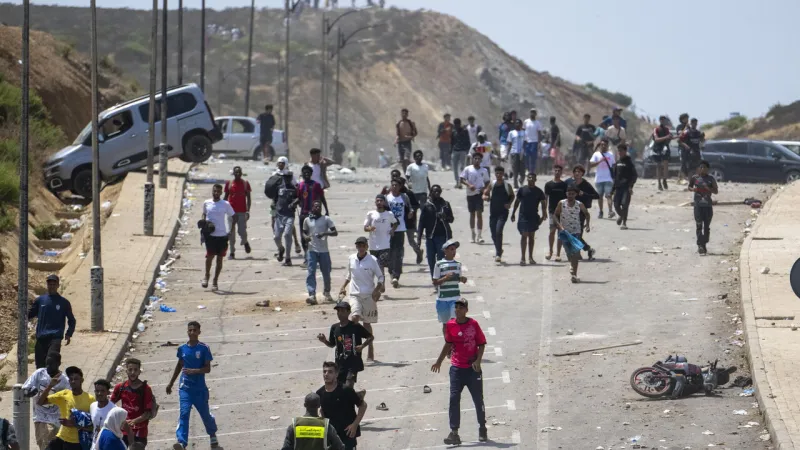
An urgent European Union summit has received approval following a request from Italian Prime Minister Giorgia Meloni and 21 other member state leaders, convening amidst a deepening migrant crisis that has seen at least 84 deaths near Ceuta and intensified debate over the future of the Schengen Area. Spanish Prime Minister Pedro Sanchez has openly criticized internal border stops, attributing them to political ignorance or vested interests, pushing for a reevaluation of current policies.
The humanitarian toll of the crisis continues to mount, with recent reports confirming 84 victims lost at sea off the coast of the Spanish enclave of Ceuta, a key entry point for migrants seeking to reach Europe. The grim statistics underscore the perilous journeys undertaken by those fleeing their home countries in search of safety and opportunity.
Compounding the maritime tragedy, a reception center in Ceuta was recently attacked, resulting in injuries to at least one migrant. This incident highlights the volatile conditions and the immense pressure on infrastructure and personnel dealing with the influx of arrivals at the borders. For more details on the escalating situation, see Ceuta Border Erupts.
The call for an urgent meeting, spearheaded by Prime Minister Meloni and supported by a broad coalition of member states, signals a collective demand for immediate, concerted action at the highest European level. The leaders emphasized the unsustainable nature of the current situation and the urgent need for a unified response to a crisis impacting the entire continent. Related discussions have occurred, as detailed in EU Nations Urge Urgent Interior Ministers Session.
Spanish Prime Minister Sanchez voiced strong disapproval of current practices regarding the Schengen Area, stating that decisions to halt free movement are driven by "ignorance or political interests." His remarks add significant weight to the growing chorus of voices questioning the efficacy and fairness of how internal borders are managed under extraordinary circumstances.
The Schengen Agreement, designed to allow passport-free travel across much of Europe, faces perennial challenges during periods of heightened migration and security concerns. While member states retain the right to temporarily reintroduce border checks, the frequency and duration of these measures have become a point of contention among leaders.
The European Union's swift approval of the urgent summit indicates a recognition of the severity of the crisis and the political will to address it head-on. The meeting is expected to facilitate a frank discussion on strategies for border management, asylum processing, and the distribution of responsibilities among member states. Earlier this year, Spain Demanded an Urgent EU Summit on the deepening Ceuta crisis.
Key agenda items for the forthcoming summit will likely include enhanced external border control measures, reforms to the Common European Asylum System, and mechanisms for more equitable burden-sharing among EU nations. The discussions aim to move beyond ad hoc solutions towards a more robust and sustainable European migration policy.
Spain and Italy, geographically positioned as frontline states on the Mediterranean migration routes, disproportionately bear the brunt of migrant arrivals. Both nations have consistently advocated for stronger EU solidarity and a more coherent, continent-wide strategy to manage migration flows.
The escalating humanitarian situation, characterized by loss of life and strain on local resources, serves as the undeniable impetus for these high-level political consultations. Leaders are under immense pressure from their constituents and international human rights organizations to forge a humane and effective response.
The upcoming summit represents a critical juncture for the European Union. Its outcome will not only determine the immediate future of migration policy but also test the fundamental principles of solidarity and shared responsibility that underpin the European project. The ability of member states to unite behind a common strategy will be paramount in addressing this complex and multifaceted challenge.