 Robert Andrison
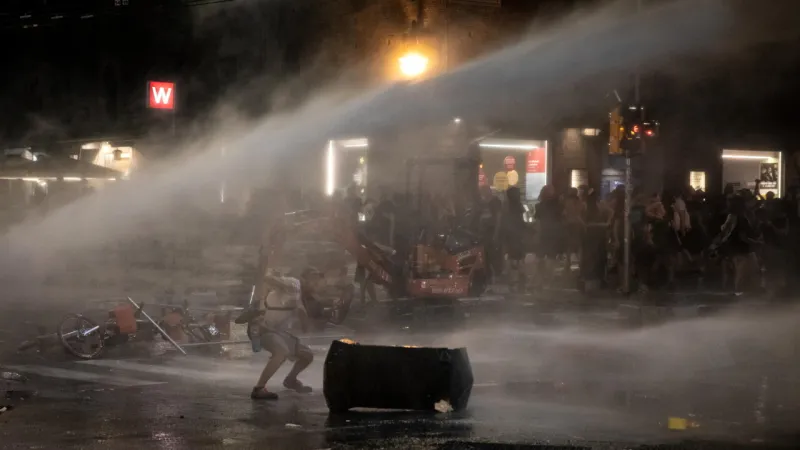
Bologna, Italy – Italian Premier Giorgia Meloni strongly condemned recent unacceptable events in the city, including the death of an individual identified as Fakir and subsequent public clashes, warning against fostering animosity toward state institutions. Her pointed remarks arrived as Mayor Matteo Lepore emphasized the public's inherent right to seek truth in such incidents, asserting that this quest does not inherently undermine law enforcement authority.
Premier Meloni issued her statement following reports of the Fakir death and the resulting civil unrest, which saw protestors clashing with police forces. “It is irresponsible to fuel a climate of hatred toward a Body of the State,” Meloni declared, underscoring the gravity of the situation and the potential for division. Her commentary reflects a national government stance prioritizing stability and respect for public order agencies.
Conversely, Mayor Lepore offered a nuanced perspective on the burgeoning public discourse. “To seek the truth does not delegitimize uniforms,” he stated, highlighting the critical distinction between demanding accountability and broadly discrediting police or other state entities. His position seeks to acknowledge public concern while also defending the integrity of institutional roles.
The focal point of the controversy remains the death of Fakir, which occurred under circumstances that have prompted significant public outcry and an official investigation. While details surrounding the incident are still emerging, the event has galvanized local activists and citizens, leading to demonstrations that escalated into confrontations with police, as previously reported in Bologna Erupts: Meloni Demands Truth After Custody Death, Night Clashes.
These recent clashes in Bologna signify a deeper tension between segments of the populace and state authorities, often ignited by incidents involving law enforcement. Eyewitness accounts and preliminary reports suggest that the protests, initially peaceful, devolved into confrontations, prompting a swift, though often criticized, response from security forces.
Adding a layer of complexity to the unfolding situation, earlier reports suggested that Fakir's death may have been preventable. According to an article from the Emergency Chief, Fakir's death could have been avoided with timely medical intervention, a detail that further intensifies calls for transparency and accountability. Readers can find more information regarding these critical insights at Emergency Chief: Fakir's Death Preventable with Immediate Medical Aid.
The political ramifications of the Fakir death inquiry extend beyond Bologna, touching upon broader national debates concerning public trust in state institutions, the role of policing, and the right to protest. Leaders across the political spectrum are carefully navigating these sensitive issues, aware of the potential for missteps to exacerbate public discontent.
Premier Meloni's remarks, while firm, aim to reinforce the sanctity of state bodies and prevent what her administration views as an unwarranted vilification. Her message is directed at ensuring that calls for justice do not devolve into generalized attacks on the foundational elements of the state.
Mayor Lepore's balancing act, meanwhile, recognizes the legitimate demands for inquiry and transparency. His approach suggests a belief that a thorough investigation and honest reckoning can ultimately strengthen, rather than weaken, public confidence in official processes and state institutions.
Public commentators and legal experts have weighed in, stressing the paramount importance of a transparent and impartial investigation into Fakir's death. Such an inquiry is deemed essential not only to ascertain the precise sequence of events but also to restore confidence and prevent further escalation of unrest.
The situation in Bologna highlights a recurring challenge for democratic governments: how to uphold law and order while simultaneously guaranteeing citizens' rights to protest and demand justice. The outcome of the current investigations will likely set precedents for handling similar incidents in the future.
As the Fakir death inquiry continues, both national and local leaders face the arduous task of de-escalating tensions and fostering an environment where facts can emerge without prejudice. The collective hope remains for a resolution that brings clarity and reinforces the principles of justice for all.