Gabriella
MOSCOW – Russia has unequivocally declared its conditions for any prospective peace negotiations concerning Ukraine, insisting that discussions must exclusively align with the strategic objectives articulated by President Vladimir Putin in 2024. This firm stance was communicated by Foreign Minister Sergey Lavrov, who also characterized the European Union's recent diplomatic overtures as a belated attempt to board a rapidly departing 'last train,' implying a diminishing window for significant influence.
These 2024 objectives, central to Moscow's current negotiating posture, reportedly encompass a range of demands including Ukraine's complete demilitarization, the eradication of perceived extremist ideologies, and a neutral non-aligned status. Critically, these conditions also tacitly acknowledge Russia's annexation of Ukrainian territories, a claim vehemently rejected by Kyiv and its Western allies.
Lavrov's striking metaphor of the 'last train' suggests a Russian perception that the conflict has reached a critical juncture where Western influence and options are dwindling. It implies Moscow believes the geopolitical landscape is shifting irrevocably in its favor, and European nations are scrambling to secure a seat, even a 'tail car,' on a trajectory already determined by the Kremlin.
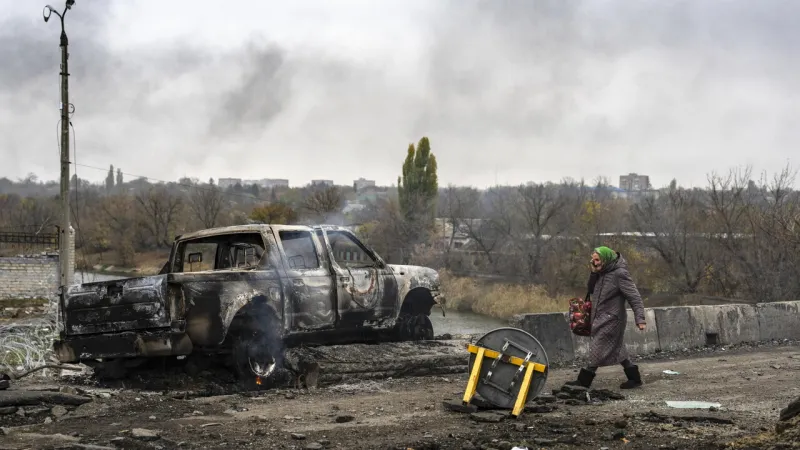
The ongoing conflict, now in its fifth year, continues to exact a heavy toll on Ukraine, despite sustained international support. The front lines remain largely static in some areas, while intense localized skirmishes and long-range bombardments persist. Recent reports indicate a continued reliance on advanced military technology, with hundreds of drones unleashed as Russia-Ukraine war escalates, highlighting the evolving nature of modern warfare.
Ukraine, for its part, has consistently rebuffed any peace proposals that would entail territorial concessions or compromise its sovereignty. President Volodymyr Zelenskyy has repeatedly asserted that true peace can only be achieved with a full withdrawal of Russian forces from all occupied Ukrainian lands, including Crimea, and adherence to international law.
The European Union has remained a steadfast supporter of Ukraine, providing extensive financial aid, military equipment, and implementing stringent sanctions against Russia. However, Lavrov's remarks hint at potential fissures or anxieties within the European bloc regarding the conflict's duration and mounting economic pressures.
This diplomatic impasse underscores the profound ideological and geopolitical chasm separating the belligerents. While both sides ostensibly express a desire for peace, their definitions of it remain fundamentally irreconcilable, with Russia seeking to legitimize its territorial gains and Ukraine striving for a full restoration of its internationally recognized borders.
Analysts suggest Russia's strategy is to prolong the conflict, aiming to exhaust Ukraine's resources and the resolve of its international backers. By consistently tying future talks to its maximalist demands, Moscow seeks to normalize its territorial claims and force a capitulation rather than a negotiated settlement.
The United States, under President Donald Trump, has closely monitored the unfolding situation, emphasizing the need for a just and lasting peace. While the administration has affirmed its commitment to global stability, the complexity of the Ukraine negotiations, compounded by Russia's uncompromising stance, presents a significant foreign policy challenge.
The broader international community faces continued instability as a result of the protracted conflict. Disruptions to global supply chains, particularly in energy and food, persist, impacting economies worldwide. Nations like South Korea have also witnessed increased digital threats, with North Korean cybercriminals targeting 30 South Korean servers, an echo of the broader cyber warfare associated with major global conflicts.
Despite the bleak outlook for immediate comprehensive peace, various diplomatic channels remain open, albeit yielding minimal progress. Figures like Prince Harry, who visited Ukraine to champion war trauma recovery efforts, symbolize a humanitarian commitment, but such efforts operate distinctly from high-level political negotiations.
Moscow's latest declaration serves as a stark reminder that any resolution to the Ukraine conflict, at least from the Russian perspective, will necessitate a significant capitulation to its predetermined objectives. This position casts a long shadow over the prospects for a swift and equitable end to the hostilities in the foreseeable future.