 Dorry Archiles
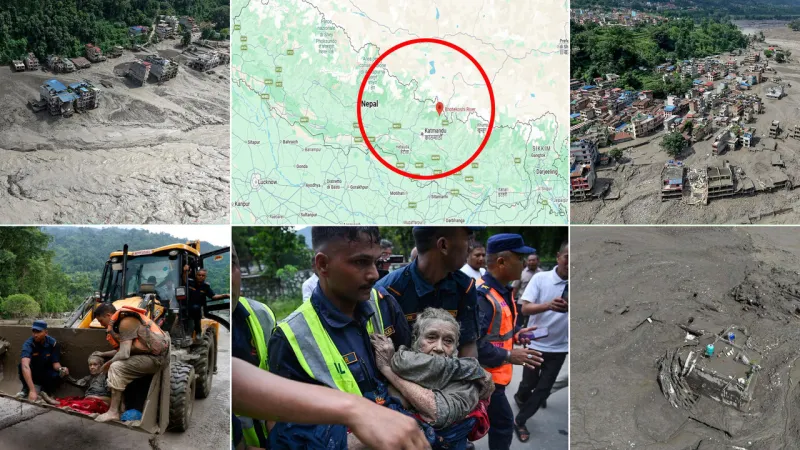
KATHMANDU, Nepal – Catastrophic floods and landslides have ravaged mountainous regions of Nepal and Tibet, claiming at least 157 lives and leaving 466 foreign nationals unaccounted for. The devastating natural disaster, triggered by intense rainfall and surging waters, has prompted an urgent international response, with Italy's Foreign Minister Antonio Tajani confirming two Italian citizens caught in a landslide are in good condition.
The immense scale of the disaster unfolded rapidly, with witnesses describing terrifying conditions. One survivor recounted the experience, stating, "Onde alte sei metri, e stato spaventoso" – meaning, "Waves six meters high; it was terrifying." This firsthand account underscores the sudden and violent nature of the deluge that swept through communities.
The search and rescue operations are intensifying, focusing on the remote valleys and difficult terrains where many of the missing are believed to have been present. The high number of foreigners among the missing highlights the popularity of the Himalayan region for trekking and tourism.
Italy's Ministry of Foreign Affairs, known as the Farnesina, is actively engaged in efforts to locate its citizens and provide assistance. Minister Tajani's statement offered a crucial update regarding the condition of two Italians directly involved in a landslide, providing a sliver of positive news amid the widespread tragedy.
While two Italian nationals are confirmed safe, the Farnesina is concurrently working to ascertain the status of approximately 90 Italians known to be in the affected areas. This underscores the complex logistical challenges involved in tracking individuals in a rapidly evolving crisis zone.
The floods, primarily affecting areas along the border between Nepal and Tibet, have caused extensive damage to infrastructure, including roads and bridges, severely hampering relief efforts. Communication networks have also been disrupted in many remote locations, making it difficult to assess the full extent of the devastation.
Experts suggest that a combination of factors, potentially including a glacial lake outburst flood (GLOF) exacerbated by heavy monsoon rains, may be responsible for the severity of the event. Such phenomena, where natural dams holding back glacial meltwater suddenly breach, can unleash torrents of water and debris with devastating force. For more context on such events, refer to reports like Nepal Devastated: Glacial Lake Outburst Suspected in Catastrophic Flood.
Rescue teams, comprising military personnel, police, and local volunteers, are navigating treacherous conditions, including unstable ground and continuing high water levels. The priority remains locating survivors and recovering those lost, though hopes diminish with each passing hour.
International aid organizations and governments have begun pledging support, offering humanitarian assistance and specialized search equipment. The rugged topography of the Himalayas, while breathtaking, also presents significant obstacles to large-scale disaster response.
The human toll is immense, with families torn apart and livelihoods destroyed. Many survivors have been displaced, seeking refuge in temporary shelters as their homes and villages lie submerged or buried under debris. The long-term recovery efforts in these impoverished regions will undoubtedly require sustained international backing.
As the search continues, the focus remains on the hundreds of individuals still missing, particularly the significant contingent of foreign nationals whose whereabouts are unknown. The international community watches closely, hoping for more positive updates amidst the grim reality of this natural catastrophe that has once again highlighted the vulnerability of Himalayan communities.