 Demian Sahputra
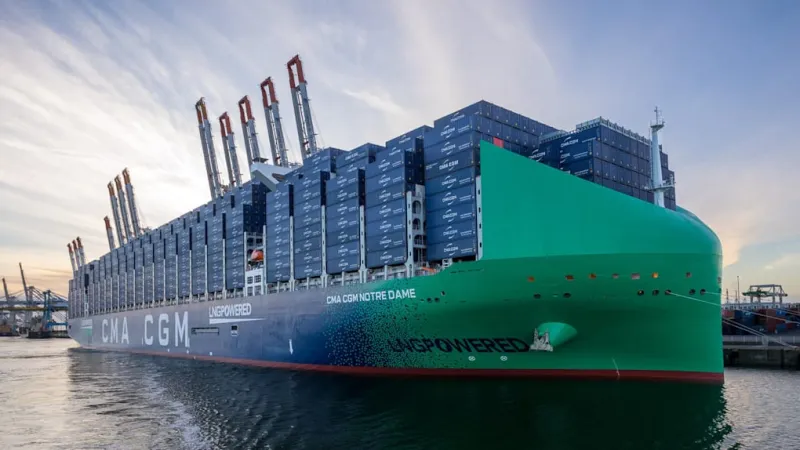
Hamburg is poised to embrace a significant stride towards sustainable maritime logistics with the regular arrival of the Notre Dame, a groundbreaking LNG-powered container vessel. This colossal ship, slated to forge direct and consistent links between the vibrant German port city and major Asian hubs, represents a pivotal commitment to climate-friendlier global trade routes.
The Notre Dame introduces a new magnitude of vessel to the bustling port, significantly enhancing Hamburg's capacity and showcasing an advanced approach to environmental stewardship in shipping. Its regular service underscores the port's ambition to remain at the forefront of international trade while championing ecological responsibility.
The vessel operates primarily on liquefied natural gas (LNG), a transitional fuel that substantially reduces emissions compared to conventional heavy fuel oil. Its adoption is a key component of the shipping industry's strategy to meet increasingly stringent environmental regulations and lower its carbon footprint.
Beyond LNG, the Notre Dame is also engineered to utilize biomethane, offering an even more sustainable pathway for its operations. Biomethane, derived from organic sources, can achieve near-zero lifecycle greenhouse gas emissions, positioning the vessel as a pioneer in the pursuit of truly green shipping.
This commitment to alternative fuels aligns with broader European directives aimed at decarbonizing the maritime sector. Ports like Hamburg are investing in the necessary infrastructure, including LNG bunkering facilities, to support the growing fleet of eco-friendly ships.
The integration of a ship of the Notre Dame's stature and environmental specifications into Hamburg's regular shipping schedule will have considerable economic ramifications. It promises to solidify Hamburg's position as a critical gateway for European-Asian trade, fostering robust commercial ties and potentially attracting further investment in green logistics technologies.
Shipping accounts for a substantial portion of global greenhouse gas emissions, making innovations like the Notre Dame critical for mitigating climate change. The vessel's operational model serves as a tangible example of how technological advancements can drive industry-wide shifts towards sustainability.
The choice of LNG and biomethane for such a large-scale vessel demonstrates a practical, albeit incremental, step in the long journey towards zero-emission shipping. While fully electric or hydrogen-powered solutions for large cargo ships are still nascent, LNG offers an immediate and impactful reduction in pollutants.
The vessel's routes will connect Hamburg directly with major port cities across Asia, streamlining supply chains and potentially reducing transit times. This efficiency, combined with its environmental credentials, presents a compelling proposition for international freight forwarders and consumers alike.
Industry analysts frequently debate the long-term viability of LNG as a bridge fuel, with some advocating for an accelerated transition to carbon-neutral alternatives. However, the Notre Dame exemplifies a significant leap forward with currently available and scalable technology.
The arrival of the Notre Dame is more than just a logistical update; it represents a powerful statement from the maritime industry regarding its readiness to adapt and innovate in response to global environmental pressures. It signals a future where economic growth and ecological preservation are increasingly intertwined on the high seas.
Moreover, the vessel's capabilities provide a benchmark for other shipping companies and shipbuilding enterprises worldwide. Its success in integrating advanced fuel technologies into large-scale commercial operations will likely influence future design and investment decisions across the sector.