 Edward DP Situmorang
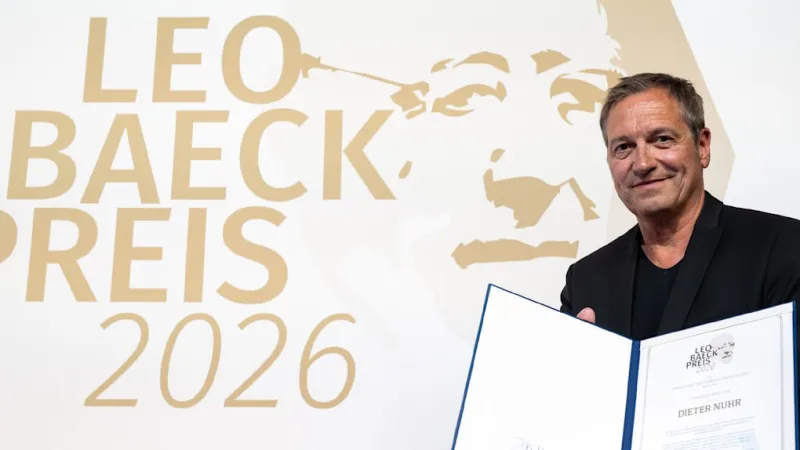
Berlin, Germany – Renowned German satirist Dieter Nuhr was awarded the prestigious Leo Baeck Prize by the Central Council of Jews in Germany, an honor recognizing his steadfast commitment against antisemitism. During the ceremony, Nuhr leveraged the significant platform to deliver sharp criticisms, targeting both climate activist Greta Thunberg and the broader German media landscape.
The Leo Baeck Prize represents the highest distinction bestowed by the Central Council, acknowledging individuals who have made exceptional contributions to Jewish life and understanding in Germany. Nuhr, known for his incisive social commentary and often provocative humor, was chosen for his vocal stance against prejudice and his active role in fostering a more tolerant society.
Sources close to the Central Council emphasized Nuhr's consistent efforts to challenge extremist narratives and promote dialogue in a society increasingly fragmented by ideological divides. His work, frequently aired on national television, has reached millions, making him a prominent voice in the German public sphere.
However, the satirist did not shy away from controversy during his acceptance speech. He specifically took aim at Greta Thunberg, whose climate activism has garnered global attention and sparked fervent debate. Nuhr suggested that aspects of modern environmental discourse have become dogmatic, stifling open discussion and intellectual curiosity.
Nuhr extended his critique to the German media, accusing it of contributing to a polarized public discourse rather than facilitating nuanced debate. He posited that certain media outlets often echo established viewpoints, neglecting critical inquiry and a diversity of perspectives. This critique resonates with broader concerns about media objectivity and its role in shaping public opinion.
The Central Council of Jews in Germany, in its statement announcing the award, highlighted the importance of critical engagement in a democratic society, even when opinions diverge. They emphasized that the Leo Baeck Prize recognizes Nuhr's core commitment to combating hatred, regardless of his broader political or social commentary.
Nuhr's comments about the state of public debate in Germany touch upon a sensitive nerve, particularly given ongoing discussions about political correctness and freedom of expression. Public figures and commentators frequently debate the parameters of acceptable discourse, with concerns often raised about cancel culture and self-censorship.
The satirist has long been a polarizing figure, admired by many for his intellectual independence and willingness to challenge prevailing orthodoxies, while criticized by others for what they perceive as cynical or dismissive humor. His receipt of such a distinguished award underscores the complex nature of public intellectualism in modern Germany.
The critique of German media, in particular, is not new. Various public figures have voiced similar concerns regarding the homogeneity of opinion within certain sectors of the press. This sentiment has been amplified in recent years as digital platforms challenge traditional journalistic gatekeepers.
The award ceremony serves as a potent reminder of the ongoing struggle against antisemitism in Germany, a nation acutely aware of its historical responsibilities. The Central Council remains a vital institution in this fight, honoring those who dedicate themselves to fostering tolerance and understanding.
As Germany grapples with complex political and social challenges, from economic reforms to immigration policy, the role of figures like Nuhr in shaping public discourse becomes increasingly significant. Recent debates, such as those surrounding the German Coalition's economic reform agenda, illustrate the fragmented nature of public opinion.
The Leo Baeck Prize, named after the last president of the Imperial Representation of German Jews, Rabbi Leo Baeck, symbolizes resilience and intellectual courage in the face of adversity. Its conferral upon Nuhr underscores a recognition of his distinct contribution to these enduring values within contemporary German society.
Nuhr's dual role as an honoree for combating antisemitism and a vocal critic of public figures and media structures highlights the multifaceted nature of his public engagement. His remarks are expected to further fuel ongoing conversations about the health and direction of Germany's public debate culture.