 Dodi Irawan
WASHINGTON — Democrats in Congress have fiercely condemned statements by Federal Communications Commission (FCC) Chair Brendan Carr, who recently signaled a readiness to consider content in broadcast license renewal decisions, with critics labeling his stance as "totalitarian" and a direct assault on the First Amendment. The escalating rhetoric emerged from Capitol Hill this week as lawmakers warned Carrs approach threatens the independence of American media.
Chair Carrs remarks, made during a policy forum on media accountability, suggested that certain broadcasters consistently disseminating what he termed "misleading narratives" could face heightened scrutiny during their upcoming license renewals. While he did not specify particular outlets or content, his comments have been widely interpreted as a warning to news organizations perceived as critical of the current administration.
Leading the charge, Senator Elizabeth Warren (D-Mass.), a senior member of the Senate Commerce Committee, issued a scathing rebuke. "Chair Carrs veiled threats are a chilling tactic designed to silence dissent and coerce journalists into self-censorship," Warren stated in a press release Tuesday. "This administration cannot weaponize regulatory bodies to stifle free speech."
The Democratic caucus argues that conditioning broadcast license renewals on content evaluation beyond legally defined obscenity or incitement crosses a dangerous line. They contend that the FCC, as an independent regulatory agency, is constitutionally prohibited from acting as an arbiter of truth in news reporting, a role traditionally reserved for the public and journalistic standards.
Representative Adam Schiff (D-Calif.), ranking member of the House Intelligence Committee, echoed the sentiment, calling Carrs position "a totalitarian impulse masquerading as responsible oversight." Schiff elaborated, asserting that "in any true democracy, a governments power should never extend to dictating the editorial content of its news outlets. This is a hallmark of authoritarian regimes."
The FCC is responsible for regulating interstate and international communications by radio, television, wire, satellite, and cable. Its primary role in broadcast licensing involves ensuring stations operate in the public interest, convenience, and necessity. Historically, content evaluation for license renewal has largely focused on technical compliance, equal-time rules, and adherence to decency standards, not the political slant or accuracy of news reporting.
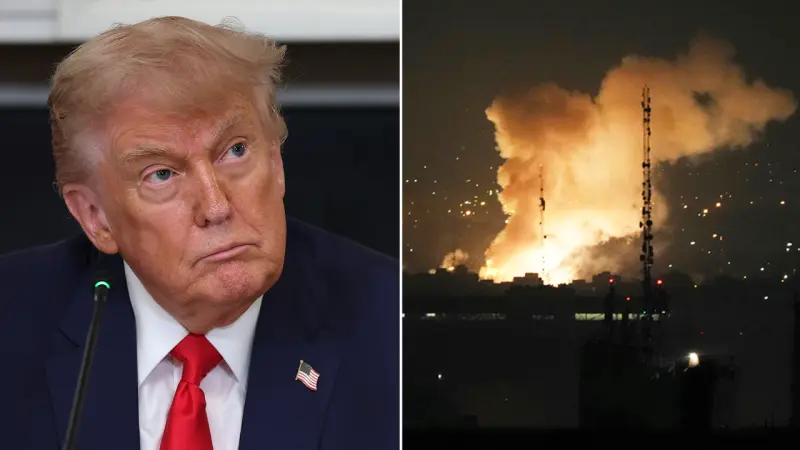
This intense debate unfolds against a backdrop of persistent tension between President Donald Trumps administration and various media organizations. President Trump has frequently used his platform to criticize what he terms "fake news" and has often called for stricter accountability for news outlets, aligning with some of Carrs stated concerns about media reliability.
Legal experts are closely watching the situation, with many suggesting that any FCC move to deny a license renewal based purely on perceived journalistic bias or narrative would likely face immediate and robust legal challenges on First Amendment grounds. Such actions could set a precarious precedent for media regulation.
While Chair Carr has not directly addressed the "totalitarian" label, his supporters and some conservative media observers argue that he is merely asserting the FCCs authority to ensure broadcasters meet their public interest obligations, especially in an era of widespread misinformation. They contend that unchecked bias can harm public discourse.
Furthermore, the implications of FCC Chair Carrs broadcast license threats extend far beyond the immediate political skirmish. Media independence, a cornerstone of democratic governance, could be severely compromised if regulatory bodies are perceived as holding content as leverage for license approval. Journalists fear a chilling effect on investigative reporting and critical analysis across the nation.
The controversy also carries significant political weight for the FCC itself. The agencys bipartisan structure relies on a degree of consensus, and open conflict with one of the major political parties could impede its ability to function effectively on other critical regulatory matters, from spectrum allocation to broadband infrastructure.
As the 2026 midterm elections approach, the role of media and the battle over its perceived fairness are likely to remain central themes. Democrats have vowed to rigorously oppose any FCC actions they deem to be infringements on press freedom, signaling a prolonged confrontation over the future of broadcast regulation.