 Robert Andrison
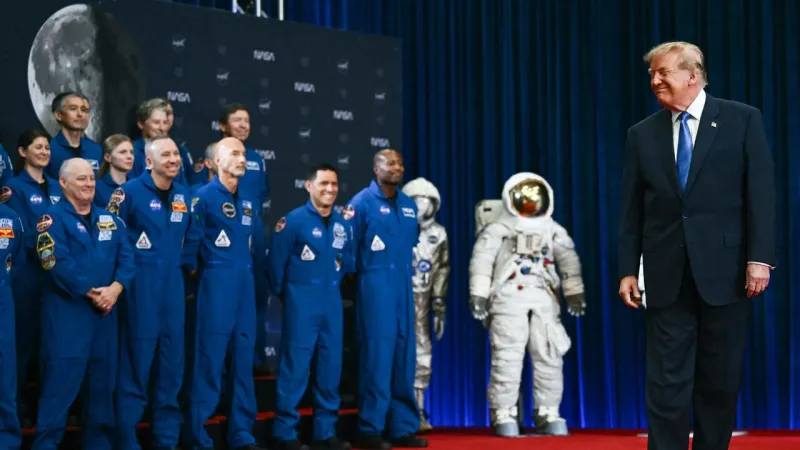
Washington, D.C. – President Donald Trump today formally inaugurated the new US Space Academy, an ambitious institution envisioned as the premier training ground for cultivating the nation's future space leaders and innovators. The significant ceremony, held in the capital, underscored the administration's resolve to reassert American preeminence in the cosmos, drawing parallels to the profound historical impact of institutions like West Point. This pivotal launch marks a strategic investment in the long-term trajectory of the United States in space exploration and defense.
During his address, President Trump offered a personal reflection on the origins of his passion for the stars, stating, "My interest in space comes thanks to my scientist uncle." This anecdote provided a rare glimpse into the President's personal connection to scientific endeavors, suggesting a deeply rooted appreciation for cosmic discovery that predates his political career.
The US Space Academy aims to provide a rigorous, interdisciplinary curriculum designed to equip cadets with expertise across aerospace engineering, astrodynamics, cybersecurity, and planetary science. Its mandate extends beyond theoretical knowledge, emphasizing practical application and leadership development crucial for complex space missions and operations.
Notably, the event also saw the presence of distinguished guests, including Italian astronaut Paolo Parmitano and the entire crew of the Artemis II mission. Their attendance highlighted the international collaborative spirit that often accompanies grand space ambitions, even as the academy champions American self-reliance and innovation. The Artemis II crew, poised for a historic lunar flyby, symbolized the very future the academy seeks to inspire.
The establishment of the US Space Academy represents a strategic pivot in national policy, signaling a renewed commitment to securing the advantages of space. From satellite defense to deep-space exploration, the academy is poised to produce the expertise needed to navigate and dominate the evolving extraterrestrial landscape.
This initiative also reflects a broader recognition of space as an increasingly critical domain for national security and economic prosperity. The demand for skilled professionals in space-related fields continues to accelerate, driven by both governmental programs and a burgeoning private sector. The academy intends to meet this demand head-on, ensuring a steady pipeline of talent.
Historically, the United States has led numerous groundbreaking space endeavors, from the Apollo missions to the International Space Station. The US Space Academy builds upon this legacy, aiming to solidify America's position at the forefront of the next era of space exploration, including sustained lunar presence and eventual human missions to Mars.
Beyond its educational objectives, the academy is projected to foster significant economic growth through research partnerships, technological spin-offs, and job creation in high-tech sectors. It will serve as a hub for cutting-edge research, attracting top scientific minds and fostering an ecosystem of innovation.
While primarily focused on American interests, the academy’s advanced research and training programs could inadvertently benefit the global scientific community. Future collaborations with international partners in areas like space debris mitigation and asteroid defense remain a potential avenue for shared progress, even as US leadership is prioritized.
The long-term objectives of the US Space Academy are clear: to ensure the United States remains the undisputed leader in space, capable of defending its assets, pioneering new discoveries, and inspiring generations to reach for the stars. This initiative represents a profound commitment to the future, echoing the foundational principles that have driven American innovation for centuries.