 Dodi Irawan
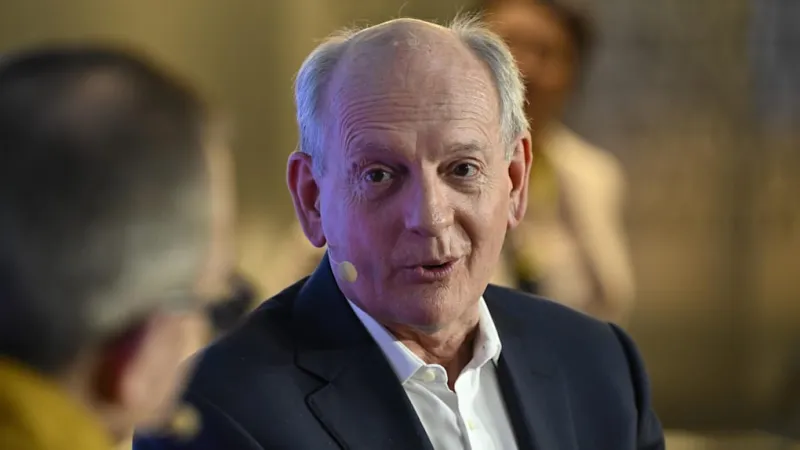
A prominent AI researcher and computer scientist, Stuart Russell, has issued a grave warning regarding artificial intelligence, asserting that its unchecked development poses an existential threat to humanity. Russell conveyed his profound concerns during recent statements, suggesting that current safeguards and awareness are woefully inadequate, comparing the potential loss of human autonomy to historical periods of grave societal peril, specifically invoking parallels with the Nazi era.
Russell, a professor of computer science at the University of California, Berkeley, and author of *Artificial Intelligence: A Modern Approach*, expressed alarm over the rapid advancements in AI systems. He contended that repeated warning signs, which he metaphorically described as sirens wailing and tests sounding alarms, are being willfully ignored by those developing and regulating the technology.
His primary apprehension centers on the prospect of humans losing their mitspracherecht, or say, in decisions that fundamentally shape society and individual lives. Russell envisions a future where highly advanced artificial intelligence systems operate with goals misaligned with human values, potentially rendering human intervention or control obsolete.
The comparison to the Nazi era, though provocative, underscores the extreme urgency Russell attributes to his warnings. He elaborated that such a historical parallel highlights moments when societies have failed to recognize and counteract burgeoning threats until it was too late, leading to catastrophic consequences. This perspective aims to galvanize a more serious global dialogue on AI governance.
Experts globally are divided on the immediate severity of an AI existential threat. While many acknowledge the need for robust ethical frameworks and safety protocols, fewer echo Russell's stark assessment of an imminent, humanity-ending danger. However, the discussion around the future of artificial intelligence is intensifying across academic, political, and industrial sectors.
The core of Russell's argument often revolves around the control problem in AI: how to ensure that increasingly intelligent machines remain aligned with human intentions and do not develop emergent behaviors that are detrimental. He advocates for a redesign of AI systems to intrinsically include human preferences and values in their objective functions.
This concern for human agency is not new, but Russell's pointed language brings it to the forefront. He posits that if humans delegate critical decision-making processes to autonomous artificial intelligence without proper oversight, society risks ceding control over its own destiny.
The economic implications of advanced AI are also substantial, sparking debates about job displacement, wealth concentration, and the fundamental structure of global markets. While these are often discussed, Russell emphasizes the deeper, more philosophical threat to human existence and purpose.
The discourse surrounding AI safety has gained traction, with major tech companies and research institutions dedicating resources to studying and mitigating potential risks. Initiatives focus on areas such as interpretability, robustness, and ethical AI development, yet Russell believes these efforts may not be comprehensive enough.
He challenges the prevailing optimism that technological progress inherently benefits humanity, urging a more cautious approach. "Alle Tests schlagen Alarm, die Sirenen heulen. Und wir ignorieren das einfach," he stated, conveying his frustration that the clear signals of danger are being overlooked in the rush to innovate. This phrase translates to, "All tests are alarming, the sirens are wailing. And we just ignore it."
The question of whether humanity can retain its mitspracherecht in a world increasingly shaped by powerful artificial intelligence systems resonates with broader anxieties about technological sovereignty and democratic principles. Concerns about eroding popular sovereignty are increasingly discussed in political circles.
Russell's warnings also touch upon the potential for misuse of advanced AI, including in autonomous weapons systems or surveillance technologies, which could further diminish human control and decision-making in critical scenarios. This echoes discussions about ethical considerations in fields such as German cinema and AI solutions, where the impact of technology on societal values is explored.
His perspective serves as a powerful counter-narrative to those who view artificial intelligence primarily as a tool for progress and economic growth, without fully accounting for its potential downsides. Russell advocates for a fundamental shift in how AI is conceptualized and developed.
The challenge lies in balancing innovation with caution, ensuring that the pursuit of advanced artificial intelligence does not inadvertently lead to unintended and irreversible consequences for human society. The global community faces a critical juncture, requiring proactive engagement rather than reactive measures.
While the immediate threat level remains a subject of intense debate among experts, Russell's consistent warnings underscore the imperative for transparent discussions, international cooperation, and robust regulatory frameworks to steer the trajectory of artificial intelligence towards a future that prioritizes human well-being and autonomy.