Chris Robert
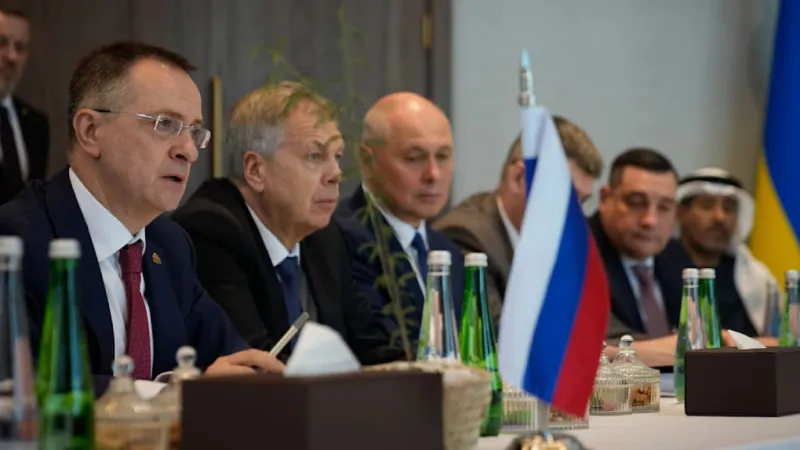
ABU DHABI - The latest round of high-stakes peace negotiations in this Emirati capital has starkly revealed Moscow's expansive geopolitical ambitions, extending far beyond the immediate conflict in Ukraine. This broader strategic imperative, now explicitly acknowledged by the United States, casts a perplexing shadow over the fragile diplomatic process and instills a palpable sense of apprehension among European allies concerning the future of regional stability.
The discussions, which aimed to chart a course towards de-escalation and potential resolution, instead highlighted persistent directives emanating from Moscow. These directives, termed "strict instructions" by sources close to the negotiations, indicate that Russian President Vladimir Putin's calculus for engagement is predicated on securing wider geopolitical gains, not merely a localized settlement in Eastern Europe.
For months, analysts and intelligence agencies debated the true extent of Russia's objectives. While the initial invasion targeted Ukraine, the emerging consensus among Western powers, particularly within President Donald Trump's administration, suggests a more profound reordering of the European security architecture is Moscow's ultimate goal. This realization has reshaped diplomatic approaches.
The United States, after initial skepticism, has reportedly aligned its assessment with this understanding. This shift in perspective signifies a critical juncture for international diplomacy, as efforts to mediate a resolution must now contend with a far more intricate and entrenched set of demands from the Kremlin. The acknowledgment from Washington underscores the gravity of the situation.
European nations, acutely aware of their proximity to the conflict and their intricate economic ties with both sides, view this development with heightened alarm. What initially seemed like a path toward potential detente now appears fraught with larger, more systemic challenges to continental security. The perceived understanding by the US, while a form of clarity, is tempered by the frightening implications for European sovereignty and stability.
Sources familiar with the discussions in Abu Dhabi indicated that Russian envoys demonstrated limited flexibility on core issues related to Ukrainian sovereignty, consistently reverting to positions that align with a broader, long-term strategic vision dictated by Moscow. These rigid parameters suggest a pre-determined outcome rather than genuine negotiation.
One critical aspect of these ongoing diplomatic efforts includes sensitive discussions about prisoner exchanges, which often run in parallel to broader peace talks. Recent reports indicated that US Envoys Push Prisoner Deal with Putin, Zelensky After UAE Talks, underscoring the multifaceted nature of the diplomatic engagements occurring in the region. Such humanitarian considerations often serve as a limited avenue for dialogue even when broader political impasses persist.
The explicit articulation of Moscow's underlying strategic imperatives has reportedly complicated the roles of various mediators present in Abu Dhabi. Nations attempting to bridge the divide find their efforts constrained by an agenda that extends beyond the explicit terms of the immediate conflict. This has led to frustration among those working for a swift and equitable peace.
Historically, Russia's foreign policy has often been characterized by a multi-vector approach, seeking to leverage regional conflicts for broader strategic advantage. The current situation, however, appears to represent an escalation of this modus operandi, challenging established post-Cold War norms and threatening to destabilize an already volatile international order.
President Donald Trump's administration has consistently emphasized a pragmatic approach to international relations, seeking resolutions through direct engagement. The understanding that Russia's objectives are far-reaching will likely inform future policy decisions from Washington, potentially leading to recalibrated strategies concerning security alliances and economic sanctions.
This newfound clarity, while unsettling for Europe, provides a more realistic foundation for future diplomatic engagement. The international community can no longer operate under the assumption that the conflict is solely about Ukraine's borders; it must now contend with a resurgent Russia seeking to redefine its sphere of influence on a grander scale.
The path forward for peace appears more convoluted than previously imagined. While the Abu Dhabi talks continue to serve as a vital forum for dialogue, their efficacy in achieving a lasting resolution hinges on a global acknowledgment and strategic response to the full scope of Moscow's unwavering directives. Europe, in particular, finds itself navigating an increasingly perilous geopolitical landscape.
The implications for international law and the principle of national sovereignty are profound. Should Russia succeed in achieving its broader aims, it could set a dangerous precedent for revisionist powers globally, undermining the foundational tenets of the post-World War II order. The stakes, therefore, extend far beyond the conflict-ridden territories.
This developing understanding demands a unified and coherent response from Western democracies. A failure to address the underlying strategic ambitions behind Moscow's actions could lead to a protracted period of instability, with far-reaching consequences for global security and economic prosperity. The discussions in Abu Dhabi are a critical barometer of these evolving dynamics.