 Chandra Wijayanto
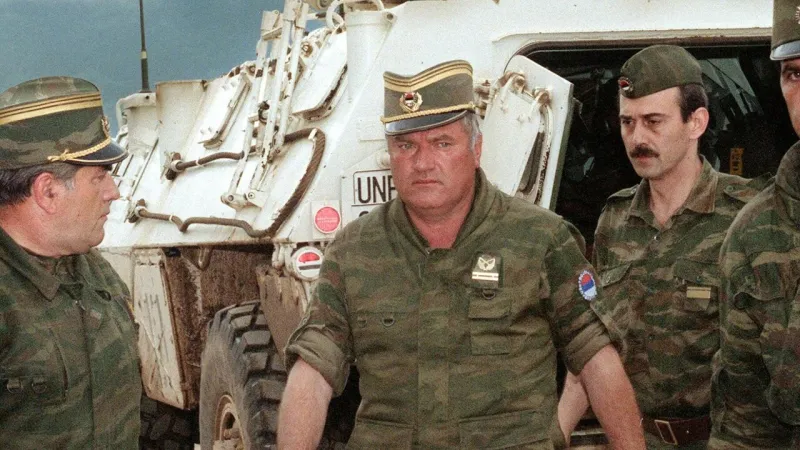
THE HAGUE — Ratko Mladic, the former Bosnian Serb military commander known as the Butcher of Srebrenica, passed away while serving a life sentence for genocide and crimes against humanity. He died at a psychiatric hospital in The Hague, where he had been detained, following a period of extended illness that left him bedridden for approximately 18 months.
His death marks the definitive closure of a legal chapter concerning one of the most infamous figures of the Bosnian War. Mladic’s conviction by the International Criminal Tribunal for the former Yugoslavia (ICTY) in 2017 underscored the gravity of his offenses, which included orchestrating the systematic extermination of Bosnian Muslims.
The former general had been battling severe health issues for several years, a condition that frequently led to delays in his lengthy trial and subsequent appeals process. His final days were spent under close medical supervision within the detention unit of the United Nations International Residual Mechanism for Criminal Tribunals, the successor court to the ICTY.
Mladic was held responsible for a litany of atrocities committed between 1992 and 1995, most notably the Srebrenica genocide. In July 1995, forces under his command systematically murdered more than 8,000 Bosniak men and boys in the eastern Bosnian town and surrounding areas, an act internationally recognized as genocide.
The massacre at Srebrenica stands as the worst atrocity on European soil since World War II, a chilling testament to the ethnic cleansing policies pursued during the conflict. Mladic, as the supreme commander of the Bosnian Serb Army, was found to have direct command responsibility for these horrific events.
Beyond Srebrenica, his conviction also encompassed charges related to the brutal 44-month siege of Sarajevo, which resulted in the deaths of thousands of civilians through shelling and sniper fire, and the ethnic cleansing of non-Serbs throughout Bosnia and Herzegovina.
For nearly 16 years after the Bosnian War concluded, Mladic eluded international justice, living as a fugitive until his arrest in Serbia in May 2011. His capture was hailed as a monumental victory for international law and a moment of profound relief for the victims of his heinous crimes.
His trial at the ICTY captivated global attention, with harrowing testimonies from survivors and meticulous presentation of evidence detailing the systemic nature of the war crimes. The court, established by the United Nations, aimed to prosecute individuals responsible for serious violations of international humanitarian law in the former Yugoslavia.
The initial verdict in 2017 found him guilty on 10 of 11 counts, including genocide, crimes against humanity, and violations of the laws or customs of war. This landmark ruling affirmed his central role in the campaign of terror that devastated Bosnia.
Despite his persistent claims of innocence and assertions that he was merely defending his people, the weight of evidence presented by prosecutors proved insurmountable. His appeals were largely rejected, solidifying his life imprisonment sentence, as detailed in reports like the one titled "War Criminal Ratko Mladic Dies in Hague Prison Serving Genocide Sentence."
For the countless survivors and families of victims, Mladic’s death offers a somber sense of finality. While it cannot erase the suffering endured, it closes the chapter on the physical presence of a man whose actions left an indelible scar on the region and its people. His demise ensures that he will forever be remembered as a symbol of man’s capacity for cruelty and the relentless pursuit of justice.
The international community broadly welcomed his conviction as a crucial step towards accountability for mass atrocities. His trial and the subsequent judgment reinforced the principle that even those at the highest echelons of military power can be held responsible for their actions in times of conflict.
Mladic’s legacy is inextricably linked to the devastating human cost of the Bosnian War. His death serves as a powerful reminder of the importance of international tribunals in holding perpetrators of grave crimes accountable and preventing future atrocities. The scars of war remain, but the pursuit of justice for its victims continues to be a cornerstone of global stability.