 Angel Doris
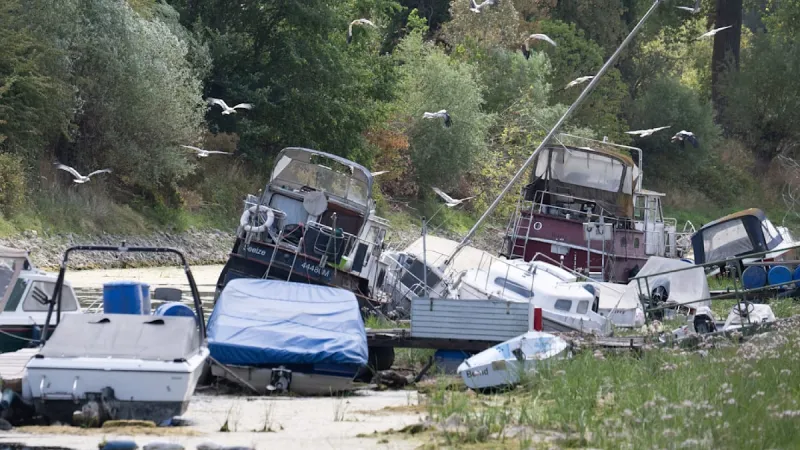
BERLIN – Germany's vital industrial sector faces escalating production cuts as the Rhine River's water levels plunge to historic lows, severely impeding barge navigation and exacerbating national supply chain vulnerabilities. The crisis, driven by prolonged drought conditions, has already compelled major chemical producer Covestro to announce operational restrictions, sparking concerns across an economy heavily reliant on the critical waterway for transporting raw materials and finished goods.
The unprecedented shallowing of the Rhine, a primary conduit for bulk commodities like coal, chemicals, and grain, has significantly reduced the cargo capacity of barges, making transport uneconomical or, in some stretches, impossible. This maritime bottleneck is forcing companies to seek alternative logistics, primarily road and rail, but these options are proving insufficient to absorb the sudden surge in demand.
Matthias Roeser, a representative of the German Inland Navigation Association, articulated the severe limitations confronting alternative transport networks. “The rail cannot absorb it either, because the rail network is chronically overloaded,” Roeser stated, highlighting a systemic infrastructure challenge that predates the current environmental crisis.
Covestro AG, a global polymer materials supplier, confirmed earlier this week that the low water levels on the Rhine were impacting its operations and supply chains. Such interruptions for key industrial players underscore the far-reaching economic ramifications of the environmental phenomenon, affecting production schedules and potentially leading to higher costs for consumers.
Economists are closely monitoring the situation, noting that extended disruptions could dampen Germany's economic output, particularly in the chemical, steel, and power generation sectors. Many power plants along the Rhine rely on barges for coal deliveries, and reduced shipments could lead to energy supply issues during peak demand periods.
While low water levels on the Rhine are not unprecedented, the severity and persistence of the current conditions are alarming. Climate change models predict more frequent and intense drought periods, suggesting that such logistical crises may become a recurring challenge for European industry. The situation echoes similar events from previous years, albeit with magnified impact now.
In response to the escalating crisis, some German states have temporarily suspended truck bans on Sundays and holidays to facilitate road transport of goods normally carried by barges. This emergency measure aims to provide some relief, but experts caution it is a stopgap solution that cannot fully compensate for the massive capacity offered by inland waterways. More information on these measures can be found in our article: German States Suspend Truck Bans Amid Critical Rhine Water Levels.
The assertion by Mr. Roeser regarding the rail network's chronic overload points to deeper infrastructure deficiencies. Despite substantial investments in recent years, the German rail system struggles with capacity, maintenance, and punctuality, rendering it an imperfect alternative for the high-volume, time-sensitive freight typically moved by barges. Recent reports, such as one detailing Federal Minister Bilger's First Major Rail Trip Plagued by Mishaps, further illustrate these challenges.
The Rhine River is not just a German issue; it serves as a critical artery for trade across Western Europe, connecting industrial hubs in Switzerland, France, and the Netherlands to the North Sea. Disruptions on the Rhine therefore reverberate throughout the entire European supply chain, affecting international trade and manufacturing.
Long-term solutions for mitigating the impact of fluctuating water levels include deepening critical stretches of the Rhine, developing more drought-resistant barge designs, and accelerating investment in multimodal transport infrastructure. However, these are costly and time-consuming endeavors, offering little immediate relief for industries currently grappling with the crisis.
As the situation persists, businesses face mounting pressure to adapt their logistics strategies, potentially incurring significant additional costs and delaying deliveries. The unfolding crisis on the Rhine highlights the critical interplay between environmental factors, infrastructure resilience, and economic stability in a globalized world. For further analysis on the broader implications, read our report: Rhine's Historic Lows Force Production Cuts, Threaten German Supply Chains.