 Chris Robert
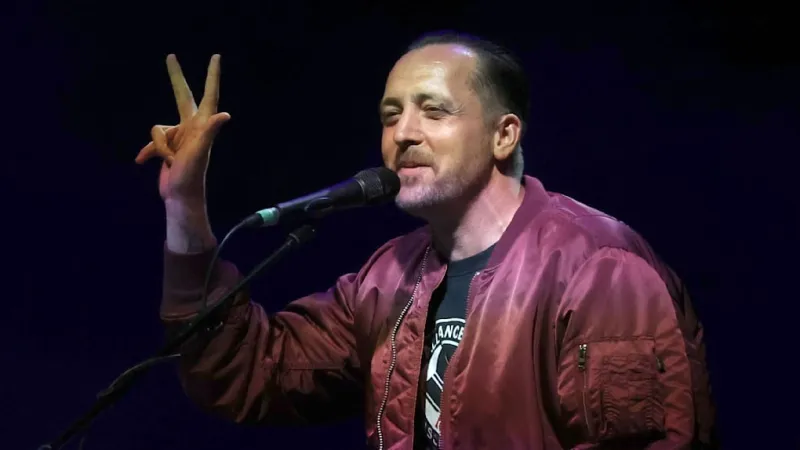
MAINZ, Germany — The acclaimed satirical program “Die Anstalt” on Germany’s public broadcaster ZDF delivered a pointed rebuke against its own network during a recent jubilee episode, publicly criticizing ZDF’s decision to uninvite rapper Danger Dan from appearing on the show. The program’s creators deemed the network’s move “simply cowardly,” dedicating a significant portion of their broadcast to the musician, which included moderators reciting passages from his controversial song lyrics.
The incident, unfolding on one of Germany's most prominent public television channels, has ignited discussions concerning artistic freedom, censorship, and the role of public broadcasting in a democratic society. “Die Anstalt,” known for its sharp political commentary and investigative humor, chose its 100th episode to directly confront the issue, turning an anticipated celebration into a platform for protest.
ZDF had reportedly made the decision to disinvite Danger Dan, whose real name is Daniel Pongratz, following concerns over the perceived radical nature of some of his lyrics. While the specific reasons for the ban remained largely undisclosed by the broadcaster, the rapper's politically charged content has previously drawn both praise and criticism.
The satirical team responded by staging a sketch that centered around the rapper’s absence and the network’s reluctance to host him. This creative defiance culminated in a powerful moment where the show’s hosts, Max Uthoff and Claus von Wagner, read aloud from the very song texts that purportedly led to Danger Dan’s exclusion, directly challenging the censorship attempt.
This act underscored the program’s commitment to its role as a critical voice, even when that criticism is directed inward at its parent institution. The choice to air the lyrics, rather than merely discussing the situation, transformed the broadcast into an active demonstration against what they perceived as an infringement on artistic expression.
Danger Dan, a member of the hip-hop group K.I.Z., has gained significant attention for his solo work, particularly for songs that critique political extremism and social injustice. His lyrical prowess often pushes boundaries, prompting dialogue on sensitive topics within German society.
The “simply cowardly” descriptor, attributed by the program’s creators to ZDF’s decision, quickly resonated across social media and media outlets. It encapsulated the sentiment that a public broadcaster, meant to foster diverse perspectives, should not shy away from challenging or even provocative artistic voices.
Critics argue that such disinvitations from public platforms can have a chilling effect on artists and stifle important cultural discourse. Public broadcasters like ZDF are funded by mandatory fees, obligating them to uphold journalistic independence and serve the public interest, which includes robust and sometimes uncomfortable commentary.
The incident prompts a broader examination of the pressures faced by media organizations in navigating the complexities of public opinion, political sensitivity, and the fundamental tenets of free speech. The balance between protecting audiences and providing a forum for all voices remains a perennial challenge for media outlets globally.
The stand taken by “Die Anstalt” is seen by many as a significant moment for German satire and a reaffirmation of its power to hold institutions, including its own, accountable. The episode served not just as entertainment but as a commentary on the state of media freedom itself.
As the debate continues, the case of Danger Dan and ZDF highlights the ongoing tension between artistic freedom and institutional caution within the realm of public media. The incident undoubtedly fuels further discussion on the boundaries of satire and the responsibilities of those who curate public discourse.