Edward DP Situmorang
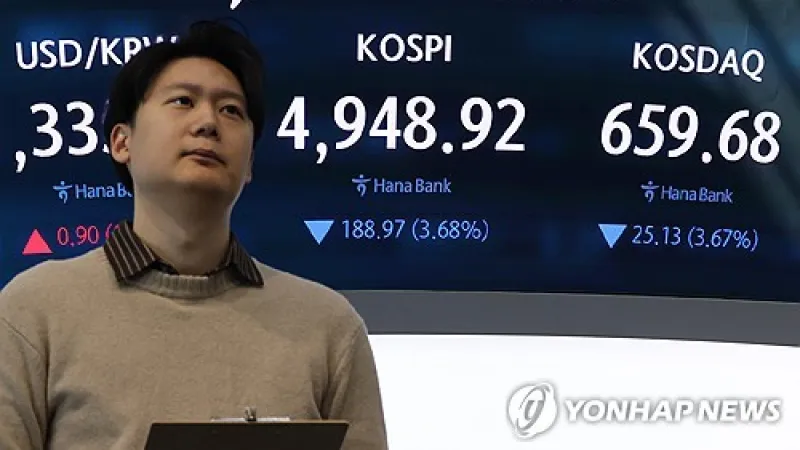
Seoul, South Korea – The Seoul stock market experienced a precipitous decline Friday, November 20, 2026, with key indices plunging more than 5 percent. This significant downturn occurred despite the highly anticipated market debut of leading artificial intelligence firm Anthropic, which unexpectedly failed to assuage investor apprehension surrounding the burgeoning AI sector. The broad-based sell-off underscored deepening anxieties about the industry's valuation and future trajectory.
The benchmark Korea Composite Stock Price Index, or KOSPI, closed down 5.12 percent, shedding 138.75 points to settle at 2,568.31. This marked the steepest single-day percentage drop in nearly three years, reflecting a sharp shift in investor sentiment previously buoyed by tech optimism. Foreign and institutional investors were significant net sellers, exacerbating the market's slide.
Anthropic, a prominent developer of large language models and other generative AI technologies, made its public trading debut amidst considerable fanfare. Analysts and investors had hoped its listing would inject renewed confidence into the AI market, signaling robust growth potential and a clear path to profitability for leading players. However, initial trading proved lackluster, failing to capture the expected enthusiasm.
Instead of a reassuring event, Anthropic's lukewarm reception appears to have amplified underlying fears. Market observers pointed to investor concerns over the company's valuation metrics, which some deemed stretched even for a high-growth sector. The highly competitive landscape, coupled with the substantial capital expenditure required for AI research and development, also contributed to a cautious outlook.
The broader implications for the artificial intelligence industry weighed heavily on traders. Questions persist regarding the long-term profitability of many AI ventures, particularly as regulatory scrutiny intensifies globally. Recent discussions around AI Cheating Prompts President Lee to Seek Sweeping Exam Reform highlight increasing societal and governance challenges linked to AI deployment.
Additionally, the rapid pace of innovation means that today's leading AI solutions could quickly become obsolete, creating a precarious environment for investors seeking stable returns. This technological obsolescence risk, combined with intense competition from established tech giants and emerging startups, creates a volatile investment climate.
This shift in sentiment was not confined solely to newly listed entities. Major South Korean technology conglomerates with significant AI investments also saw their shares suffer. Samsung Electronics and SK Hynix, critical players in the global semiconductor industry and key enablers of AI hardware, were among the hardest hit, reflecting concerns about future demand and profit margins in the AI supply chain.
Analysts from various investment firms issued cautionary notes following the plunge. "The market has clearly signaled a re-evaluation of AI valuations," stated Kim Min-jun, a senior market strategist at Seoul Investment Bank. "What was once an unquestioned growth narrative is now facing rigorous scrutiny. Investors are demanding tangible returns and sustainable business models, not just promises of future potential."
The market jitters in Seoul are not isolated, echoing concerns seen in other global tech hubs, although perhaps not to this extreme degree. Reports on new AI developments, such as the Meta AI Assistant Ignites Unfollow Wars, Reshaping Instagram Dynamics, indicate that even consumer-facing AI faces complex market acceptance challenges.
South Korea, a nation heavily invested in technological advancement and a global leader in innovation, relies significantly on its tech sector for economic growth. The pronounced decline in Seoul shares, particularly affecting AI-linked firms, could have broader economic ramifications if the sentiment persists, potentially impacting venture capital flows and future tech investments in the country.
Regulators have yet to issue specific statements directly addressing the AI sector's performance, but market participants anticipate closer monitoring of volatility. The Bank of Korea and financial supervisory authorities are expected to remain vigilant, ready to implement measures should market instability threaten the broader financial system.
Investors are now grappling with how to recalibrate their portfolios in light of these evolving AI sector dynamics. Many are questioning whether the current downturn represents a necessary correction in an overheated market or the beginning of a more sustained period of skepticism toward highly speculative tech investments. The coming weeks will likely provide further clarity on whether Friday’s plunge marks a temporary setback or a more fundamental re-evaluation of the artificial intelligence boom.