Gabriella
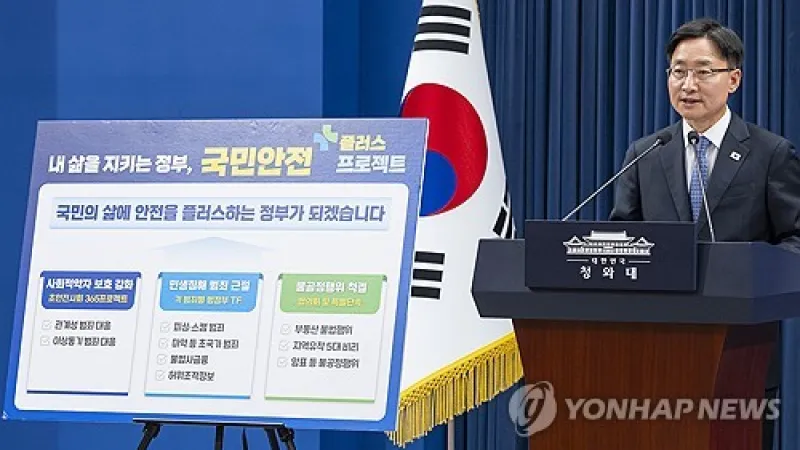
SEOUL, Nov. 15, 2026 (Yonhap) – South Korea’s presidential office declared Sunday its serious consideration of introducing life without parole as a sentencing option, a pivotal move aimed at bolstering public safety and addressing escalating concerns over heinous crimes. The proposed measure would mark a significant departure from current judicial practices, potentially impacting the nation's approach to severe criminal offenses.
This potential judicial reform emerges amidst growing calls for tougher penalties for grave offenses, particularly those involving violent crime and repeat offenders. The presidential office indicated that detailed legislative discussions are expected to commence soon, involving legal experts, government ministries, and public representatives to ensure a comprehensive review of its implications.
Currently, South Korean law allows for life imprisonment, but traditionally, this sentence carries the possibility of parole after a period of good behavior, typically 20 years. The introduction of a life without parole option would eliminate this possibility, ensuring that the most dangerous criminals remain incarcerated permanently.
Officials stated that the initiative directly responds to a perceived rise in particularly cruel and indiscriminate crimes that have shaken public confidence in the existing legal framework. The government aims to reassure citizens by establishing an unequivocal deterrent and ensuring that justice is served for victims and their families.
Recent public surveys consistently show strong support for stricter punishments for violent crimes, reflecting a national sentiment that existing sentences do not always match the severity of offenses. This public outcry has provided political momentum for the presidential administration to explore more stringent judicial avenues.
Implementing such a profound change will necessitate careful navigation of constitutional principles and human rights considerations. Legal scholars anticipate robust debates regarding proportionality of punishment and the potential for irreversible errors within the justice system.
While South Korea retains capital punishment on its books, it has not executed anyone since 1997, maintaining a de facto moratorium. The move toward life without parole could be seen as an alternative form of permanent incapacitation, avoiding the irreversible nature of execution while still guaranteeing offenders do not re-enter society.
Many nations, including the United States, employ life without parole sentences for severe crimes. Understanding international precedents and their effectiveness will likely inform South Koreas legislative process. This focus on strong judicial action for egregious offenses aligns with global efforts to curb severe criminality, as seen in cases like when South Korea Jails Uzbek National for Financing Syrian Terrorist Group, underscoring the nation's commitment to robust legal responses.
Although specific crime categories for which life without parole might apply were not explicitly detailed, it is widely anticipated to target offenses such as premeditated murder, serial killings, certain sexual offenses against minors, and other crimes deemed exceptionally heinous by society.
A spokesperson from the presidential office emphasized that the administrations primary goal remains the creation of a safer society where citizens can live without fear. They reiterated that all proposals would undergo thorough scrutiny to balance punitive measures with fundamental legal rights.
The proposed legislation would require approval from the National Assembly, where it is expected to face considerable debate across political factions. While the drive for public safety garners broad support, the specifics of sentencing reform often provoke nuanced discussions on legal philosophy and societal impact.
Should life without parole be adopted, it would reshape the landscape of criminal justice in South Korea, affecting prison populations, rehabilitation programs, and the broader societal understanding of crime and punishment. It represents a significant policy shift potentially aimed at permanent incapacitation for the most dangerous individuals.
The implementation of such a policy would also require consideration of resources for long-term incarceration, including correctional facilities and personnel. The cost-benefit analysis of these long-term commitments will undoubtedly be a part of the forthcoming legislative discussions.
Victim advocacy groups have largely welcomed the discussion, seeing it as a step toward addressing the severe psychological and emotional toll suffered by victims and their families. They argue that permanent incapacitation offers a crucial sense of closure and protection from repeat victimization.
A critical aspect of the forthcoming legislation will involve defining the scope of judicial discretion in applying life without parole. Clarity will be essential to prevent arbitrary sentencing and to ensure that the punishment truly fits the crime without being overly broad.
Beyond punitive measures, the government also continues to invest in preventive strategies, aiming to address the root causes of crime. However, the current focus on life without parole underscores a strong emphasis on incapacitating individuals who pose an irreducible threat to the community.
As South Korea moves forward with these deliberations, the outcome will significantly define the nation's future approach to criminal justice. The balance between deterrence, punishment, rehabilitation, and fundamental rights will be central to the ultimate legislative decision on life without parole.