Angel Doris
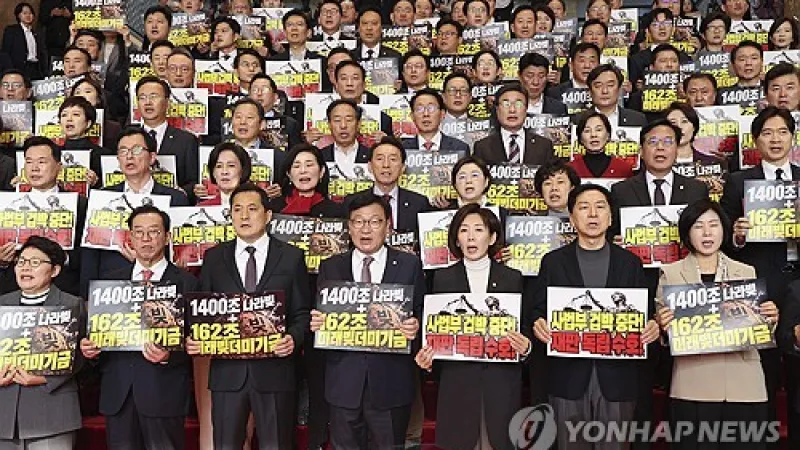
SEOUL – South Koreas ruling Democratic Party (DP) on Monday, November 2, 2026, expressed strong approval for President Lees proposed 2027 budget, characterizing it as a blueprint for national stability and growth. Conversely, the primary opposition People Power Party (PPP) launched a scathing critique, asserting that the fiscal plan conspicuously overlooked pressing national security threats from North Korea and failed to sufficiently address persistent domestic economic vulnerabilities. This pronounced divergence in parliamentary opinion highlights a deep partisan chasm over the nations strategic and budgetary priorities.
DP spokesperson Kim Min-joon lauded the budget during a press briefing at the National Assembly, emphasizing its commitment to social welfare programs and targeted investments in future industries. “This budget reflects President Lees steadfast vision for a prosperous and equitable Korea,” Kim stated. “It prioritizes the well-being of our citizens while prudently managing national finances amidst global uncertainties.”
The ruling party underscored provisions aimed at bolstering public health infrastructure, expanding educational opportunities, and supporting small and medium-sized enterprises. They also pointed to initiatives designed to accelerate South Koreas transition to a low-carbon economy, aligning with international environmental commitments and fostering innovation.
In sharp contrast, the PPP branded the 2027 budget as myopic and irresponsible. Representative Park Ji-hoon, a leading voice for the opposition, declared the budget a profound disappointment. “It is an exercise in fiscal delusion to ignore the clear and present dangers facing our nation,” Park asserted. “President Lees administration appears to be living in an alternate reality, one where North Korea is not a nuclear threat and where ordinary Koreans are not struggling with mounting living costs.”
The PPPs primary concern centered on what they described as the budgets inadequate allocation for defense and national security preparedness, especially concerning Pyongyangs escalating missile development and provocative rhetoric. “To gloss over the North Korean threat in a national budget is not only negligent but frankly dangerous,” Rep. Park elaborated. “Our citizens deserve to know that their government is prioritizing their safety above all else, not burying its head in the sand.” This stance echoes prior governmental statements regarding regional security, as seen after incidents like the DMZ blast incident.
Furthermore, the opposition argued that the budget offered no substantive relief for ordinary households grappling with inflation, stagnant wages, and job insecurity. They criticized the governments approach to economic policy, claiming it favored grand projects over tangible support for struggling families and businesses. “Where is the relief for our small business owners? Where is the plan to curb the cost of essential goods?” questioned Rep. Park, highlighting a perceived disconnect between government spending and public need.
President Lee had previously outlined the 2027 budget priorities to the National Assembly, emphasizing fiscal prudence and strategic investments for long-term national competitiveness. His address detailed plans for technological advancement, social safety nets, and regional development, presenting a vision of a resilient and forward-looking Korea.
The ongoing debate surrounding North Korea highlights a persistent challenge for South Korean policymakers. While international efforts, including those involving President Donald Trump, continue to seek denuclearization pathways, Pyongyangs continued belligerence necessitates robust defense planning. Allies frequently forge unified fronts on North Korea denuclearization, yet internal debates often arise concerning the appropriate level of domestic investment in defense versus other priorities.
Globally, nations are navigating complex economic landscapes marked by supply chain disruptions, energy price volatility, and demographic shifts. South Koreas export-driven economy is particularly susceptible to these external factors. The PPPs critique reflects a broader sentiment among some segments of the populace that the government has not sufficiently insulated the nation from these global economic headwinds.
Political analysts suggest that the budget debate is not merely about numbers but about fundamental disagreements over the nations direction. Dr. Lee So-yeon, a professor of political science at Seoul National University, commented, “This budget clash signifies deeper ideological fissures. The ruling party prioritizes stability through welfare and strategic investments, while the opposition demands a more proactive stance on immediate threats and economic hardships.”
The intense parliamentary scrutiny foreshadows a challenging legislative period for the Lees administration. Securing bipartisan cooperation on the budget is crucial for effective governance, yet the current climate suggests protracted negotiations and potential amendments before final approval. Both parties will likely engage in further public discourse to sway popular opinion and leverage their positions ahead of upcoming electoral cycles.
Ultimately, the 2027 budget will shape South Koreas trajectory, impacting everything from social services to defense capabilities. The ongoing partisan friction underscores the high stakes involved as the nation balances its domestic ambitions with its role in a complex geopolitical environment.