 Chandra Wijayanto
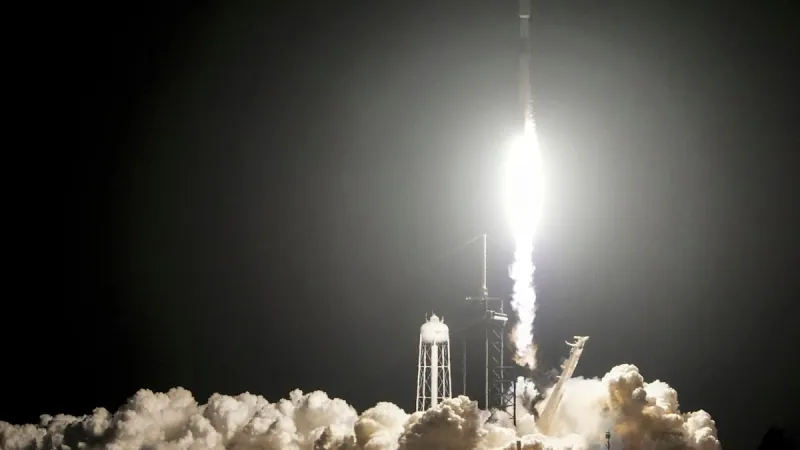
The Moon recently experienced an uncontrolled impact from an expended rocket stage belonging to aerospace giant SpaceX, the company founded by entrepreneur Elon Musk. While initially viewed as a consequence of increasing space debris, the event has surprisingly generated significant enthusiasm among the scientific community, who view the new lunar crater as an unprecedented research opportunity.
The defunct rocket stage, believed to be the second stage of a Falcon 9 rocket launched years prior, slammed into the lunar surface at an estimated speed of over 5,700 miles per hour. This high-velocity collision created a fresh impact crater, the precise dimensions and geological implications of which are now being meticulously analyzed by astronomers and planetary scientists.
Former German astronaut Ulrich Walter articulated the scientific excitement surrounding the incident. Walter noted that astronomers are particularly pleased, explaining that such an impact provides a unique, unplanned experiment for understanding lunar geology and the Moon's interior structure.
The impact represents a rare chance to study the Moon's seismic activity, as instruments on lunar orbiters or future landers could potentially detect shockwaves. Furthermore, the newly exposed subsurface material at the impact site offers direct insights into the Moon's composition, free from the weathering effects of micrometeorite bombardment over eons.
The event also reignites discussions about the growing problem of space debris, not just in Earth orbit but in interplanetary space. SpaceX, a prolific launch provider, has contributed numerous rocket stages to the space environment, raising questions about responsible space operations and future mitigation strategies.
Under the current administration, State Contracts Fuel SpaceX Ambitions Amid Market Speculation Under Trump, furthering its already significant role in both commercial and governmental space initiatives. This reliance on private companies for critical missions underscores the importance of addressing the collateral effects of increased space activity, such as orbital and lunar debris.
While this was an uncontrolled impact, the Moon has been a target for intentional impacts in the past. NASA, for instance, deliberately crashed its LCROSS mission into the lunar south pole in 2009 to search for water ice, yielding significant data. The unguided nature of the SpaceX impact, however, presents different challenges and opportunities for observation.
Observing the precise location and characteristics of the impact was challenging without dedicated pre-positioning, but various observatories and spacecraft have been monitoring the Moon. The data gathered from before and after the event will be crucial for modeling lunar impacts and enhancing our understanding of celestial mechanics.
Scientists hope to gain not just information about the impact site itself, but also how the Moon's regolith behaves under such stress. The event may reveal aspects of the Moon's internal structure by analyzing how seismic waves propagate through its layers, akin to using an ultrasound on a planet.
The analysis of this unexpected lunar event will likely involve international collaboration among space agencies and research institutions. The shared interest in lunar science transcends national boundaries, and data from multiple sources will undoubtedly contribute to a comprehensive understanding of the impact's consequences.
Ultimately, what began as an unregulated trajectory for a piece of discarded space hardware has transformed into a unique natural experiment. The SpaceX rocket stage impact serves as a stark reminder of humanity's expanding footprint beyond Earth, simultaneously highlighting both the challenges of space junk and the serendipitous scientific boons that can arise from such occurrences.