 Dodi Irawan
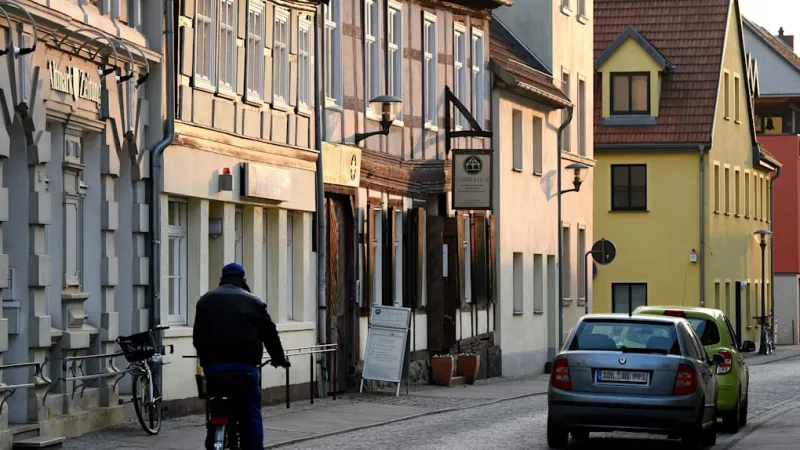
In a contentious political development, local Christian Democratic Union (CDU) politicians in the district of Stendal, Sachsen-Anhalt, Germany, have controversially collaborated with the far-right Alternative for Germany (AfD), helping the party secure a crucial majority. This unprecedented alignment is poised to enable a far-right candidate to advance significantly within the political landscape, sparking widespread concern over the erosion of traditional democratic firewalls.
The move marks a profound departure from the established consensus among mainstream German parties to reject cooperation with the AfD, often referred to as the Brandmauer or firewall. This principle has historically aimed to isolate the AfD due to its extremist rhetoric and policies, particularly given Germany's historical sensitivity to far-right movements.
CDU municipal councilors in Stendal cast votes that effectively sided with the AfD, thereby granting the far-right party the necessary majority in a local decision-making body. This action directly enabled an AfD candidate from the far-right spectrum to take a significant step in their political career, though the specifics of the role or promotion remain under close scrutiny.
The local CDU branch has faced immediate backlash from its national leadership and other democratic parties, who view the collaboration as a severe breach of party discipline and a threat to democratic stability. Critics argue that such alliances legitimize a party widely considered to undermine democratic institutions and values.
A Christian Democrat from the region, speaking on condition of anonymity to discuss the sensitive situation, explained the rationale behind the vote. The individual suggested a pragmatic approach, citing local issues and a desire to achieve outcomes rather than maintain ideological purity, hinting at local frustrations with political gridlock.
This explanation, however, does little to assuage the fears of those who see the Brandmauer not as an optional political strategy, but as a fundamental safeguard against the normalization of extremism. The incident in Stendal illuminates the growing pressure on mainstream parties in regions where the AfD has achieved significant electoral success.
Sachsen-Anhalt is one of several eastern German states where the AfD commands considerable support, making the adherence to the non-cooperation pledge particularly challenging for local politicians seeking to govern effectively. The party's consistent electoral gains have forced other parties to confront the difficult choice between principled opposition and practical governance.
The ramifications of the Stendal incident extend beyond the local district. Political analysts are closely watching to see if this local collaboration could set a precedent or embolden other regional CDU factions to explore similar partnerships. Such a development could profoundly alter the dynamics of German politics, especially with state and federal elections on the horizon.
National figures within the CDU have swiftly condemned the actions, reaffirming the party's official stance against working with the AfD. They emphasize that the incident represents an isolated local decision, not a shift in the party's overall strategy. However, the event undeniably highlights internal tensions and debates within the CDU regarding how best to counter the AfD's rise.
The AfD, for its part, has often railed against the established political order, with prominent figures like AfD Leader Alice Weidel demanding the abolition of the German domestic intelligence agency, and AfD Leader Bjorn Hocke backing accused terrorists, further cementing its image as a radical force. These positions underscore the fundamental ideological chasm that the Brandmauer was designed to maintain.
Observers suggest that this local cooperation, regardless of its stated motivations, lends a veneer of legitimacy to the AfD. It blurs the lines between mainstream and far-right politics, potentially normalizing the AfD in the eyes of some voters and reducing the perceived risks of supporting or cooperating with the party.
The incident poses a critical challenge to the CDU's identity as a conservative party committed to democratic values. It compels the party to articulate a clearer, more unified strategy for engaging with, or isolating, the AfD across all levels of government, particularly as the far-right continues to gain ground in several German states.
Ultimately, the events in Stendal represent more than just a local political maneuver. They symbolize a significant crack in Germany's democratic firewall, raising urgent questions about the future of political alliances and the resilience of democratic norms in the face of rising populism and extremism. The nation watches as mainstream parties grapple with the complex implications of this controversial collaboration.