 Angel Doris
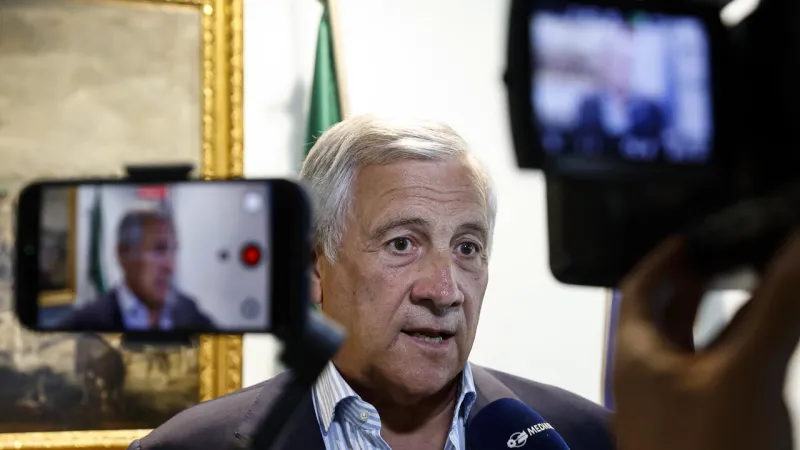
ROME – Italian Foreign Minister Antonio Tajani issued a stark warning today regarding potential Russian attempts to influence upcoming electoral processes in Italy, framing the threat as a broader concern for the entire European continent.
Addressing the press, Tajani asserted the gravity of the situation, stating, "This is a matter that concerns all of Europe." His remarks underscore a growing apprehension among European leaders about external interference in democratic elections.
Journalists pressed Tajani specifically on General Roberto Vannacci, a controversial figure in Italian politics, questioning whether he could be seen as a Trojan horse for Russia. Tajani responded cautiously but unequivocally to the query, saying, "I sincerely hope not."
This exchange highlights the delicate balance Italian officials navigate between safeguarding national sovereignty and openly confronting allegations of foreign meddling without pre-empting investigations or exacerbating political tensions.
The concerns voiced by Italy's top diplomat are not isolated. Across Europe, nations have heightened vigilance against sophisticated campaigns designed to sway public opinion and undermine democratic institutions. Evidence of Russian influence operations has repeatedly surfaced in various contexts, from disinformation campaigns to cyberattacks.
Germany, a key European ally, has been particularly vocal in recent years regarding similar threats. Berlin has openly accused Moscow of hybrid attacks and even drone plots on its soil, leading to firm diplomatic responses. Such incidents illustrate the multifaceted nature of contemporary foreign interference. The German government, for instance, blamed Russia for drone attacks in Leipzig and other hybrid actions, prompting a strong collective response from Europe and NATO.
These patterns of interference often involve the dissemination of propaganda, support for extremist or fringe political movements, and efforts to exploit societal divisions. The objective, analysts suggest, is frequently to destabilize target nations and weaken collective European resolve.
For Italy, the stakes are particularly high, given its strategic position within the Mediterranean and its vital roles in the European Union and NATO. Any successful foreign influence on its electoral outcomes could have far-reaching implications for regional stability and international alliances.
The European Union has increasingly prioritized intelligence sharing and collaborative defense strategies to counter these evolving threats. Member states are working to bolster their cybersecurity defenses and develop more robust mechanisms for identifying and neutralizing foreign electoral interference.
Tajani's statement serves as a fresh reminder of the persistent and evolving challenge posed by external actors seeking to manipulate democratic processes. It urges both national governments and the wider electorate to remain vigilant against covert attempts to sway the public discourse and electoral choices.
The Italian Foreign Minister's warning aligns with broader condemnations of Russian aggression and destabilizing activities witnessed across the continent. Nations continue to grapple with the implications of an increasingly assertive foreign policy from Moscow, which often employs non-conventional methods to achieve its geopolitical aims.
The international community remains seized with the issue of electoral integrity, viewing it as fundamental to the health of democracies worldwide. As Italy prepares for its next electoral cycle, the discourse around foreign influence is expected to intensify, prompting a closer examination of campaign finance, media narratives, and digital security.