 Dorry Archiles
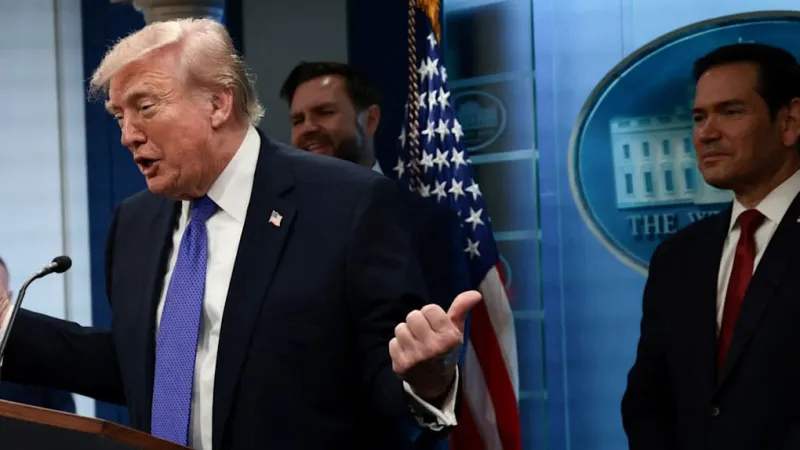
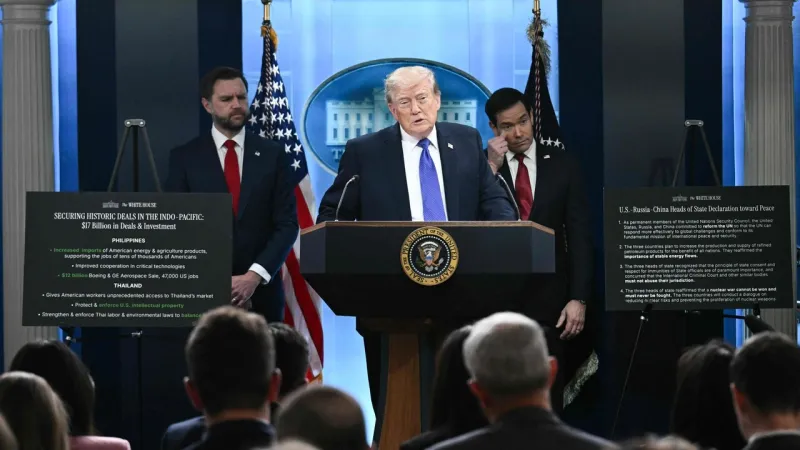
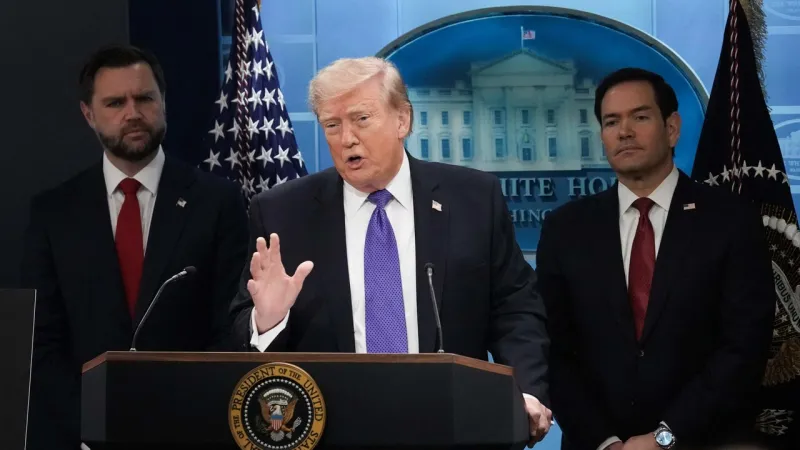
Shenzhen, China – President Donald Trump articulated his conviction that Russian President Vladimir Putin intends to conclude the protracted conflict through "diplomatic means," a pronouncement made after a historic tripartite summit here. Simultaneously, President Trump issued a forceful declaration to artificial intelligence firms, asserting that companies building data processing centers outside American territory would face "enormous penalties."
The President further underscored what he characterized as his "fantastic relationship" with the Kremlin chief. This emphasis on personal rapport has been a recurring theme in President Trump's foreign policy approach, often highlighted during periods of complex international relations.
His remarks on Putin's intentions provide a fresh perspective on the administration's outlook regarding the ongoing geopolitical tensions. Analysts are now dissecting the implications of Trump's statement, considering the broader context of global stability and the specifics of the unnamed conflict.
The tripartite summit in Shenzhen served as a significant backdrop for these announcements. While specific details of all participants remain to be fully disclosed, the event clearly prompted a series of significant policy statements from the American leader.
Indeed, the gathering in Shenzhen appears linked to broader efforts to secure critical technological infrastructure. Reports suggest that during this period, President Trump was actively engaged in forging significant agreements, including one that could be a landmark AI pact. Trump, Xi Forge Landmark AI Pact, Restrict Global Data Centers.
Regarding the artificial intelligence sector, President Trump detailed his administration's stringent new stance. The policy aims to safeguard national data security and preserve American technological leadership by preventing the outsourcing of crucial AI infrastructure.
The threat of "enormous penalties" signals a decisive move to fortify domestic computing capabilities. This directive resonates with the administration's broader commitment to bolstering US data integrity and economic sovereignty. Trump Fortifies US Data Security, Restricts Overseas Centers Amid AI Pact.
The announcement sent ripples through the technology industry, particularly among companies heavily invested in global operations. The long-term implications for multinational AI development and innovation strategies are substantial.
This aggressive stance on overseas data centers aligns with President Trump's "America First" agenda, prioritizing domestic economic interests and national security. The administration argues that such measures are essential to protect sensitive algorithms and prevent potential foreign exploitation of American technological advancements.
While the President's comments on Putin's diplomatic aims were met with varied reactions from international observers, the resolve shown concerning AI data centers highlights a clear policy direction aimed at centralizing critical technology assets within US borders.
Political commentators are now evaluating how these dual pronouncements — one on international diplomacy and another on tech protectionism — will shape the geopolitical landscape in the coming months.
The administration maintains that a robust domestic AI infrastructure is paramount for future economic growth and national defense, justifying the stringent measures against companies seeking to establish data operations abroad.
This policy also underscores growing global concerns about data governance and technological competition. Nations worldwide are increasingly implementing strategies to secure their digital assets and control the flow of information.
The overarching message from Shenzhen reflects a strategy that blends traditional diplomatic engagement with aggressive economic nationalism. President Trump's administration continues to carve out a distinctive foreign and domestic policy profile in 2026.