 Dorry Archiles
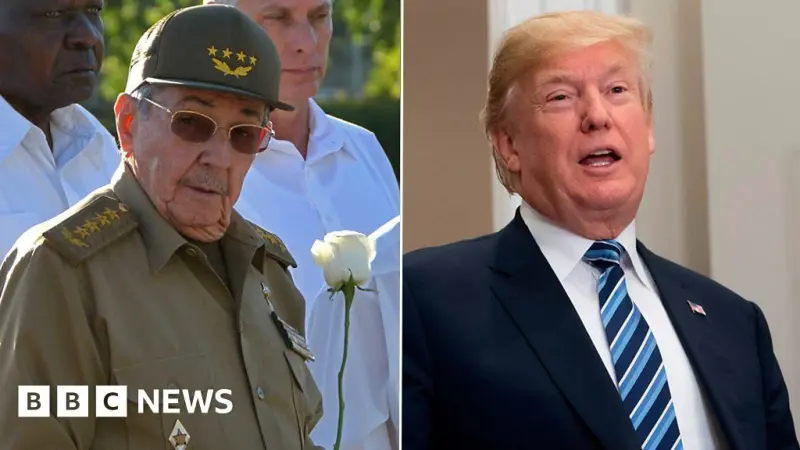
MIAMI — President Donald Trump faces a significant challenge to his once-unwavering Cuban American support base, as recent surveys and community sentiments in South Florida indicate a noticeable erosion of loyalty among a demographic crucial to his electoral success. This shift, observed by political strategists and community leaders in 2026, suggests a reevaluation of political allegiance driven by evolving priorities and policy concerns within the influential voting bloc.
Historically, President Trump has commanded robust support from Cuban American voters, a foundation built on his staunch anti-socialism rhetoric and hardline policies against the Cuban and Venezuelan regimes. This strategy solidified a voting block that consistently backed him in previous presidential contests, viewing him as a bulwark against perceived socialist threats in the Western Hemisphere.
However, the perceived guarantee of this support is now faltering. Younger generations of Cuban Americans, often less directly impacted by the immediate aftermath of the Cuban revolution, exhibit different political priorities. Their focus frequently extends beyond Cold War-era grievances to include domestic issues like economic opportunity, healthcare, and environmental policies.
Political analysts point to a growing disconnect between the administration's continued emphasis on confrontational foreign policy and the evolving concerns of a community increasingly integrated into mainstream American society. Some within the community express disillusionment over the tangible impact of past policies on conditions in Cuba or Venezuela, questioning their effectiveness.
Dr. Elena Rodriguez, a political science professor at the University of Miami, notes the generational divide. “The narrative that once bound many Cuban Americans to a single party is loosening,” Rodriguez said. “Younger voters are more pragmatic, less ideological, and actively seek politicians who address a broader spectrum of concerns beyond just anti-communist stances.”
Recent data from a Cognito Daily poll conducted across key South Florida districts shows a dip in President Trumps approval ratings among Cuban Americans compared to his performance in previous elections. While still enjoying considerable support, the margin of unwavering commitment appears to have narrowed, with a notable increase in undecided voters.
Community leaders are also taking notice. Jorge Ramirez, a long-time Cuban American activist in Little Havana, expressed concern. “Our community has always been passionate, but that passion is now being channeled into a more diverse set of political discussions,” Ramirez stated. “Loyalty is earned, not just assumed, especially when peoples daily lives and economic futures are on the line.”
The Trump administration, aware of the shifting landscape, has reportedly intensified outreach efforts in South Florida. Senior campaign advisors have been dispatched to meet with local leaders and voters, aiming to reinforce traditional ties and address emergent concerns within the community.
Meanwhile, Democratic strategists are actively attempting to capitalize on this perceived vulnerability. They are crafting messages that highlight domestic policy initiatives and appeal to the evolving demographics, aiming to chip away at a historically Republican stronghold.
The implications for Florida, a perennially crucial swing state, are profound. Any significant weakening of the Presidents base could shift the electoral calculus, compelling both major parties to recalibrate their strategies for securing the states 30 electoral votes in future contests.
The dynamic suggests a maturation of the Cuban American voting bloc, moving from a largely monolithic political entity to a more heterogeneous group whose allegiances are increasingly contingent on contemporary policy relevance and a nuanced understanding of their diverse needs.
This evolving political landscape underscores that no demographic allegiance remains static, forcing all political actors to continually engage, adapt, and earn the support of every voter.