 Robert Andrison
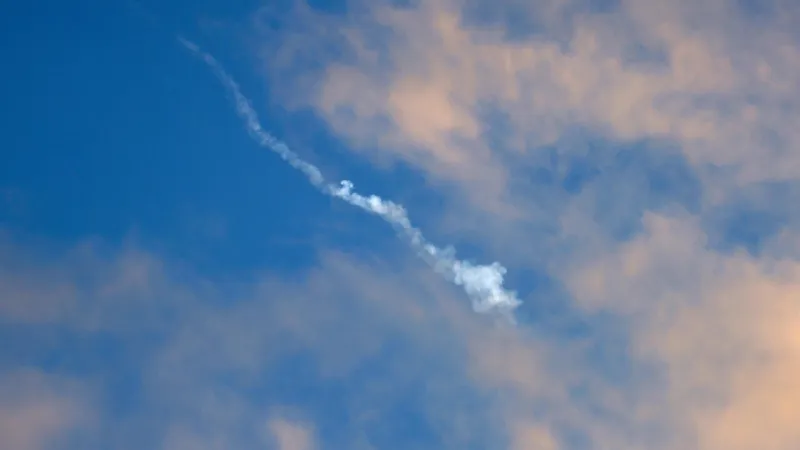
WASHINGTON – The United States Central Command, or CENTCOM, has confirmed an eleventh consecutive night of targeted military strikes against various installations within Iran. This sustained campaign signals a notable escalation in regional tensions, as announced by US defense officials early this morning.
The operations, which commenced several weeks ago, have consistently focused on what CENTCOM describes as military targets critical to Iran's offensive capabilities and its network of proxy forces. This persistent engagement underscores the strategic resolve of President Donald Trump's administration in addressing perceived threats.
While specific targets for these latest strikes were not immediately detailed, previous attacks have often aimed at infrastructure supporting ballistic missile programs, drone manufacturing sites, and logistical hubs utilized by the Islamic Revolutionary Guard Corps (IRGC) and its affiliates.
The unprecedented duration of these nightly bombardments – now spanning nearly two weeks – marks a significant intensification of direct military pressure on Tehran. Analysts suggest this prolonged campaign aims to degrade Iran's military capacity and deter further destabilizing actions across the Middle East.
President Trump has repeatedly emphasized a firm stance against Iranian aggression since taking office in 2025. His administration has articulated a policy of robust deterrence, aiming to protect US interests and allies from what it views as an expanding Iranian sphere of influence.
The regional landscape remains volatile, with ongoing conflicts and proxy engagements stretching from the Persian Gulf to the Mediterranean. These US Iran attacks are inextricably linked to the broader effort to maintain stability and prevent wider conflagrations.
Tehran has, in turn, condemned the American military actions as acts of aggression violating its sovereignty. Iranian state media and officials have vowed retaliation for any perceived attacks on its territory or personnel, though concrete responses to this specific series of strikes have yet to be publicly detailed.
International reactions have varied, with some allies expressing concern over the escalating military exchanges, while others have affirmed support for Washingtons stated goals of regional security. The United Nations has urged all parties to exercise restraint to prevent a wider regional conflict.
The history of US-Iran relations is replete with periods of heightened tension and covert operations. These overt, sustained military actions represent a more direct confrontation, building upon a complex legacy that includes economic sanctions and proxy warfare. For a broader understanding of the financial implications of such conflicts, readers may find this related article insightful: Defense Secretary Reveals Iran War Cost, Congress Erupts in Protest.
Military strategists are closely observing the effectiveness of these consistent strikes in altering Iran's strategic calculations. The long-term implications for regional power dynamics and global energy markets remain a subject of intense speculation and concern.
The Department of Defense has maintained that these operations are executed with precision, prioritizing the minimization of civilian casualties while maximizing impact on military infrastructure. This approach seeks to balance aggressive deterrence with efforts to avoid an uncontrolled escalation.
Sources close to the Pentagon indicate that intelligence assessments guide each strike, ensuring targets are directly linked to the identified threats. This methodical application of force is designed to send a clear message regarding the consequences of continued destabilization.
The current environment contrasts sharply with previous eras of diplomatic engagement, underscoring a recalibration of Washingtons foreign policy priorities in the Middle East. The administration appears committed to a strategy that combines economic pressure with overt military deterrence.
Iran, for its part, has often leveraged its strategic depth and asymmetric warfare capabilities to counter superior military forces. The full extent of the damage inflicted by these US Iran attacks and Tehran's capacity to absorb or adapt to such pressure remains under evaluation.
As the situation unfolds, global attention remains fixed on the Persian Gulf. The stability of a region vital to international commerce and energy supply hangs in the balance, heavily influenced by the trajectory of these sustained military actions.