 Dodi Irawan
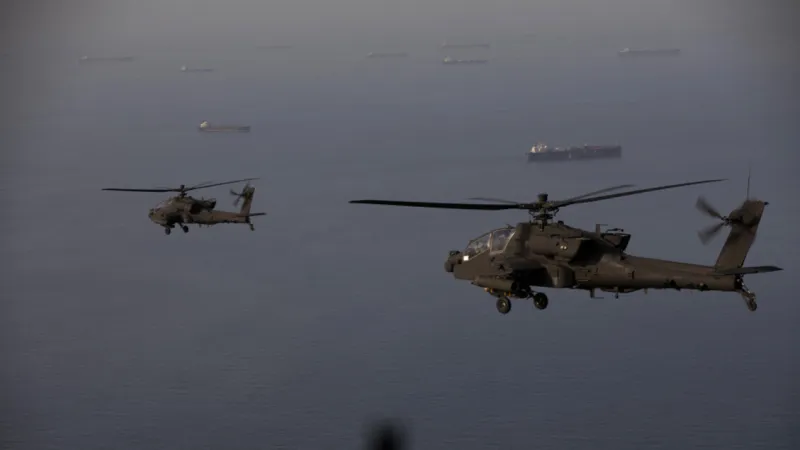
Strait of Hormuz — U.S. armed forces recently intercepted and destroyed two Iranian drones over the vital Strait of Hormuz, U.S. Central Command (CENTCOM) announced, asserting the unmanned aerial vehicles posed a direct threat to international maritime traffic in the critical waterway. CENTCOM officials confirmed the defensive action, underscoring a continued commitment to safeguarding navigation and regional stability.
A statement from CENTCOM elaborated on the incident, specifying that the Iranian drones were engaged after demonstrating hostile intent. "They threatened maritime traffic, and we will continue to defend ourselves," a CENTCOM spokesperson declared, emphasizing the necessity of the intervention to prevent potential harm to commercial and naval vessels traversing the strait. This incident marks another flashpoint in the volatile region.
The Strait of Hormuz, a narrow passage between the Persian Gulf and the Gulf of Oman, holds immense strategic importance. It serves as a choke point for roughly one-fifth of the world's total oil consumption and a significant portion of liquefied natural gas (LNG) shipments. Any disruption in this conduit can send ripple effects across global energy markets and supply chains.
Tensions in the strait have been recurrent, with numerous past confrontations involving Iranian forces and vessels belonging to the United States and its allies. Incidents have included harassment of commercial shipping, drone surveillance, and, at times, direct seizures of tankers. These actions consistently draw condemnation from international maritime organizations and global powers.
The latest engagement involving the Iranian drones comes amidst persistent geopolitical friction with Iran, largely centered on its nuclear program, regional proxy activities, and missile development. International sanctions continue to exert pressure on Tehran, yet the nation maintains its assertive posture in its territorial waters and airspace.
Unmanned aerial systems, or drones, represent an evolving challenge for maritime security. Their capabilities range from reconnaissance and surveillance, allowing for real-time intelligence gathering, to potentially carrying out direct attacks. The presence of such vehicles, especially when exhibiting threatening behavior, necessitates swift and decisive responses by patrolling forces.
The U.S. Fifth Fleet, headquartered in Bahrain, consistently operates in the Persian Gulf, providing a robust naval presence designed to deter aggression and ensure freedom of navigation. Its mandate includes responding to threats to international law and maritime safety, a role prominently demonstrated by the recent downing of the drones.
While specific international reactions to this particular drone incident are still developing, such encounters typically elicit calls for de-escalation from global leaders. The international community largely recognizes the imperative of maintaining safe passage through the Strait of Hormuz for global commerce and energy security.
The direct confrontation involving U.S. forces and Iranian drones carries the inherent risk of further escalation, though both sides often seek to contain incidents to avoid broader conflict. Market analysts will be closely monitoring oil prices, which can fluctuate dramatically with any perceived threat to shipping in the Persian Gulf.
President Donald Trump's administration has consistently maintained a firm stance against what it perceives as Iranian aggression and destabilizing actions in the Middle East. Policies have focused on robust deterrence and protecting U.S. interests and allied security in the region, aligning with the swift response to the drone threat.
The incident also underscores the broader regional instability that has prompted global concern. For instance, Pope Leone, during a recent visit to Spain, called for European unity and decried the prospect of war with Iran, highlighting the widespread desire for peaceful resolutions to Middle Eastern crises.
The destruction of the two Iranian drones serves as a stark reminder of the delicate balance of power in the Strait of Hormuz and the unwavering commitment of U.S. forces to upholding maritime security. The vigilance against potential threats to international navigation remains paramount in this geopolitically sensitive waterway.