 Debby Wijaya
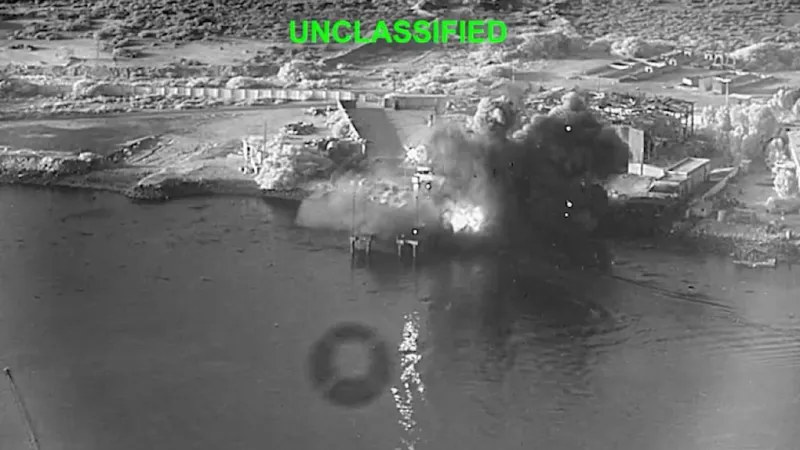
US military forces conducted a series of strategic airstrikes across southern Iran, targeting critical infrastructure including bridges and an airport, according to reports from Iranian state television. These latest attacks, part of an escalating campaign, resulted in at least seven fatalities and significant explosions reported in key locations like Bushehr, Bandar Abbas, and Iranshahr.
Iranian state media detailed the scope of the operations, reporting explosions near the city of Bushehr, home to the nations only active nuclear power plant. While the extent of damage to the nuclear facility specifically remains unconfirmed, its proximity to the strike zone raises immediate international concerns.
Further reports indicated explosions in the vital port city of Bandar Abbas, a strategic maritime hub on the Strait of Hormuz. The targeting of infrastructure in this region could severely disrupt shipping lanes and global oil transit, amplifying already heightened geopolitical tensions.
The airport in Iranshahr, another crucial transportation node in southeastern Iran, also experienced significant explosions. Disrupting air travel and logistical capabilities in this area signals a broader effort to incapacitate Iranian operational capacity.
Iranian state television, the primary source for these initial reports, stated unambiguously that at least seven individuals perished in the widespread attacks. Independent confirmation of casualty figures remains pending, a common challenge in regions experiencing active conflict.
These engagements mark what appears to be the sixth consecutive night of US forces striking Iranian targets, escalating a prolonged period of regional instability. Previous strikes have focused on various infrastructure points, reflecting a sustained campaign by Washington.
The overarching context for these US strikes involves ongoing tensions in the Persian Gulf and broader Middle East. President Donald Trump administration has maintained a firm stance against what it characterizes as Iranian aggression and its proxy activities throughout the region.
Analysts suggest the targeting of both military and dual-use civilian infrastructure aims to degrade Irans ability to project power and support allied groups. The destruction of bridges and an airport directly impacts logistical chains essential for both military movements and civilian supply.
The timing of these operations also coincides with heightened rhetoric from Tehran. Iran previously warned of potential Red Sea closure, a critical shipping artery, in response to perceived threats, further complicating the maritime security landscape.
International observers are closely monitoring the situation, fearing a wider regional conflagration. The deliberate targeting of sites like Bushehr, even if the nuclear plant itself was not directly hit, introduces an additional layer of alarm for global powers.
A senior Pentagon official, speaking on background, indicated that US operations aim to deter further destabilizing actions by Iran. “Our objective remains clear: to safeguard regional security and protect our interests and those of our allies,” the official reportedly stated.
However, the Iranian government vows retaliation, promising a “crushing response” to any continued military aggression on its sovereign territory. This rhetoric suggests a protracted and dangerous standoff between the two nations.
Civilian populations in the affected areas face severe humanitarian challenges. Infrastructure damage not only disrupts military logistics but also essential services, supplies, and public safety for residents.
The international community has called for de-escalation, urging both Washington and Tehran to exercise restraint and pursue diplomatic avenues. United Nations Secretary-General Antonio Guterres spokesperson issued a statement expressing deep concern over the escalating violence.
This situation develops against a backdrop of complex regional alliances and historical grievances, making a swift resolution seem increasingly distant. The implications extend far beyond the immediate conflict zones, impacting global energy markets and international diplomacy.
Further updates are anticipated as information from the ground emerges and official statements are released by the involved parties. The precise extent of damage and the full casualty count require independent verification.
The global oil market reacted to the news with volatility, reflecting concerns over potential disruptions to energy supplies from the Gulf region. Analysts predict sustained high prices if the conflict intensifies.
Regional neighbors are also bracing for potential spillover effects, with several nations initiating heightened security alerts and reviewing their defense postures in anticipation of broader instability.
President Trump has yet to issue a direct public statement regarding these specific strikes, though White House press secretary Sarah Huckabee Sanders indicated the administration is “fully committed to protecting American interests.”
As the situation unfolds, the world watches closely for signs of de-escalation or further intensification, recognizing the profound implications for global peace and security.