Gabriella
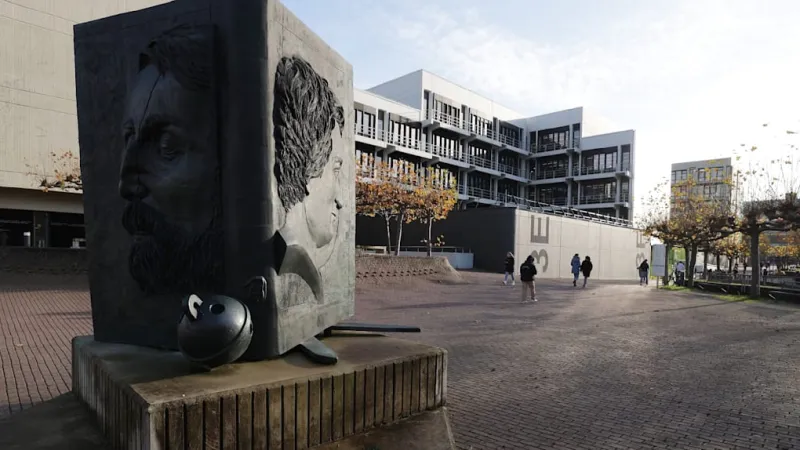
DUSSELDORF - A controversy has engulfed Heinrich Heine University (HHU) in Dusseldorf, Germany, where a professor's planned lecture to critically examine trans-identities has ignited widespread student protests. Student associations are vehemently calling for the professor's immediate dismissal and a ban from campus, raising significant questions about academic freedom and the boundaries of discourse within higher education.
The student bodies are not merely requesting a boycott of the upcoming lecture; their demands extend to a thorough review of all the professor's past and future statements, insisting on rigorous scientific verification. This escalation transforms the academic debate into a direct challenge to the professor's employment and scholarly legitimacy.
While the specific arguments the professor intends to present remain largely undisclosed, the mere premise of a critical inquiry into trans-identities has provoked a visceral reaction. Proponents of academic freedom assert that universities are foundational spaces for the unfettered exploration of ideas, even those considered sensitive or controversial by certain groups.
Conversely, student activists argue that academic freedom should not be a shield for what they perceive as harmful or discriminatory discourse. They contend that critically questioning established identities can invalidate lived experiences and foster an unwelcoming environment for transgender students and allies.
The intensity of the student response underscores a growing tension on university campuses globally regarding free speech versus inclusive spaces. This particular incident in Dusseldorf illustrates the challenges institutions face in balancing diverse viewpoints while ensuring a respectful and safe environment for all members of the academic community.
HHU administration now faces the delicate task of navigating these competing interests. Any decision regarding the professor could set a precedent for how similar disputes are handled, potentially impacting the university's reputation as a bastion of intellectual inquiry or a champion of social justice. The university has yet to issue a definitive statement on the students' demands.
The debate over trans-identities, specifically, has become a focal point in broader cultural discussions across Europe and North America. Scientific, ethical, and social dimensions are routinely contested, leading to impassioned arguments from various sides, often spilling from academic journals into public squares and digital platforms.
The rapidity with which such controversies can escalate, amplified by social media, highlights a contemporary challenge for public figures and institutions. Similar online outcries have been observed in other instances, such as the intense scrutiny faced by Miss Bologna Endures Racist Onslaught After Crowning; Social Media Condemned, demonstrating how public opinion, even if ill-informed, can rapidly mobilize.
This situation echoes other instances where academic figures have faced calls for disciplinary action or removal over their research or teaching on sensitive topics. The outcomes of these cases often contribute to the ongoing redefinition of acceptable academic discourse.
The long-term implications for the professor, the students, and the university are significant. A dismissal could be seen as a chilling effect on academic inquiry, while an affirmation of the lecture could alienate a segment of the student body. The resolution of this specific conflict will likely be scrutinized by observers far beyond Dusseldorf.
As the academic community awaits the university's formal response, the situation at HHU Dusseldorf serves as a potent reminder of the complex interplay between free expression, intellectual curiosity, and the imperative to foster an inclusive and respectful learning environment. The challenge lies in finding a path that upholds scholarly rigor without compromising the welfare of vulnerable groups.