 Robert Andrison
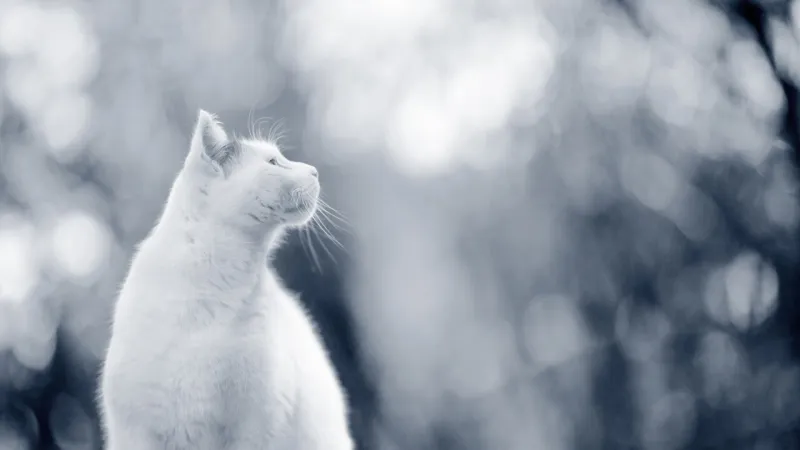
As the highly anticipated August 12 solar eclipse draws near, pet owners worldwide are pondering how their beloved dogs and cats will react to the momentary descent into twilight. Experts in animal behavior and veterinary science suggest that for most domestic animals, the event will likely register as a simple, albeit unusual, shift in the daily light cycle, rather than a cause for alarm.
Unlike humans, who possess the cognitive capacity to understand the astronomical significance of a solar eclipse, animals operate primarily on instinct and circadian rhythms. Their perception is shaped by environmental cues, making a sudden dimming of daylight the primary sensory input they will process during the eclipse.
Veterinarians and ethologists anticipate that pets will largely experience the eclipse as an early onset of dusk or an unusually dark, sudden cloud cover. Dogs might become slightly confused, perhaps looking to their owners for cues or exhibiting behaviors associated with nighttime, such as seeking their beds or exhibiting a calmer demeanor.
Cats, with their often more independent nature, might display similar patterns. They could grow more active as nocturnal instincts stir, or conversely, settle down as if night has fallen. Any profound distress or panic is widely considered unlikely, provided the pets are in a familiar and secure environment.
Historical accounts and observations from previous eclipses corroborate this assessment. Many reports indicate that farm animals, birds, and even wild creatures often react by settling down, believing evening has arrived. Roosting birds, for example, may return to their nests, only to become active again once full daylight returns.
Human preparations for a solar eclipse, which often involve specialized viewing equipment and gatherings, stand in stark contrast to the natural, unburdened experience of animals. While humans are advised about eye safety, noting that sunglasses are insufficient for proper protection, animals generally do not gaze directly at the sun, reducing any risk of retinal damage.
The August 12 event is not only a solar eclipse but also coincides with the peak of the Perseid meteor shower, promising a spectacular display for human skygazers. For those planning to observe this dual phenomenon, understanding its broader impact, including on animal life, adds another layer to its intrigue, as explored in the article, August 12 Sky Lights Up: Eclipse and Perseid Meteor Spectacle.
Pet owners are encouraged to maintain their animals regular routines as much as possible during the eclipse. Providing a calm, familiar space can help mitigate any minor confusion. If a pet seems particularly disoriented, a reassuring presence or distraction with a favorite toy can be effective.
For humans, the August 12 solar eclipse offers a prime opportunity for unique travel experiences. The travel industry is actively working to offer unforgettable eclipse journeys, capitalizing on the fascination this celestial event holds for people.
Ultimately, the August 12 solar eclipse serves as a compelling reminder of the distinct ways different species interact with and interpret the natural world. While we marvel at the cosmic alignment, our animal companions will likely process it as just another, albeit fleeting, moment in their day, governed by their innate connection to earth rhythms.