 Angel Doris
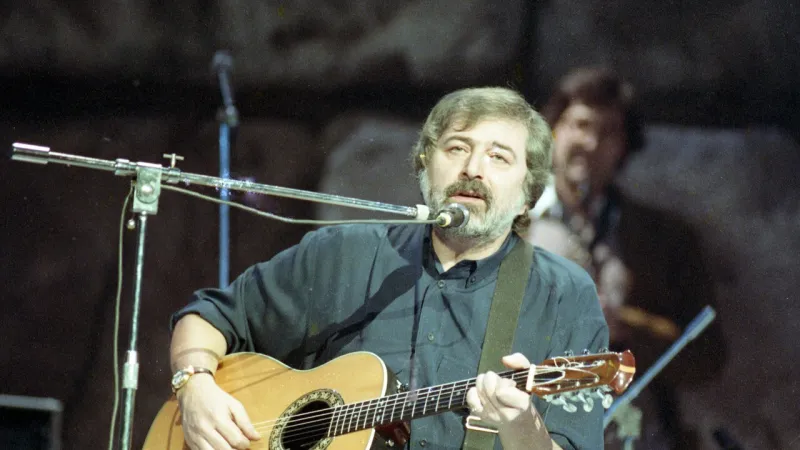
ROME – Renowned Italian music critic Riccardo Bertoncelli recently revisited his notorious professional disagreement with the late, iconic singer-songwriter Francesco Guccini, revealing a depth of mutual affection that transcended their public artistic clash. Bertoncelli, reflecting on the critical review that famously provoked Guccini's scathing anthem “L'Avvelenata,” acknowledged in a recent statement that he would not compose the same critique today, emphasizing an underlying bond shared between the two influential figures.
Bertoncelli's remarks cast new light on one of Italian music's most celebrated feuds, a conflict that became legendary after Guccini immortalized his rebuttal in the powerful lyrics of “L'Avvelenata” (The Poisoned One). This song, a raw and direct response to what Guccini perceived as an unfair attack on his artistic integrity, cemented both his and Bertoncelli's places in cultural history.
Speaking candidly about the contentious period, Bertoncelli articulated a sense of remorse for the harshness of his original critique. His admission, “Today I would not rewrite that review,” signals a mature re-evaluation of his journalistic approach and the impact of his words on a fellow artist.
The critic further elaborated on the complex nature of their relationship, stating simply, “We loved each other.” This revelation underscores a personal connection that existed beyond the professional sparring, suggesting a profound respect and even fondness despite their public disagreements. It speaks to the nuanced reality of artistic relationships, often characterized by both fierce competition and deep admiration.
The genesis of the dispute lay in Bertoncelli's review of Guccini's work, which Guccini countered with the blistering verses of “L'Avvelenata.” The song, released in 1976, became an anthem for artists facing critical onslaughts and remains one of Guccini's most recognized and beloved pieces, reflecting Italy's enduring spirit of dissent and lyrical artistry. Indeed, the enduring power of such compositions is highlighted in related discussions about Guccini's Iconic Songs: Italy's Enduring Mirror of Politics and Memory.
Francesco Guccini, whose voice shaped generations of listeners, passed away at the age of 86, leaving behind a monumental legacy of poetic and socially conscious songwriting. His death, which occurred some years prior to Bertoncelli's recent reflections, has perhaps offered the critic new perspective and freedom to express sentiments previously unvoiced. Accounts of his passing confirm that Francesco Guccini, Italy's Poetic Voice, Silenced at 86, marked a significant loss for the nation's cultural landscape.
Bertoncelli's current introspection highlights the evolution of critical discourse within the music industry. What might have been considered standard, uncompromising criticism in the past is now viewed through a lens of greater empathy and understanding, especially when reflecting on the totality of an artist's career and personal journey.
The cultural impact of their feud, though initially fraught, ultimately contributed to the rich tapestry of Italian popular music. It sparked discussions about the role of the critic, the resilience of the artist, and the often-unseen bonds that link creative individuals, even in opposition.
Guccini's influence continues to resonate, with his lyrical prowess explored in various contexts, from his early life to his later works. His journey through storytelling and melody forms a significant part of Italy's cultural heritage, as detailed in examinations like Guccini's Lyrical Legacy: a Poetic Journey Through Cities and History.
The candidness of Bertoncelli's recent comments provides valuable insight into the human element behind artistic conflicts. It serves as a reminder that professional disagreements, even those publicly aired and fiercely debated, often conceal layers of personal regard and shared humanity.
Such reflections gain particular poignancy in the wake of an artist's passing. It allows for a more comprehensive appreciation of their contributions, free from the immediate pressures of contemporary criticism, fostering a space for reconciliation and deeper understanding of their intricate relationships.
Bertoncelli, a prominent figure in Italian music criticism for decades, now exemplifies a maturation in his approach, advocating for a nuanced perspective that acknowledges both the critical function and the personal connection between artists and their observers. His latest statements add a compelling chapter to the long-standing narrative of his relationship with Guccini, ultimately framing it not as an irreconcilable rivalry, but as a bond forged in mutual respect and, ultimately, affection.
As the legacy of Francesco Guccini continues to inspire new generations, Bertoncelli's reflection ensures that the story of their pivotal interaction is remembered with greater context and compassion, solidifying both their individual histories within the broader narrative of Italian cultural heritage. His candidness invites a reassessment of historical artistic feuds, suggesting that underlying affinities often outlast immediate professional discord.