 Debby Wijaya
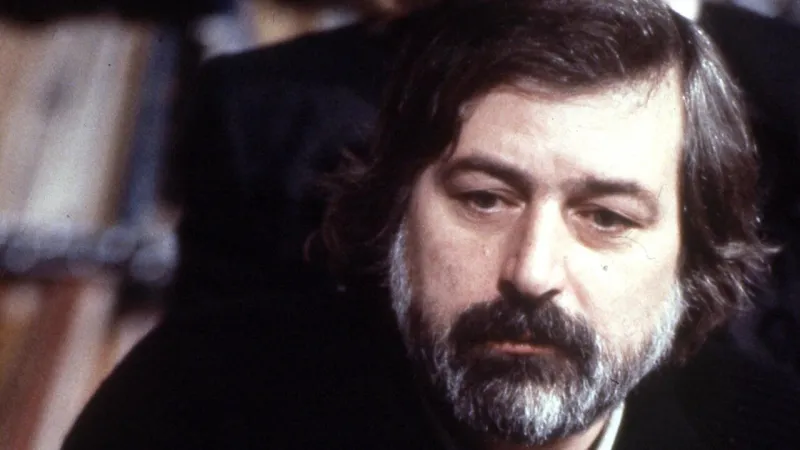
In Italy, the lyrical prowess of Francesco Guccini continues to resonate, his work serving as an enduring cultural and political barometer for the nation. Songs such as Dio e morto, Eskimo, and Auschwitz stand as potent manifestos, consistently reflecting Italy's complex societal narratives and its historical consciousness across generations.
Guccini, a celebrated figure in Italian songwriting, crafted a body of work renowned for its profound social commentary and incisive political observations. His compositions transcended mere entertainment, becoming touchstones in the countrys intellectual discourse and a mirror for the collective soul.
The enduring relevance of his protest songs underscores their timeless quality. Unlike fleeting pop anthems, Guccini's lyrics delve into the fabric of Italian identity, addressing themes that remain pertinent decades after their initial release.
Dio e morto, a defiant critique of institutional religion and societal stagnation penned in the late 1960s, challenged prevailing norms with a ferocity that still reverberates today. It cemented Guccini's reputation as a fearless voice unafraid to confront the status quo.
Similarly, Eskimo offered a poignant reflection on personal and national disillusionment during a tumultuous period in Italy, capturing the mood of a generation grappling with political upheaval and ideological shifts.
Perhaps most searing is Auschwitz, a powerful ballad that transcends national borders to speak to the universal horrors of the Holocaust. Guccini skillfully wove a narrative of memory and warning, ensuring that the atrocities of the past are never forgotten by future generations.
These songs, among others like La Locomotiva and L'Avvelenata, established Guccini as more than just a musician; he became a chronicler of his era, an interpreter of Italian life, and a moral compass for many. His ability to fuse personal introspection with broader societal concerns is a hallmark of his artistry.
Even after his passing, as noted in the article Francesco Guccini, Italy's Poetic Voice, Silenced at 86, his influence has only solidified. Scholars and enthusiasts alike continue to dissect his work, finding new layers of meaning and connections to contemporary issues.
The depth of his storytelling, often infused with a rich, almost literary quality, ensured his compositions transcended the realm of popular music. His lyrics are studied in schools and universities, cementing his legacy as a significant literary figure as much as a musical one.
Guccini's unique ability to weave intricate narratives and socio-political critique into accessible melodies allowed his messages to permeate various strata of Italian society. He articulated the unspoken thoughts and frustrations of countless citizens.
His lyrical journey, a poetic traverse through cities and history as explored in Guccinis Lyrical Legacy: a Poetic Journey Through Cities and History, provides an unparalleled insight into the evolution of Italy from the post-war period to the early 21st century.
For those seeking a profound understanding of Italy's recent past, Guccini's song catalogue offers an invaluable resource. It remains a testament to the power of art to both reflect and shape a nation's identity and memory.
His songs are not merely historical relics; they are living narratives that continue to provoke thought, inspire debate, and offer solace. They serve as a constant reminder of the intertwined nature of politics, memory, and artistic expression in Italy's cultural tapestry.
In a world increasingly characterized by rapid change, the steadfast truth and lyrical integrity of Francesco Guccini's manifestos offer a grounding perspective, inviting listeners to pause and reflect on the persistent questions of human existence and societal progress.