 Dorry Archiles
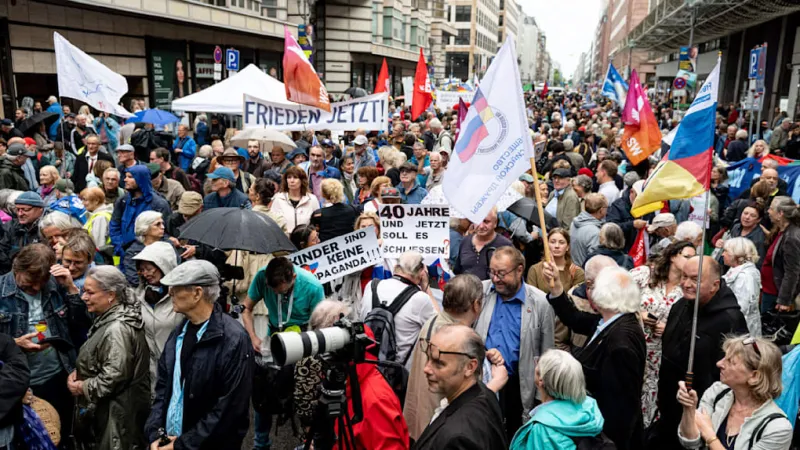
Berlin recently witnessed opposing demonstrations as several hundred individuals rallied against the proposed closure of the Russian House, while a smaller counter-protest formed mere meters away, underscoring ongoing geopolitical tensions within the German capital.
The demonstrations unfolded on a weekday afternoon, drawing a stark line between those advocating for the preservation of Russian cultural presence and those demanding its curtailment amidst international scrutiny of Russia's actions. The focal point of contention, the Russian House of Science and Culture, has served as a significant cultural institution in Berlin for decades, offering language courses, art exhibitions, and various public events.
Proponents of the Russian House, many carrying signs emphasizing cultural exchange and peace, expressed concern that its closure would sever important historical and cultural ties between Germany and Russia. They argued for the separation of cultural institutions from contemporary political conflicts, asserting the importance of maintaining open channels for dialogue and understanding.
Conversely, the counter-demonstrators voiced strong opposition to the continued operation of the Russian House, viewing it as a propaganda tool and a symbol of Russian influence that should no longer be tolerated in Germany. Their placards often referenced current international events and called for a clear stance against state-sponsored cultural diplomacy perceived as disingenuous.
The debate surrounding the Russian House is not isolated. It reflects a broader societal discussion within Germany regarding its historical relationship with Russia and how that relationship should evolve in the current global climate. The German government faces pressure from various factions, balancing diplomatic considerations with public sentiment and international alliances.
For many, the planned closure of the Russian House symbolizes a hardening of Germany's foreign policy towards Russia, moving beyond economic sanctions to cultural and institutional severance. Such actions often precipitate complex legal and diplomatic challenges, given the long-standing agreements governing cultural exchanges.
Legal experts indicate that any decision to close the institution would involve navigating intricate international agreements and property rights. The Russian House operates under a framework that has been in place for decades, making its unilateral closure a move with significant diplomatic repercussions.
Critics of the Russian House's continued operation often point to the institution's perceived role in disseminating state-approved narratives, arguing that its cultural facade masks deeper political objectives. This perspective aligns with increasing calls for nations to scrutinize foreign-backed institutions that might subtly undermine democratic values, a sentiment echoed in discussions like those detailed in German Union Seeks Residency Revocation for Attacks on Fundamental Values.
The divided public response in Berlin underscores the multifaceted challenges faced by European nations in managing relations with Russia. It highlights the tension between preserving cultural heritage and responding decisively to geopolitical shifts that redefine national interests and security.
As authorities deliberate the future of the Russian House, the dual demonstrations serve as a potent reminder of the deeply entrenched opinions and passionate advocacy on both sides of the issue. The ultimate decision will undoubtedly carry significant symbolic weight, shaping perceptions of Germany's approach to international relations for years to come.