 Demian Sahputra
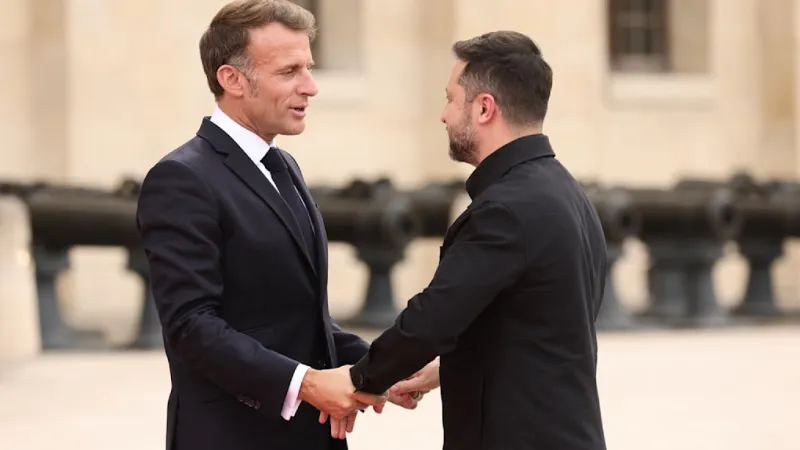
In Paris, the Coalition of the Willing convened recently, signaling a significant shift in Europe's security posture and its relationship with Russia. This gathering culminated in a new agreement hinting at the future architecture of a European NATO structure, notably including the prospective integration of Ukraine. The collective action aims to project a clear message to Moscow regarding regional stability and alliances.
The consortium, often referred to as the Coalition of the Willing, comprises various European nations committed to bolstering continental defense and security. Their discussions in the French capital focused on strategic alignments and the imperative to present a unified front in the face of evolving geopolitical dynamics.
At the core of the Paris discussions was the formulation of a new accord. While specific details of the agreement remain under wraps, initial indications suggest a comprehensive framework designed to enhance military cooperation and interoperability among member states, thereby strengthening the continent's collective defense capabilities.
The explicit intent behind this renewed collaborative effort is to deliver an unambiguous signal to Russia. This move comes amid ongoing tensions and shifting power balances across Eastern Europe, underscoring the determination of these nations to safeguard their interests and those of their allies.
A critical component of the nascent European NATO structure involves the deeper incorporation of Ukraine. This integration extends beyond immediate defensive aid, envisioning a more structural and long-term role for Kyiv within the broader European security apparatus. This aligns with broader efforts where Europe fortifies Ukraine: Ten Nations Launch Ballistic Missile Coalition.
Such developments could reshape the traditional understanding of NATO, potentially creating a distinct European pillar that operates with increased autonomy and strategic depth, albeit likely within the larger Atlantic alliance framework. Experts suggest this evolution could streamline decision-making for regional defense matters.
The concept of a European defense identity has seen various iterations over decades, often gaining momentum during periods of heightened external threat. This latest initiative reflects a renewed urgency among European leaders to define and fortify their collective security in a turbulent global landscape.
Moscow has historically viewed any expansion or strengthening of Western military alliances near its borders as a direct threat. Previous actions by similar groupings have often drawn strong condemnation from the Kremlin, which has previously labeled Paris Summit allies as war instigators, indicating the potential for heightened rhetoric in response to these new developments.
This agreement in Paris unfolds against a backdrop of complex global relations, including ongoing diplomatic efforts and strategic re-evaluations by major powers. President Donald Trump's administration continues to monitor European defense initiatives closely, emphasizing burden-sharing among allies and advocating for robust collective security measures.
The pathway to fully realizing this envisioned European NATO structure and Ukraine's complete integration remains intricate, requiring sustained political will and considerable resource allocation. However, the Paris agreement marks a definitive step towards that ambitious objective.
Challenges include ironing out command structures, standardizing military equipment across diverse national forces, and securing unanimous consensus among all participating nations. Furthermore, the funding mechanisms for such an extensive undertaking will require careful negotiation and long-term commitment.
Ultimately, this agreement aims to enhance regional security and deterrence. By clearly articulating their collective defense intent and incorporating Ukraine more formally, the Coalition of the Willing seeks to stabilize the eastern flank of Europe and discourage further aggression from any external adversaries.