 Chris Robert
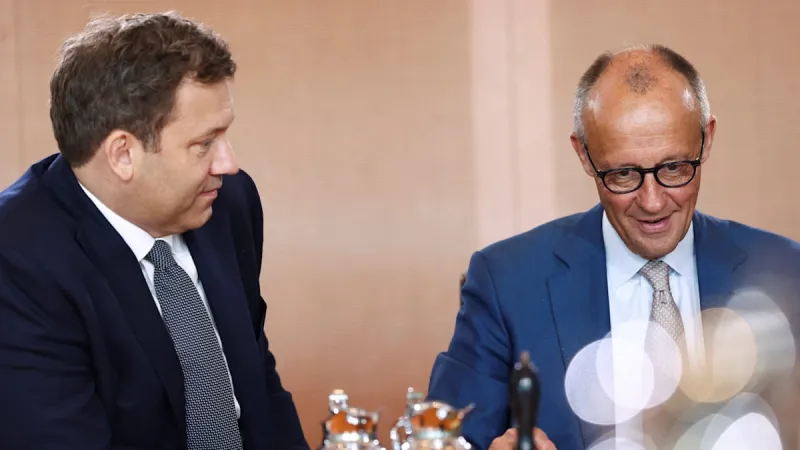
BERLIN – Deep-seated divisions persist between Germany's ruling Union and SPD parties concerning critical policy areas, notably tax reform, labor law, and the prospective 2027 budget. These unresolved disputes cast a long shadow over the upcoming coalition committee meeting scheduled for Wednesday, where leaders aim to bridge the chasm separating their legislative agendas. The impasse threatens to derail significant governmental initiatives, raising concerns about future economic stability and social policy direction within the nation's fragile governing alliance.
The core of the disagreement centers on fundamental ideological differences regarding fiscal responsibility and social welfare. The Union bloc, typically advocating for business-friendly policies and reduced public spending, finds itself at odds with the Social Democratic Party's emphasis on social equity, robust worker protections, and targeted investments in public services. This ideological friction has exacerbated negotiations, making compromise elusive.
Central to the discord is the proposed tax reform. The Union reportedly champions reductions in corporate taxation and tax relief for high earners, aiming to stimulate economic growth and enhance Germany's competitiveness on the global stage. Conversely, the SPD has put forth proposals that include wealth taxes, increased taxation on high incomes, and measures to close loopholes for large corporations, asserting these are necessary to fund social programs and ensure a fairer distribution of economic burdens.
Further complicating matters are the divergent views on labor law amendments. While the SPD seeks to strengthen employee rights, particularly regarding remote work regulations and collective bargaining power, the Union expresses apprehension that such measures could stifle employer flexibility and impede job creation. The two parties remain entrenched in their respective positions, with little indication of imminent concession.
The 2027 budget planning represents perhaps the most formidable hurdle. With Germany navigating persistent economic headwinds and geopolitical uncertainties, prudent fiscal planning is paramount. The Union pushes for strict budgetary discipline and a return to the constitutional debt brake, while the SPD advocates for greater flexibility in spending to address pressing social needs and invest in sustainable infrastructure projects. Reconciling these vastly different approaches to public finance appears increasingly challenging.
Such profound disagreements within a governing coalition are not unprecedented in German political history, yet the current standoff comes at a critical juncture. The nation's economy, a pillar of the European Union, requires clear policy signals and stable governance to maintain investor confidence and address long-term structural challenges. A prolonged German political deadlock could undermine public trust and impede the country's ability to respond effectively to future crises.
Experts suggest that the stakes extend beyond domestic policy, potentially impacting Germany's standing and influence within the European Union. As a leading economic power, Germany's internal stability often reverberates across the continent. Uncertainty regarding its fiscal direction or the coherence of its government could have broader implications for EU-wide initiatives and economic cooperation.
Sources close to the negotiations indicate that both parties recognize the gravity of the situation, yet neither appears willing to yield on core principles. The Wednesday meeting is anticipated to be a rigorous session, potentially involving marathon discussions as leaders strive to avert a full-blown political crisis. The outcome will likely shape not only the immediate legislative agenda but also the long-term trajectory of the coalition.
Public sentiment reflects a growing unease, with recent polls indicating a desire for greater political unity and decisive action from the government. Citizens are keenly aware of the economic pressures and expect their elected representatives to prioritize national interests over partisan rivalries. The ability of the Union and SPD to demonstrate effective governance will be a key determinant of their political fortunes.
The resolution of these contentious issues will require significant compromise and strategic foresight from both sides. While the immediate focus remains on the looming coalition committee meeting, the broader challenge for Germany's political leadership is to foster a collaborative environment capable of addressing complex national challenges with coherence and resolve.
This ongoing tension underscores the inherent complexities of coalition governance, where diverse mandates and ideological commitments must coalesce to form a functional government. The path forward for the Union and SPD is fraught with difficulty, demanding a level of statesmanship that transcends narrow party lines to secure Germany's future stability and prosperity.