 Edward DP Situmorang

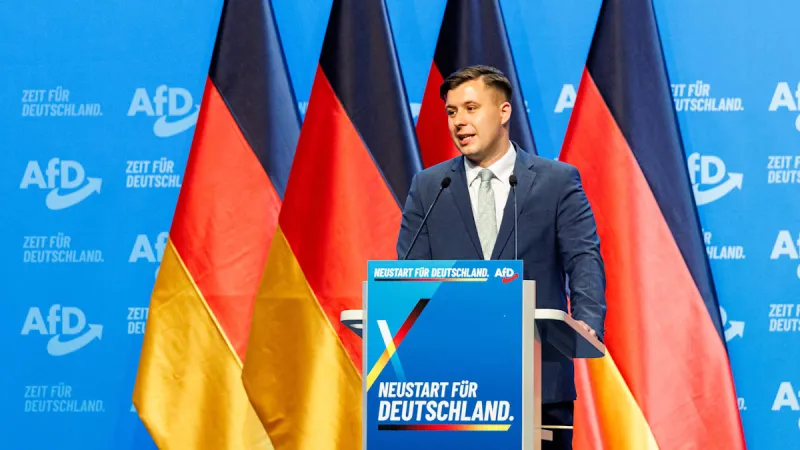
BERLIN - German communication expert Bela Anda contends the far-right Alternative for Germany (AfD) increasingly dictates the national political agenda, compelling mainstream parties to adapt their strategies even amidst potential electoral shifts, such as those projected for Manuela Schwesig in Mecklenburg-Vorpommern.
Anda, known for his insights into public discourse, specifically asserted that the AfD now "determines the programmatics" for other political entities. This provocative claim, made during a discussion on freedom of expression, underscores a significant shift in Germany's political landscape.
The AfD has witnessed a steady ascent in German politics over the past decade, moving from a Eurosceptic fringe party to a formidable force with representation across federal and state parliaments. Their increasing electoral support has prompted a reevaluation of traditional political boundaries.
This growing influence reportedly forces established parties across the spectrum to adjust their own platforms and rhetoric. Anda's observation suggests that rather than isolating the AfD, mainstream discourse inadvertently converges towards issues and frames initially championed by the far-right party.
The expert highlighted the situation in Mecklenburg-Vorpommern, where Minister-President Manuela Schwesig faces a potential challenge. Despite any localized upturns for conventional parties, Anda posits the broader trend of AfD programmatic dominance persists. Schwesig, a prominent Social Democrat, has consistently steered her state government, yet the undercurrents of AfD influence remain palpable.
The phenomenon Anda describes extends beyond regional elections, reflecting a national trend. Political analysts have observed how issues like immigration, national identity, and economic protectionism, once central to the AfD's appeal, have become more prominent in the debates of established parties.
Anda's remarks were made within the context of discussions surrounding freedom of expression, suggesting that the AfD's ability to shape the narrative is closely linked to its effective use of public platforms and its challenge to established media frameworks. This dynamic often tests the boundaries of what is considered acceptable political discourse.
Some observers draw parallels to other European nations where populist parties have successfully pushed their agendas into the mainstream, thereby recalibrating the entire political conversation. Germany, once seen as more resistant to such shifts, now grapples with this evolving reality.
The implication for democratic discourse is substantial. If one party effectively sets the programmatic baseline, it risks narrowing the scope of debate and potentially marginalizing alternative viewpoints, even among parties ideologically opposed to the AfD.
Political strategists now face the challenge of addressing the AfD's appeal without legitimizing its more extremist elements, a delicate balancing act. Anda's assessment suggests that this task becomes increasingly difficult as the AfD's influence continues to expand at the policy formulation level.
Public perception of the AfD also plays a crucial role. While controversies frequently surround the party, a segment of the electorate resonates with its messaging, contributing to its sustained relevance and, consequently, its ability to shape the wider political conversation. This dynamic further complicates efforts by other parties to counteract the AfD's agenda-setting power.
The debate around the AfD's influence intersects with broader discussions regarding political categorization, prompting questions on whether society is over-detecting authoritarian tendencies, a concept explored in discussions about Fascism Pareidolia.
Ultimately, Anda's statement serves as a stark warning to Germany's political establishment. Countering the AfD's agenda-setting prowess demands more than mere opposition; it requires a proactive strategy that reclaims the narrative and offers compelling alternatives that resonate with a diverse electorate.