Angel Doris
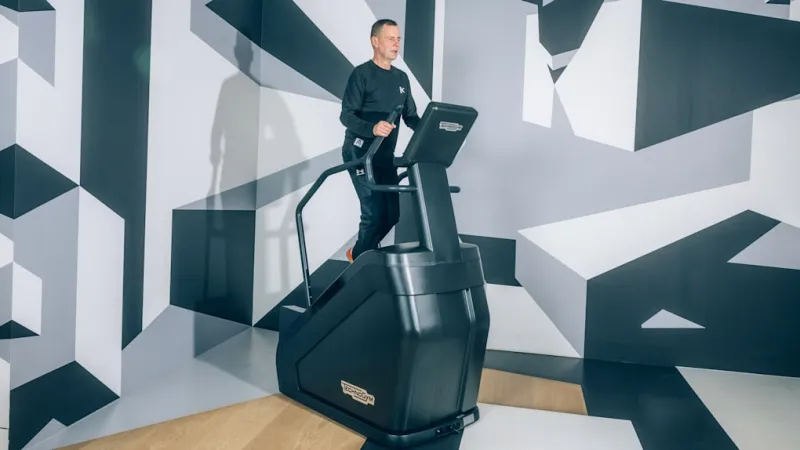
DÜSSELDORF – The esteemed Düsseldorf Art Palace has ignited a lively debate within the international art community by integrating fitness equipment amidst its venerable collection of masterpieces. This bold initiative, unveiled recently, challenges traditional notions of museum engagement, prompting observers to question whether it signifies a groundbreaking approach to cultural consumption or merely a calculated provocation designed to attract attention. A series of self-experiments conducted at the institution aims to clarify the impact of this unusual juxtaposition on visitor experience and artistic interpretation.
The move by the German institution appears to stem from a desire to redefine the relationship between art and its audience, shifting the focus towards a more customer-centric model. For decades, the European art scene, particularly in Germany, has often been perceived as insular, prioritizing academic discourse over accessible public engagement. The Art Palace's decision marks a departure from this established paradigm.
Visitors to the Düsseldorf Art Palace now encounter treadmills, stationary bikes, and other exercise apparatus strategically placed within galleries, adjacent to works by renowned artists. This direct interaction invites patrons not just to observe art passively, but to experience it kinetically, potentially altering their perception of both the artwork and their own physical presence within the cultural space.
The installation has predictably drawn varied reactions from critics and the public alike. Some hail it as a revolutionary concept, praising the museum for its audacity in breaking down perceived barriers between high culture and everyday life. Others decry it as a cheap stunt, arguing that it trivializes the sanctity of artistic heritage and reduces the profound experience of art to a fleeting novelty.
Throughout history, art institutions have periodically grappled with how to remain relevant and engaging to evolving audiences. From pop art's challenge to traditional aesthetics to performance art blurring the lines between artist and spectator, the art world has a rich tradition of self-examination and boundary-pushing. Much like how the Peter Pan Musical has captivated audiences with its rock reimagining for two decades, proving that innovative approaches can breathe new life into classic forms, this current endeavor in Düsseldorf echoes those historical precedents, albeit with a distinctly contemporary twist focused on wellness and active participation.
The Art Palace explicitly framed the installation as a self-experiment, implying a research-oriented approach to understanding audience interaction. This suggests a desire to gather empirical data on how physical activity influences cognitive engagement with art, moving beyond subjective critiques to a more measured assessment of its effectiveness.
Proponents suggest that physical activity could enhance mental alertness and receptivity, allowing visitors to engage with art on a deeper, more mindful level. The idea is that breaking the traditional passive viewing experience might unlock new interpretive pathways, making art less intimidating and more approachable for a broader demographic.
Conversely, critics raise concerns about distraction. They argue that the presence of exercise equipment might divert attention from the artworks themselves, turning the museum into a gym or a social media backdrop rather than a sanctuary for contemplation. The delicate balance between accessibility and artistic integrity becomes a central point of contention.
This initiative also taps into a broader societal emphasis on wellness, mental health, and active lifestyles. By merging these contemporary values with the timeless appeal of fine art, the Düsseldorf Art Palace might be attempting to position itself at the intersection of culture and health, appealing to a generation increasingly focused on holistic well-being.
In 2026, museums globally face the challenge of attracting diverse audiences amidst a myriad of digital distractions and competing leisure activities. Innovation is often seen as key to survival and relevance. This German experiment offers a stark example of how institutions are willing to push boundaries to stay vital in the cultural landscape.
The underlying philosophy, as hinted by the original German discussion, is to think from the customer's perspective. This reflects a business-minded approach to cultural institutions, treating visitors as consumers whose experience must be optimized. It questions whether museums should primarily educate and preserve, or entertain and cater to immediate preferences.
Ultimately, whether the Düsseldorf Art Palace's venture proves to be a fleeting gimmick or a pioneering model for future cultural institutions remains to be seen. The ongoing dialogue it has provoked underscores the dynamic and often contentious nature of art in contemporary society, perpetually seeking new forms of expression and engagement.