Angel Doris
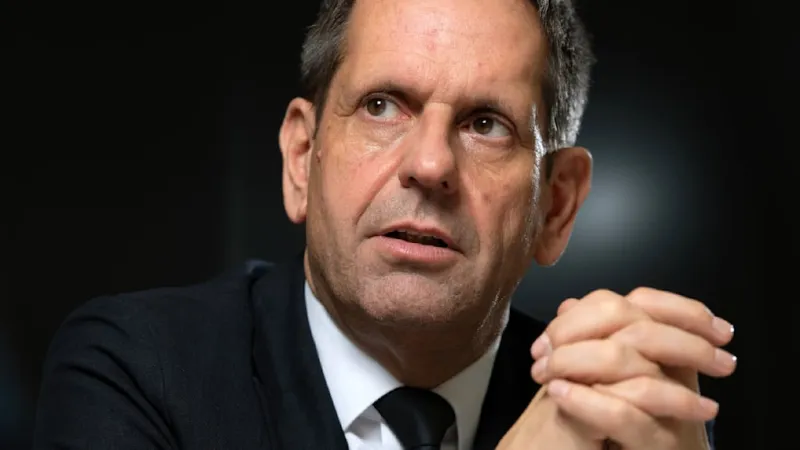
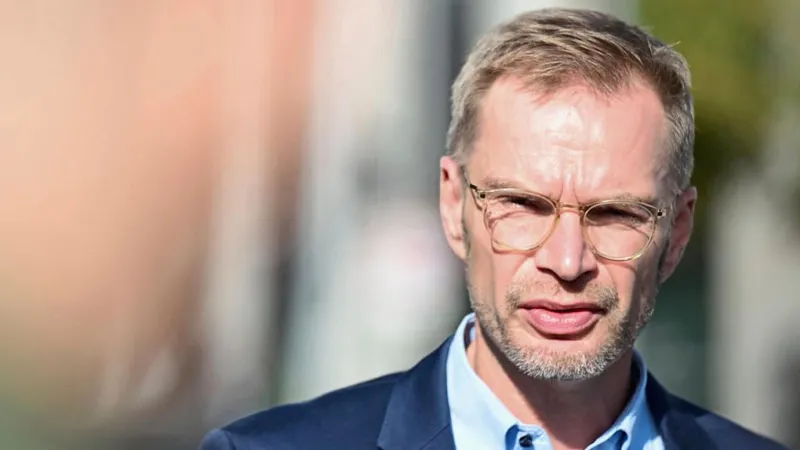
Berlin – Minister-President Stephan Lies, a prominent figure within Germany's Social Democratic Party, has publicly denounced the current federal government for what he termed a fundamental error rooted in "self-occupation." Lies called upon his struggling party, the SPD, to expedite its search for new leadership, asserting that public servants are “not elected for such self-occupation.” His remarks highlight growing internal discord and dissatisfaction with the ruling black-red coalition's performance.
The blunt criticism from the state premier comes amid palpable tension within the federal coalition comprising the Christian Democratic Union (CDU), its Bavarian sister party the Christian Social Union (CSU), and Lies's own Social Democrats. Lies specifically targeted the coalition's perceived preoccupation with internal power struggles and policy disagreements rather than focusing on the pressing issues facing the nation in 2026.
He argued that this internal focus represents a profound failure of governance, diverting attention and resources from critical national priorities. The term "self-occupation" suggests a government too absorbed in its own survival and political maneuvering to effectively address the public's needs, echoing sentiments often expressed by the electorate during periods of political instability.
The Minister-President's exhortation for the SPD to quickly resolve its leadership vacuum further underscores the party's turbulent internal state. The search for a new leader is often a disruptive process, but Lies's urgency indicates a belief that prolonged uncertainty could inflict significant damage on the party's public image and electoral prospects.
As a state premier, Lies commands significant political capital and represents a key voice within the SPD. His public condemnation carries more weight than that of a backbencher, signaling a deep-seated frustration that could ripple through the party ranks and beyond the federal government itself.
The black-red coalition, often characterized as a grand coalition, has faced consistent challenges since its formation, navigating complex policy debates ranging from economic reform to climate change initiatives. Public approval ratings for the federal government have reportedly seen a downturn, reflecting voter fatigue with protracted negotiations and perceived inaction.
Lies's statement implies a direct challenge to the competence and priorities of the ruling alliance. His choice of words, “not elected for such self-occupation,” is a powerful rhetorical device designed to resonate with the average voter who expects efficient governance and clear policy direction, not partisan infighting.
This latest public critique could further destabilize the already fragile coalition. Such open dissent from a leading figure within one of the governing parties often precipitates intense internal debates and calls for greater unity, yet it can also exacerbate existing divisions and hasten political realignments.
The SPD, traditionally one of Germany's two major parties, has grappled with declining support in recent years. The current leadership search is seen as a pivotal moment for the party to redefine its identity and strategy ahead of future elections. Lies's demand for haste reflects a desire to present a united and decisive front to the electorate.
Political analysts suggest that Lies's intervention is strategically timed, possibly aiming to pressure internal party factions into a quicker resolution regarding leadership. The broader implication is a call for renewed focus on tangible policy achievements rather than allowing the government to become paralyzed by internal bickering.
The ongoing political friction in Germany could have wider repercussions for the European Union, given Germany's central role as an economic and political powerhouse. A stable German government is often viewed as crucial for overall European stability, particularly as the continent navigates various geopolitical and economic challenges.
The federal government has yet to issue an official response to Minister-President Lies's remarks. However, political observers anticipate that his strong statements will undoubtedly ignite further discussion within coalition circles and among the broader German public, setting the stage for potentially significant political developments in the coming weeks.