Dorry Archiles
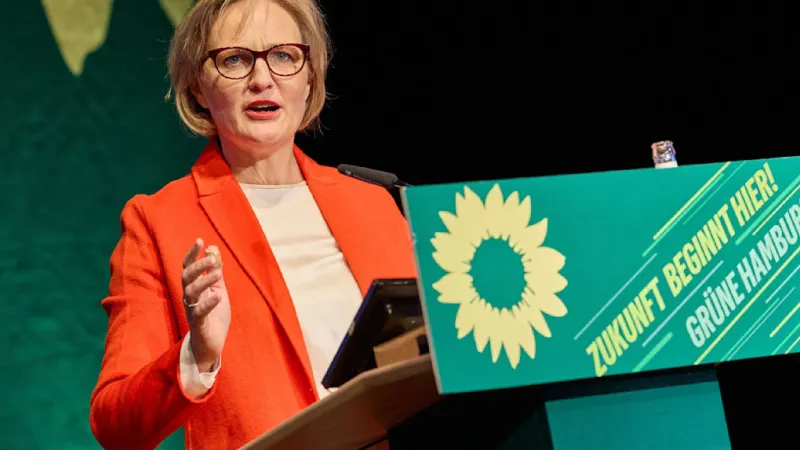
HAMBURG – Tens of thousands of young people across Germany recently converged in nationwide demonstrations, reiterating their urgent demands for enhanced education and robust climate protection, while unequivocally opposing any return to military conscription. The extensive protests drew sharp condemnation from Green Party leader Franziska Brantner, who accused the federal government of pursuing “a cruel policy at the expense of the next generation.”
The coordinated protests, spanning numerous German cities beyond Hamburg, underscored a persistent frustration among the youth. Participants, ranging from students to young professionals, highlighted what they perceive as systemic failures in addressing critical long-term challenges that directly impact their future.
Central to their demands was a call for significant reforms and increased investment in the national education system. Protesters voiced concerns over underfunding, outdated curricula, and a lack of resources that they argue are ill-preparing them for the complexities of the modern world and the demands of a green economy.
Simultaneously, a strong emphasis was placed on the imperative of aggressive climate action. Demonstrators carried placards and chanted slogans demanding concrete policies to mitigate climate change, accelerate the transition to renewable energy, and ensure Germany meets its environmental commitments. They critiqued what they see as insufficient progress and political inertia on an existential issue.
Opposition to conscription formed another critical pillar of the demonstrations. Despite Germany suspending compulsory military service in 2011, recent discussions surrounding its potential reintroduction, particularly amidst evolving geopolitical landscapes, have sparked considerable apprehension among the younger demographic. Protesters advocated for peace and civilian alternatives over mandatory military enlistment.
Green Party Chairwoman Franziska Brantner lent her voice to the youth movement, directly implicating the current federal administration. Her statement, “a cruel policy at the expense of the next generation,” resonated deeply with the sentiments expressed on the streets, highlighting a perceived disregard for the long-term well-being of future cohorts.
Brantner further criticized what she termed “Soder gifts,” a colloquial reference often used in German political discourse to denote populist, short-sighted political initiatives or expenditures. These “gifts” are typically perceived as measures designed for immediate political gain, especially from figures like Bavaria's Markus Soder, without sufficiently considering their enduring financial or societal costs.
The Green leader’s comments imply that the government’s current policy framework prioritizes expedient, politically motivated decisions over sustainable, forward-looking strategies in areas vital to the nation’s youth. This perceived short-termism, she suggested, jeopardizes the societal and economic foundations for generations to come.
These nationwide demonstrations are not isolated incidents but rather represent the latest chapter in a series of youth-led movements that have galvanized public attention in Germany and beyond. Echoing earlier calls for climate justice and and social equity, the current wave of protests signals an escalating impatience with the pace of governmental response.
The persistent activism underscores a widening generational divide regarding policy priorities. While the federal government maintains its commitment to addressing national challenges, the youth’s vocal objections indicate a profound disillusionment with the efficacy and urgency of current political initiatives.
Analysts suggest that the sustained pressure from these young activists could significantly influence upcoming political debates and potentially shape electoral outcomes. Their unified stance on education, climate, and conscription serves as a powerful reminder to political leaders of the long-term consequences of today’s decisions.
The energy and determination displayed by the tens of thousands participating in these protests send a clear message: Germany’s next generation is not merely observing, but actively demanding a seat at the table in crafting policies that will define their future.