Gabriella
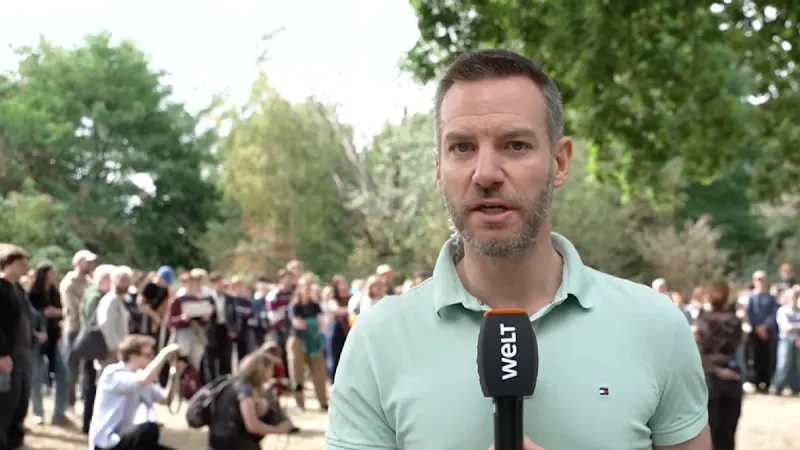
DÜSSELDORF – Students at Heinrich-Heine-Universität Düsseldorf have initiated widespread protests and called for the dismissal of Professor Ute Bayen, accusing her of promoting views hostile to transidentities in a planned lecture. The demonstrations reflect significant campus unrest, prompting university spokesperson Achim Zolke to describe the situation as unprecedented in its level of agitation.
The core of the student outrage centers on a scheduled lecture by Professor Bayen addressing transidentities. Student groups contend that the professor's past or anticipated statements on the subject are not merely controversial, but deeply offensive and fundamentally discriminatory towards transgender individuals.
Organizers of the protest emphasize that their actions are not an attempt to stifle academic discourse generally, but rather to ensure the university remains an inclusive and safe environment for all students. Their central demand is the permanent removal of Professor Bayen from her teaching position, asserting that her perspective fosters an atmosphere of intolerance.
Achim Zolke, speaking on behalf of Heinrich-Heine-Universität, acknowledged the gravity of the student demonstrations. He noted, "So much agitation has not yet been experienced," underscoring the unusual intensity and scope of the campus mobilization. The university administration now faces the delicate task of balancing academic freedom with the demands for an inclusive learning environment.
The controversy reignites a perennial debate within academia concerning the boundaries of free speech and the responsibility of educators. Universities globally grapple with how to foster open intellectual exchange while simultaneously protecting vulnerable communities from hate speech or discriminatory rhetoric.
While specific content of Professor Bayen's planned lecture has not been fully disclosed by the university, student manifestos and social media campaigns claim her views align with narratives often deemed transphobic. These accusations suggest a perceived invalidation or misrepresentation of trans experiences, which students argue crosses a line into outright marginalization.
The ongoing protests have visibly fractured the university community, creating an atmosphere of tension and division. Many students report feeling unsafe or unwelcome on campus if viewpoints perceived as discriminatory are allowed to be presented unchallenged within an academic setting.
This incident, while specific to Düsseldorf, echoes broader patterns of student activism globally. Similar movements have emerged where students challenge institutions over perceived injustices, ranging from curriculum content to faculty conduct. For instance, recent reports detailed how New Delhi Police clashed with students protesting alleged exam fraud, highlighting the varied causes of student dissent.
The Heinrich-Heine-Universität now stands at a critical juncture. It must decide whether to uphold a professor's right to present potentially unpopular or challenging ideas, or to prioritize the emotional and psychological safety of its transgender student population and allies. Any decision will undoubtedly face scrutiny from both sides of the escalating debate.
Possible administrative actions could range from mediating discussions between the professor and students, mandating sensitivity training, revising the lecture's content, or, in more extreme scenarios, initiating formal disciplinary proceedings against Professor Bayen. The university's response will set a precedent for future academic freedom disputes.
The discourse around transidentities has become increasingly prominent and often polarized in public life, extending beyond university campuses. This local protest in Düsseldorf reflects a wider societal reckoning with evolving understandings of gender and identity, and the challenges of integrating diverse perspectives within established institutions.
Support for the protesting students has garnered traction across various campus organizations and from some faculty members who advocate for greater inclusivity. The students maintain that their collective action is a necessary step to hold the university accountable for its stated values of diversity and respect.
The arguments from those defending academic freedom often emphasize the importance of open inquiry, even into sensitive topics. Proponents of this view might contend that a professor should be permitted to explore various perspectives on transidentities, provided the approach is scholarly and not intended to incite hatred. This perspective presents the university with a complex challenge.
Amidst the calls for dismissal, some voices within the academic community suggest that dialogue, rather than immediate censure, could offer a more constructive path forward. However, student activists argue that certain views are so fundamentally harmful that they fall outside the bounds of legitimate academic debate.
The university's review process will likely involve intricate legal and ethical considerations, weighing employment contracts, academic freedom clauses, and anti-discrimination policies. The institution's ultimate decision will have far-reaching implications for its reputation and its internal governance.
The immediate future of Professor Bayen's controversial lecture remains uncertain. Whether it will proceed as planned, be revised, or canceled altogether depends heavily on the university's internal investigations and its interpretation of its responsibilities towards both faculty and students.
As the protest gains attention beyond the campus, Heinrich-Heine-Universität finds itself under increasing public scrutiny. The outcome of this dispute will be closely watched by other academic institutions and by organizations advocating for LGBTQ+ rights and academic freedom alike.
The situation remains fluid as both students and university officials navigate the contentious intersection of academic inquiry, social justice, and institutional responsibility.