 Edward DP Situmorang
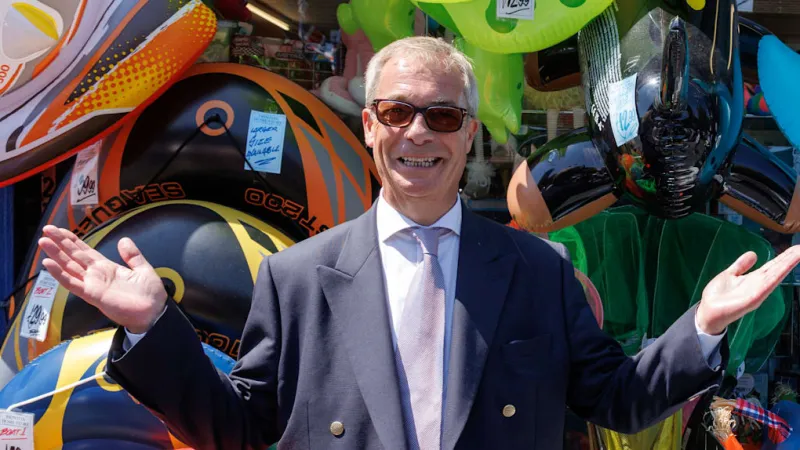
CLACTON, UK – Veteran politician Nigel Farage finds himself embroiled in an unexpected electoral spectacle, returning to contest the parliamentary seat of Clacton against a challenger who dons a dustbin as a helmet and proclaims himself an "intergalactic space warrior." This peculiar development follows Farage's controversial decision to re-enter frontline politics, a move observers suggest is an attempt to salvage his political standing.
The decision by Farage, a figure synonymous with Euroscepticism and the Brexit movement, marks a significant turnaround after previously indicating a withdrawal from direct electoral contests. Sources close to his campaign, speaking anonymously due to the sensitivity of internal party discussions, suggest his re-entry into the Clacton race is a strategic gambit "to save his skin" from political irrelevance amidst shifting alliances and public sentiment.
Clacton, a seaside town in Essex, holds symbolic weight for Farage, having been the site of his unsuccessful attempts to secure a parliamentary seat in previous elections. The constituency has historically shown strong support for anti-establishment and Eurosceptic candidates, making it a natural, albeit challenging, battleground for his latest political endeavor.
Adding an extraordinary twist to an already unpredictable election, Farage's opponent has captured national attention with his unconventional persona. Identifying himself as an "intergalactic space warrior," the challenger reportedly campaigns wearing a dustbin lid as headgear, presenting a stark, even surreal, contrast to the traditional political landscape.
This bizarre electoral showdown underscores a perceived "shameful low point" in British politics, as described by some commentators. The presence of such a distinct challenger against a seasoned political figure like Farage highlights a growing disillusionment with mainstream politics and a potential appetite for radical alternatives, however eccentric.
Farage's career has been characterized by a series of political comebacks and shifts. From leading the UK Independence Party (UKIP) to founding the Brexit Party and later Reform UK, he has consistently positioned himself as an outsider challenging the establishment. His latest pivot back to a direct constituency contest is consistent with his history of seeking direct mandates from the electorate.
The original German source implied Farage's return to the Clacton race was a form of "punishment" following his resignation. This interpretation suggests a challenging consequence, perhaps internal party pressure or the sheer oddity of the contest itself, compelling him to confront a political landscape far removed from conventional campaigning.
Amidst a climate of heightened political drama and shifting allegiances in the UK, exemplified by events such as the recent investigation into the murder of Brexit Icon Ann Widdecombe, Farage's latest gambit adds another layer of complexity to the nation's political narrative. The current political climate in the United Kingdom, characterized by fluctuating public trust and a fragmented electorate, provides a fertile ground for such unusual electoral contests.
The media has seized upon the narrative surrounding the Clacton election, with extensive coverage focusing on the challenger's theatrical approach and Farage's renewed battle for parliamentary representation. This attention, while amplifying the eccentricity of the race, also raises questions about the seriousness of the democratic process and the nature of political engagement.
As the Clacton constituency prepares for its upcoming election, the contest shapes up to be more than just a battle for a parliamentary seat; it represents a microcosm of the broader shifts and frustrations permeating contemporary British politics, with an iconic figure navigating an increasingly surreal electoral landscape.