 Dorry Archiles
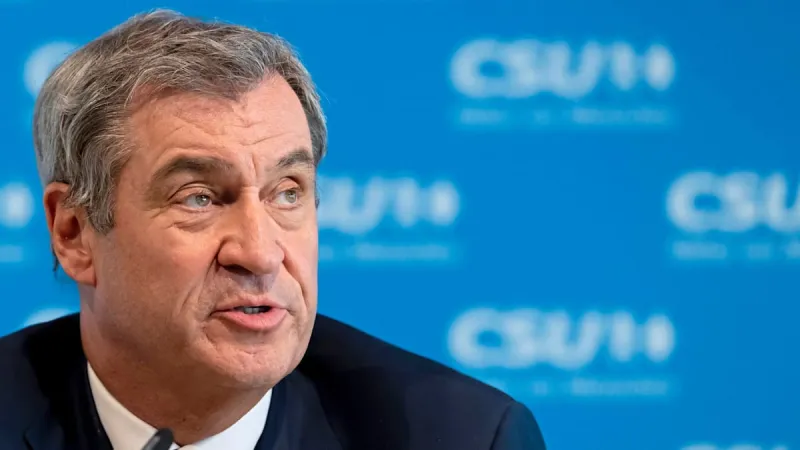
BERLIN – Bavarian Prime Minister and Christian Social Union (CSU) leader Markus Soeder has called for a significant reduction in Germany's citizen's basic income program, known as Buergergeld, advocating cuts to what he terms “the absolute constitutional minimum.” His proposition, announced this week, aims to achieve substantial savings as part of broader national budget consolidation efforts for 2026 and beyond.
Soeder asserted that the current Buergergeld rates offer considerable potential for budgetary relief, arguing for their reduction to help stabilize federal finances. His comments underscore a growing debate within German political circles regarding the scope and sustainability of social welfare expenditures at a time of fiscal tightening.
Introduced in 2023, the Buergergeld program replaced the long-standing Hartz IV unemployment benefit system, with the stated goal of providing greater dignity and support for those out of work or with insufficient income. It aimed to move away from the stricter sanctions regime of its predecessor, focusing more on skills development and long-term reintegration into the labor market.
However, from its inception, the program has faced scrutiny regarding its costs and perceived incentives. Critics, including Soeder and other conservative voices, have frequently argued that the benefit levels disincentivize work, especially in sectors with lower wages.
Soeder’s demand comes as Germany grapples with persistent economic challenges and a pressing need to consolidate its national budget following various crises and increased public spending. The federal government is under pressure to identify areas where expenditures can be curtailed to meet fiscal targets and address long-term financial stability.
The CSU leader specified that the cuts should extend “to the absolute constitutional minimum,” implying a re-evaluation of the Buergergeld s regular rates to ensure they strictly adhere to the fundamental human right to a dignified existence while eliminating what he perceives as excessive provisions.
Such proposals inevitably ignite intense political debate. Parties on the left, such as Die Linke, have consistently championed robust social safety nets and worker advocacy. Leaders like Janine Wissler, co-chair of Die Linke, and others affiliated with the party, have frequently voiced concerns over any measures that could weaken support for vulnerable populations. This position aligns with the party s broader commitment to social justice and safeguarding citizens from economic hardship, as highlighted by figures advocating for worker protections. For example, recent shifts within Die Linke, including the ascendance of figures like Pantisano, underscore a continued focus on these issues.
The discussion around Buergergeld is not isolated. It mirrors broader austerity conversations occurring across Germany at various governmental levels. For instance, recent decisions in Hamburg regarding special needs support illustrate the difficult choices local authorities face in reconfiguring public services amidst fiscal constraints. Similar debates are evident in national discussions about pension reform, where experts like the DIW chief have criticized proposals for lacking courage and consequence in addressing long-term solvency.
Proponents of the existing Buergergeld structure emphasize its role in preventing poverty and ensuring social cohesion. They argue that drastic cuts could push more individuals into destitution and exacerbate social inequalities, potentially leading to increased strain on other public services.
Soeder s assertive stance signals a potential battleground for upcoming political negotiations on the federal budget. The outcome of this debate will significantly influence Germany s social policy landscape and its approach to economic challenges in the mid-2020s, with implications for millions of citizens reliant on state support.
As the government proceeds with its budget consolidation plans, the interplay between fiscal responsibility and social equity will remain a central point of contention, shaping the lives of many across the nation.